
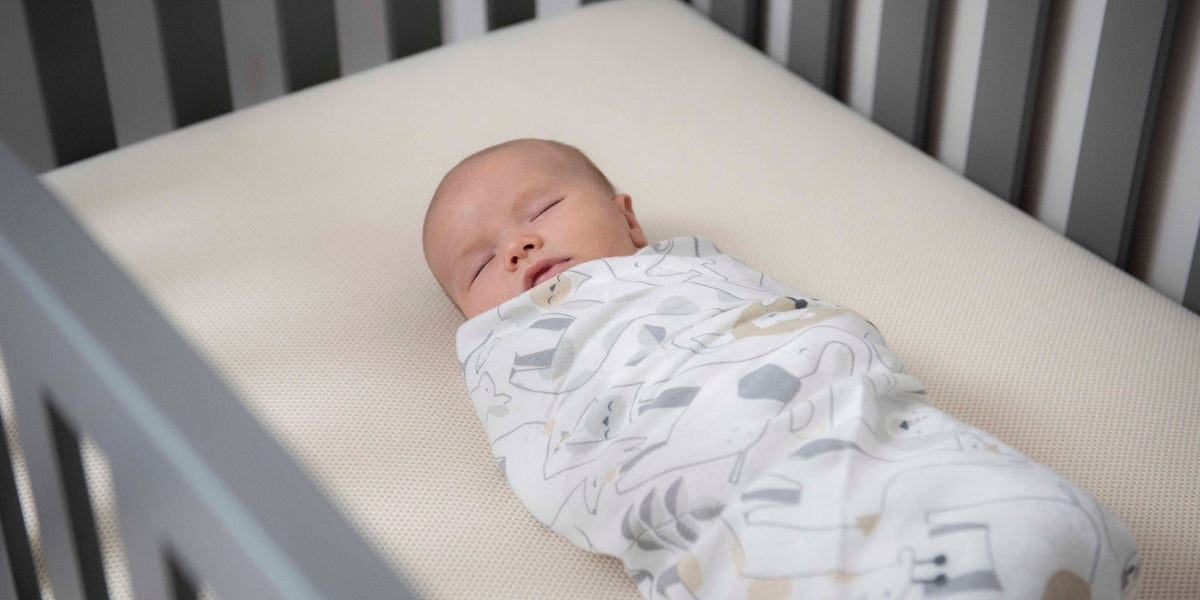
“If a crib mattress feels comfortable to me, it should be comfortable for my baby, too.” Right?
Not necessarily. Babies and adults have very different sleep needs, especially when it comes to mattress firmness. While adults may prefer a soft or cushioned sleep surface, babies need a crib mattress that is firm, flat, non-inclined, and designed specifically for infant sleep.
So, how firm is firm enough for a baby crib mattress? Rather than looking for a specific number on a firmness scale, parents should focus on whether the mattress meets current safety standards, maintains its shape, and fits tightly inside the crib.
Let’s take a closer look at what crib mattress firmness means and what else you should consider when creating a safer sleep environment for your baby.
How Firm Should a Baby Crib Mattress Be? Key Points
- Choose a firm, flat, non-inclined crib mattress designed specifically for infant sleep and compliant with current federal safety standards.
- Do not rely on an adult mattress firmness scale. A crib mattress should maintain its shape without sagging or conforming around a baby’s head or body.
- Make sure the mattress fits tightly inside the crib without large gaps that could create an entrapment hazard.
- Do not try to soften the mattress with a topper, blanket, pillow, extra pad, or other cushioning.
- Use only a tight-fitting sheet and keep loose bedding, toys, bumper pads, and other soft objects out of the crib.
Note: This blog may contain links to Naturepedic products and promotional content where relevant to the topic discussed.
How Firm Should a Baby Crib Mattress Be?
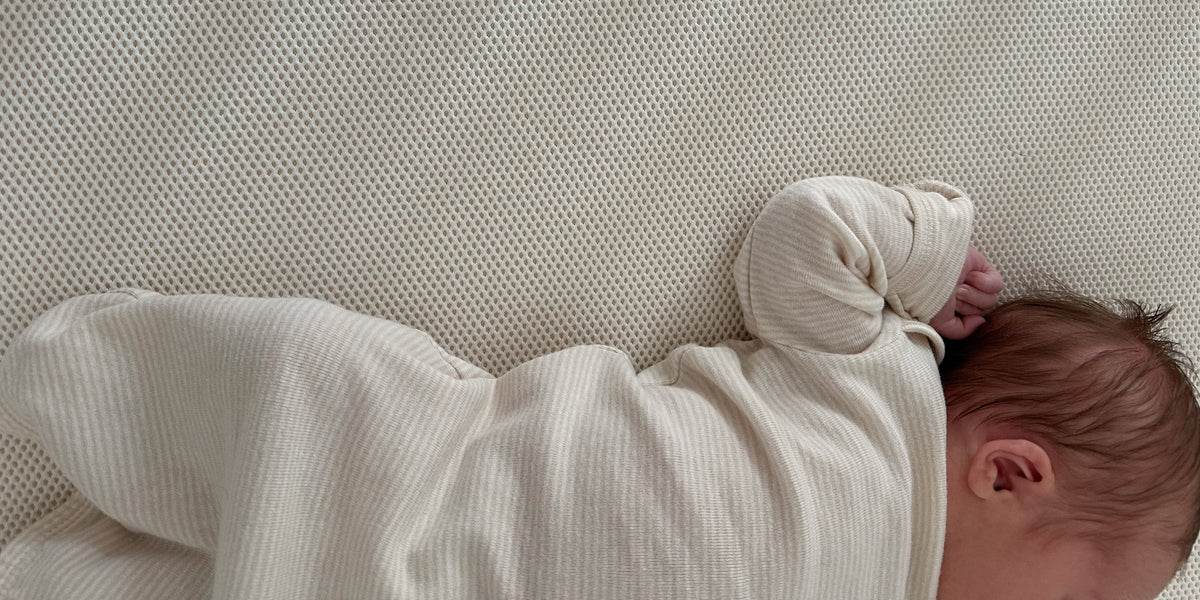
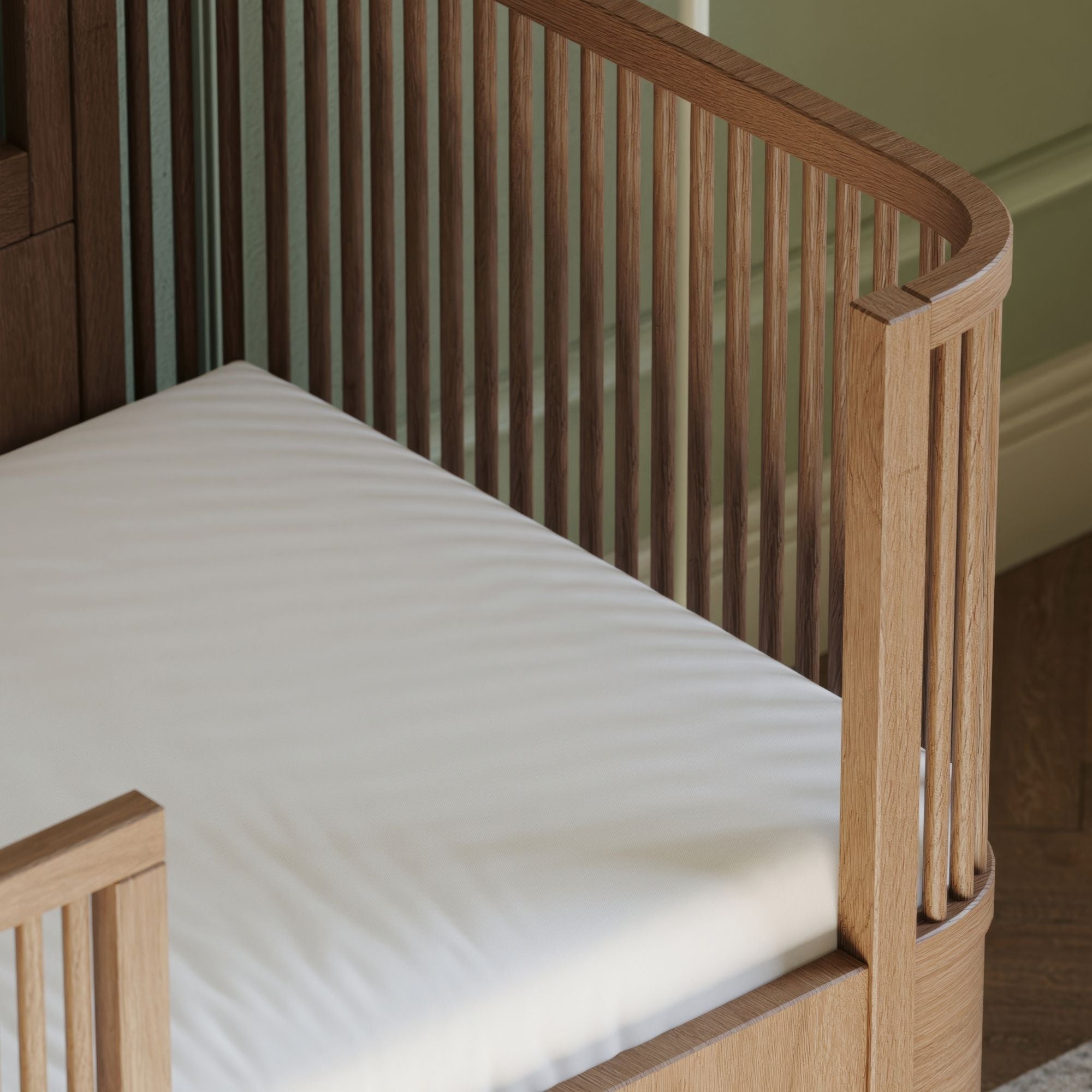
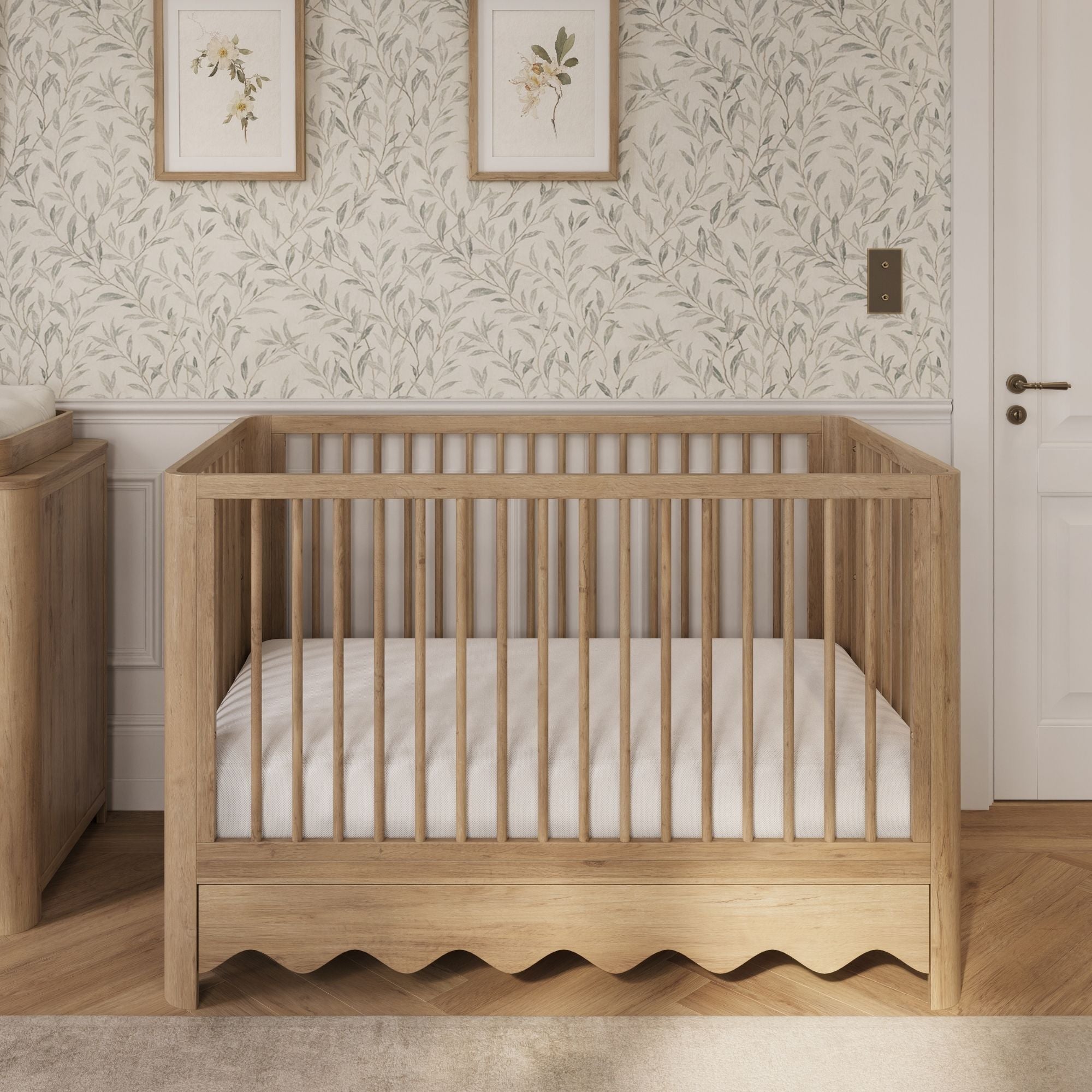
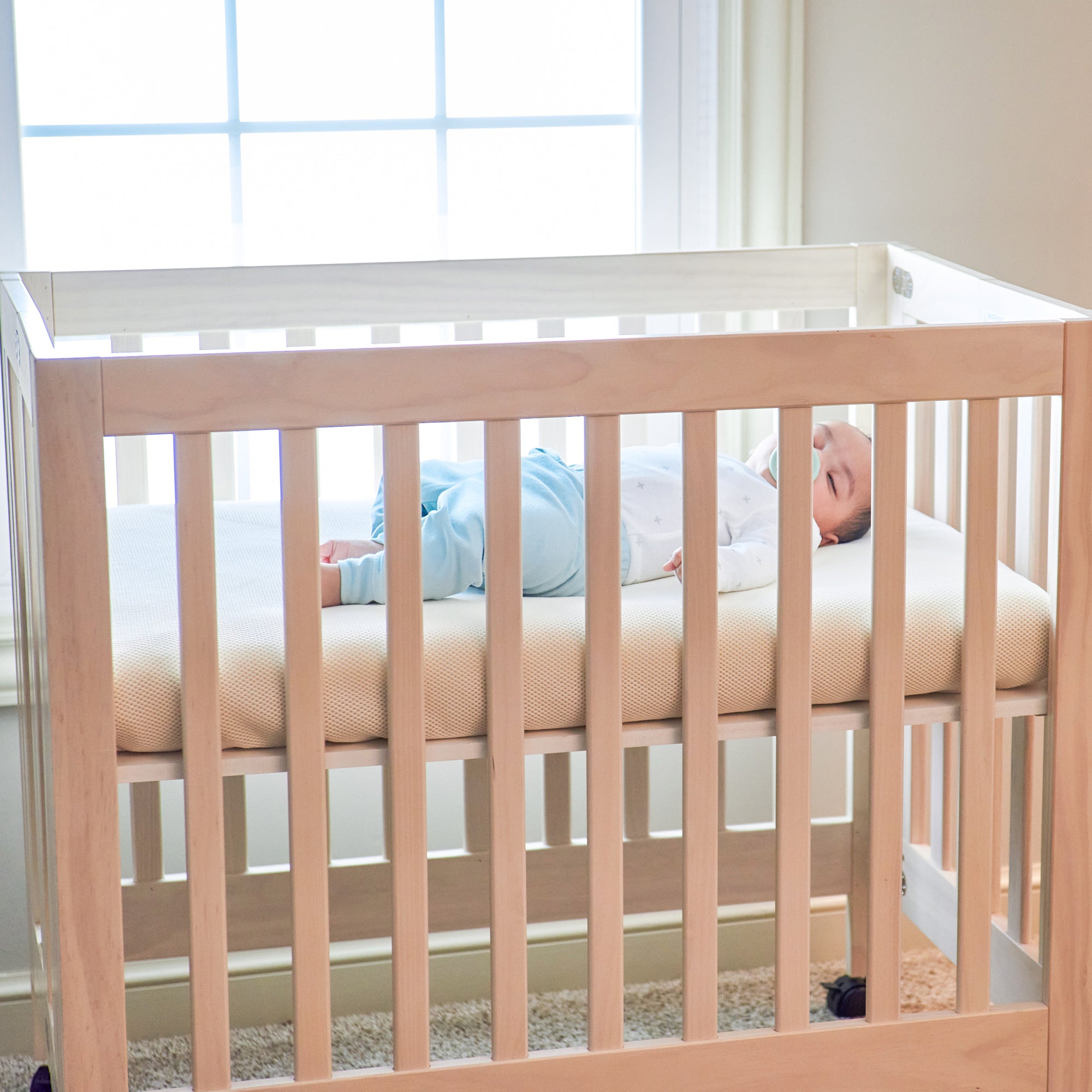
A baby’s crib mattress should be firm enough to maintain its shape rather than noticeably conforming around the baby’s head or body.

The American Academy of Pediatrics (AAP) recommends placing babies on their backs for every sleep on a firm, flat, non-inclined sleep surface. The Consumer Product Safety Commission (CPSC) similarly recommends using a firm, tight-fitting mattress in a crib that meets current safety standards.
Crib mattresses sold in the U.S. must comply with federal safety requirements addressing hazards associated with excessive softness, poor fit, broken coils, and other potential concerns. These requirements include a standardized firmness test, so parents do not have to judge a mattress by feel alone.
In other words, a crib mattress will probably feel much firmer than the mattress you sleep on. It’s a safety feature, not a design flaw!
Is There a Crib Mattress Firmness Scale?
Adult mattresses are often described using a 1-to-10 firmness scale, but current AAP and CPSC guidance does not tell parents to shop for a particular numerical rating.
Instead, the guidance focuses on several practical characteristics. An infant sleep surface should be:
- Firm
- Flat
- Non-inclined
- Tight-fitting
- Specifically designed and marketed for infant sleep
- Free from noticeable sagging, damage, or permanent indentations
A crib mattress should not feel plush or allow a baby to sink deeply into its surface. However, “firm” does not mean that you need to search for the hardest mattress available. The most important consideration is that the mattress meets applicable safety standards and is used according to the manufacturer’s instructions.
How Can You Tell if a Crib Mattress Is Firm Enough?
The most reliable way to choose an appropriately firm crib mattress is to purchase one that is designed for infant sleep and meets current federal crib mattress standards.
You can also inspect the mattress for obvious signs that it should not be used. Avoid using a mattress that:
- Sags in the center or around the edges
- Has developed deep or lasting indentations
- Is torn, cracked, misshapen, or otherwise damaged
- Has broken or protruding components
- Does not fit the crib correctly
- Has been recalled
You may gently press the center and edges to check for visible sagging or deformation. The surface should feel solid and promptly return to its original shape. However, a hand-press test cannot confirm that a crib mattress complies with federal standards and should not replace checking the product label, manufacturer information, or recall status.
Can a Crib Mattress Be Too Firm?
No — not if it is designed for infant sleep and meets current federal crib mattress safety standards. A safe crib mattress may feel surprisingly hard to an adult, but babies do not need the plush cushioning adults often associate with comfort.
The greater safety concern is a mattress that is too soft, sags, or conforms around a baby’s head and face. However, that does not mean you need to search for the hardest mattress available. Choose a compliant crib mattress, use it as directed, and resist the urge to make it feel softer.
The AAP recommends keeping mattress toppers, loose bedding, pillows, blankets, toys, bumper pads, and other soft objects out of an infant’s sleep space. A tight-fitting sheet is all that should be placed over the mattress.
Why Do Babies Need a Firm Crib Mattress?
Firmness is an important part of reducing suffocation and entrapment hazards in an infant sleep environment.

A soft mattress can indent or conform around a baby’s head and face. Because young infants have limited strength and motor control, they may not be able to reposition themselves as easily as an older child or adult.
The federal crib mattress safety standard specifically addresses suffocation hazards associated with overly soft mattresses through required firmness testing. It also addresses entrapment hazards that can result from mattresses that do not fit properly inside a crib.
A firm mattress is only one part of safer sleep, however. The mattress must also be flat, non-inclined, properly fitted, and used in an approved infant sleep product.
How Should a Crib Mattress Fit?
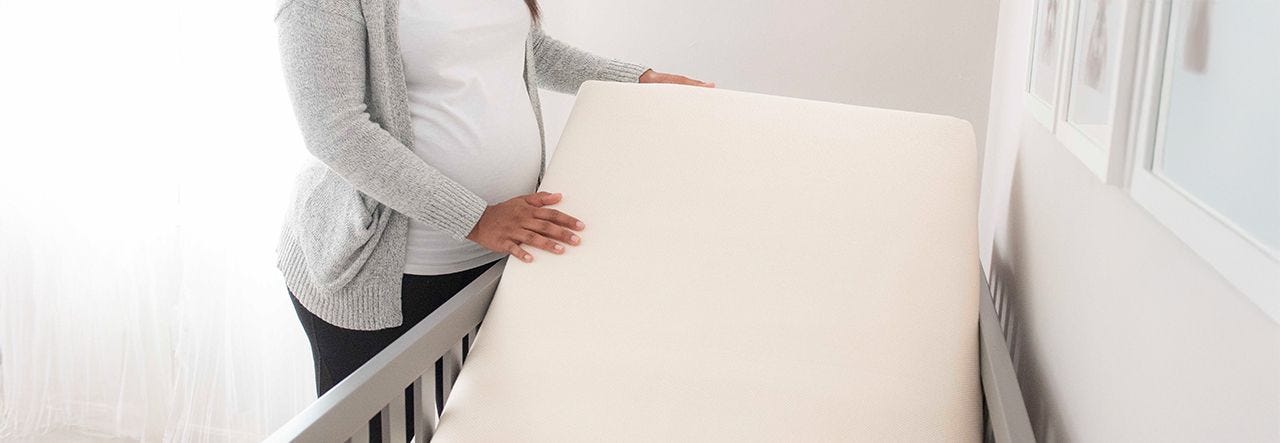
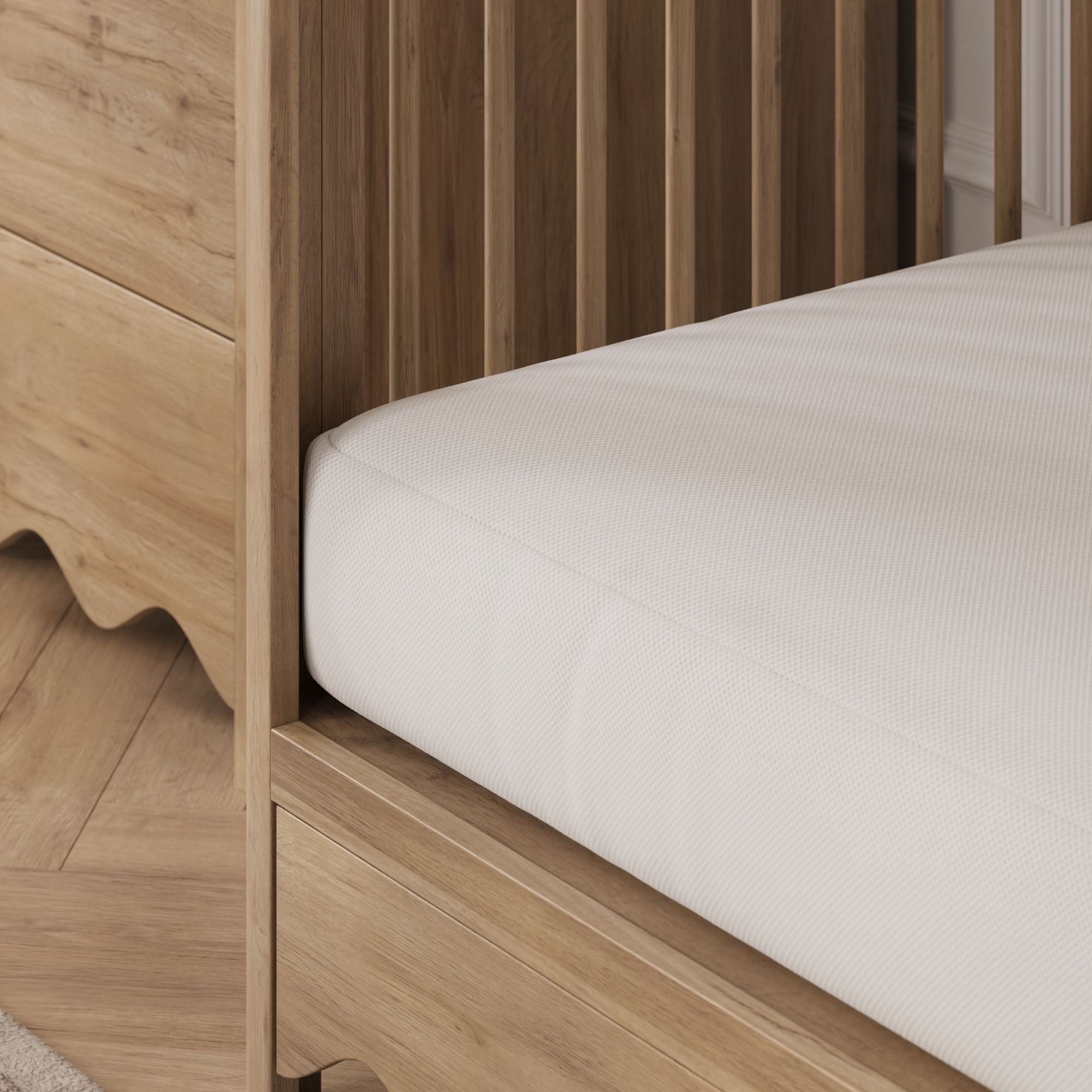
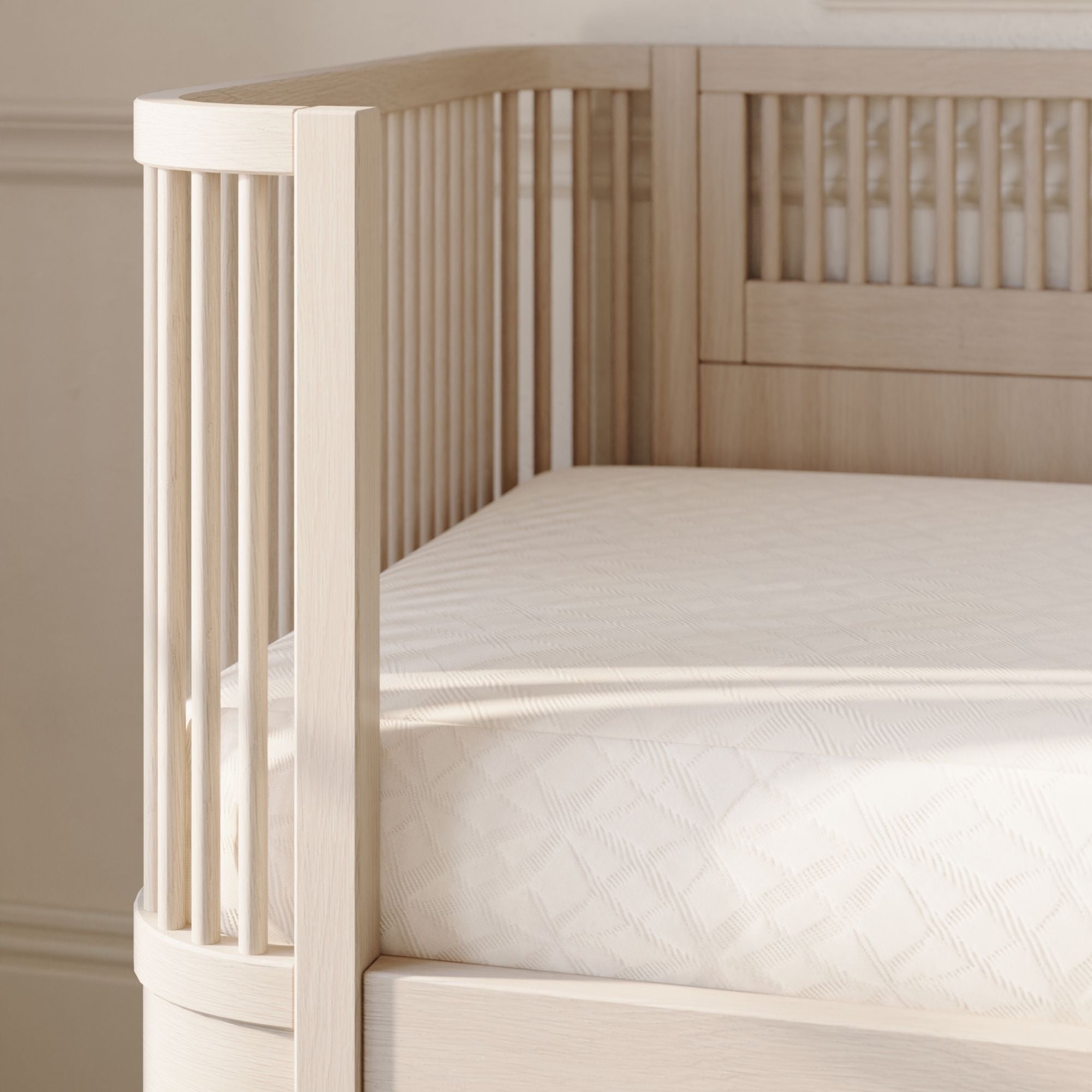
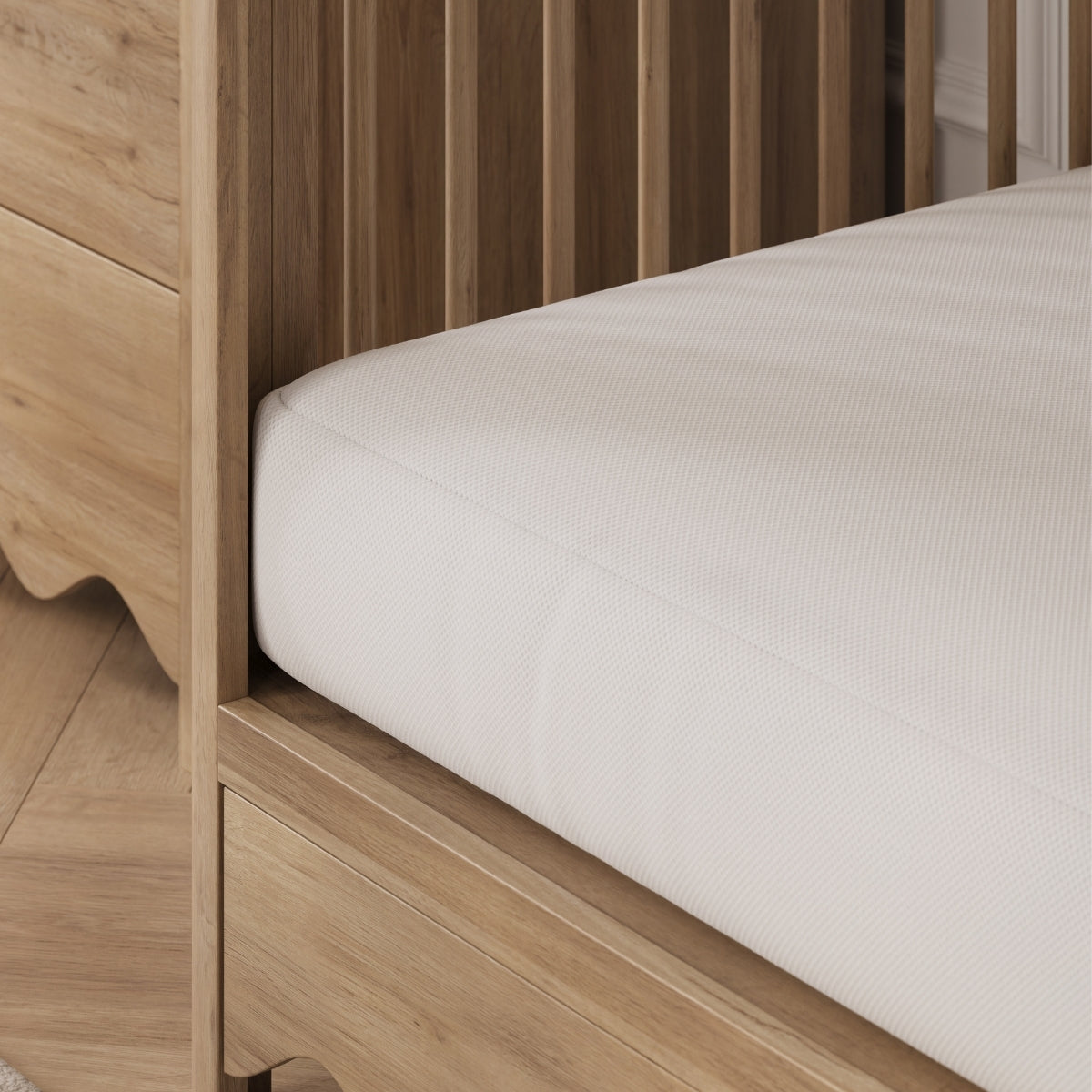
A crib mattress should fit tightly against all sides of the crib, without large gaps around the edges.
Gaps can create an entrapment hazard if part of a baby’s body becomes wedged between the mattress and crib. The AAP advises against using a crib and mattress combination if you can fit more than two fingers between the mattress and the sides or ends of the crib.
Before purchasing a mattress, check the crib manufacturer’s instructions for the correct dimensions. This is especially important for mini cribs, oval cribs, portable cribs, and other nonstandard sleep spaces, which may require a specific mattress size.
Do not add a second mattress, mattress topper, folded blanket, or other padding to fill a gap. Use only a mattress designed to fit that particular crib or sleep product.
What Is a Dual-Stage Crib Mattress?
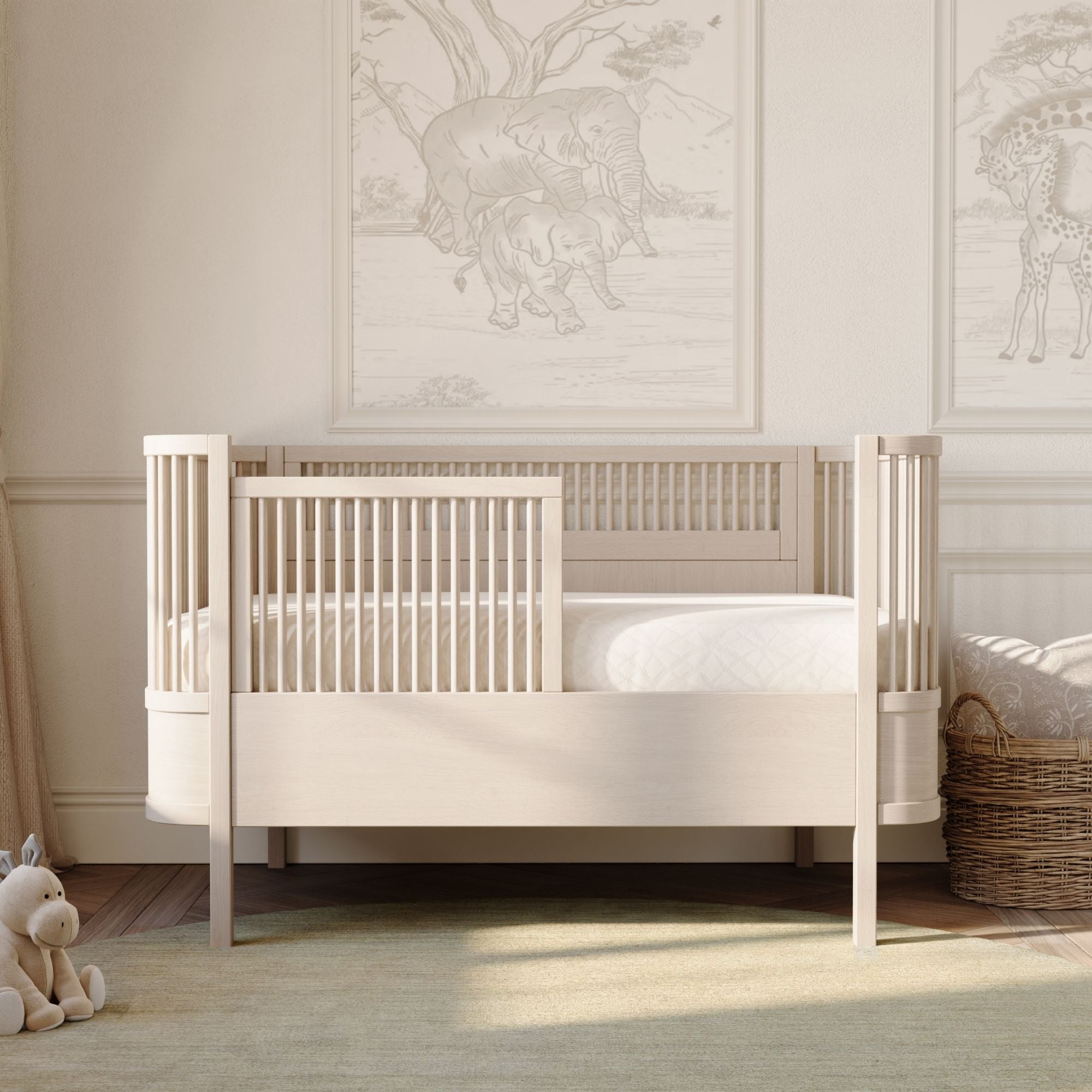
A dual-stage crib mattress has two different sleep surfaces: a firmer side intended for infants and a slightly more cushioned side intended for toddlers.
Always begin with the infant side facing up. Do not flip the mattress simply because the toddler side feels softer or more comfortable to you. Follow the mattress manufacturer’s instructions regarding when to transition to the toddler side.
Because recommended timing and product designs may vary, check the mattress label or product guide before flipping it.
Three More Crib Safety Tips
Choosing a firm mattress is a good start, but it's not everything.

These additional practices can help create a safer sleep environment.
1. Place Your Baby on Their Back for Every Sleep
Place your baby on their back for naps and nighttime sleep unless your pediatrician has provided different instructions for a specific medical reason.
Even if your baby has reflux, the AAP recommends a flat, firm sleep surface rather than raising the mattress or using an inclined sleep product.
2. Keep the Crib Clear
A fitted sheet is all your baby’s crib needs.
Keep pillows, loose sheets, quilts, comforters, blankets, stuffed animals, positioners, bumper pads, mattress toppers, and other soft objects outside the crib. These items can increase the risk of entrapment, suffocation, or strangulation.
A wearable blanket or appropriately sized sleep sack can provide warmth without placing loose bedding in the crib.
3. Use Only Products Intended for Infant Sleep
Swings, loungers, rockers, nursing pillows, and other seated or inclined products are not substitutes for a crib, bassinet, or play yard.
If your baby falls asleep in a sitting device, move them to an approved firm, flat sleep surface as soon as practical. Products inclined more than 10 degrees should not be used for infant sleep.
Have feedback on our story? Contact us to let us know what you think or visit our about us page to learn more!