


There’s a kind of calm your eyes recognize before your mind does. You can feel it the moment when they finally stop scanning. That sense of ease is known as visual rest.
Your sleep space is meant to bring ease – physically, visually, spiritually – but for many people, it does the opposite. Glowing screens, crowded surfaces and busy décor can keep the mind alert long after the lights go out, and what you see before you close your eyes can have a direct impact on how easily you drift into sleep.
The visual environment acts as a signal to the brain, influencing how easily your body can relax. When your surroundings feel composed and balanced, your mind follows. Visual rest offers a simple yet powerful way to design a bedroom, helping the eyes recover from daily stimulation and guiding the body toward deeper sleep. The idea of “visual rest” has roots in both design and psychology – and understanding it can completely change how your bedroom feels.
What Is Visual Rest?
Visual rest happens when your surroundings stop demanding attention. It’s the experience of looking around and finding nothing your eyes need to sort, manage or filter. In that pause, your mind has a chance to slow too.
Research in environmental psychology suggests that visual simplicity helps reduce cognitive load – the amount of information your brain processes at once. When the visual environment feels organized and open, your nervous system can shift from alertness to restoration. This response allows the body to relax more fully before sleep.
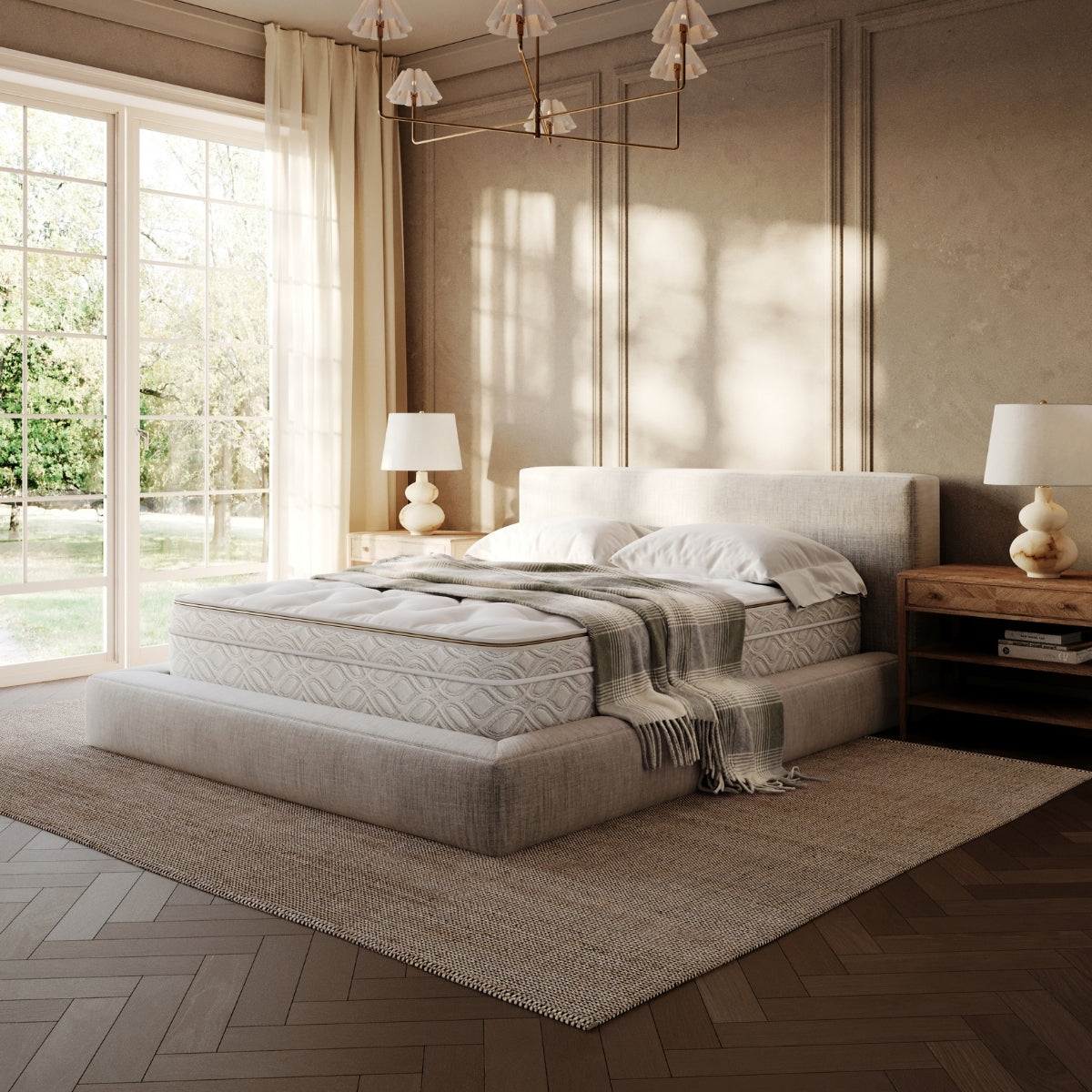
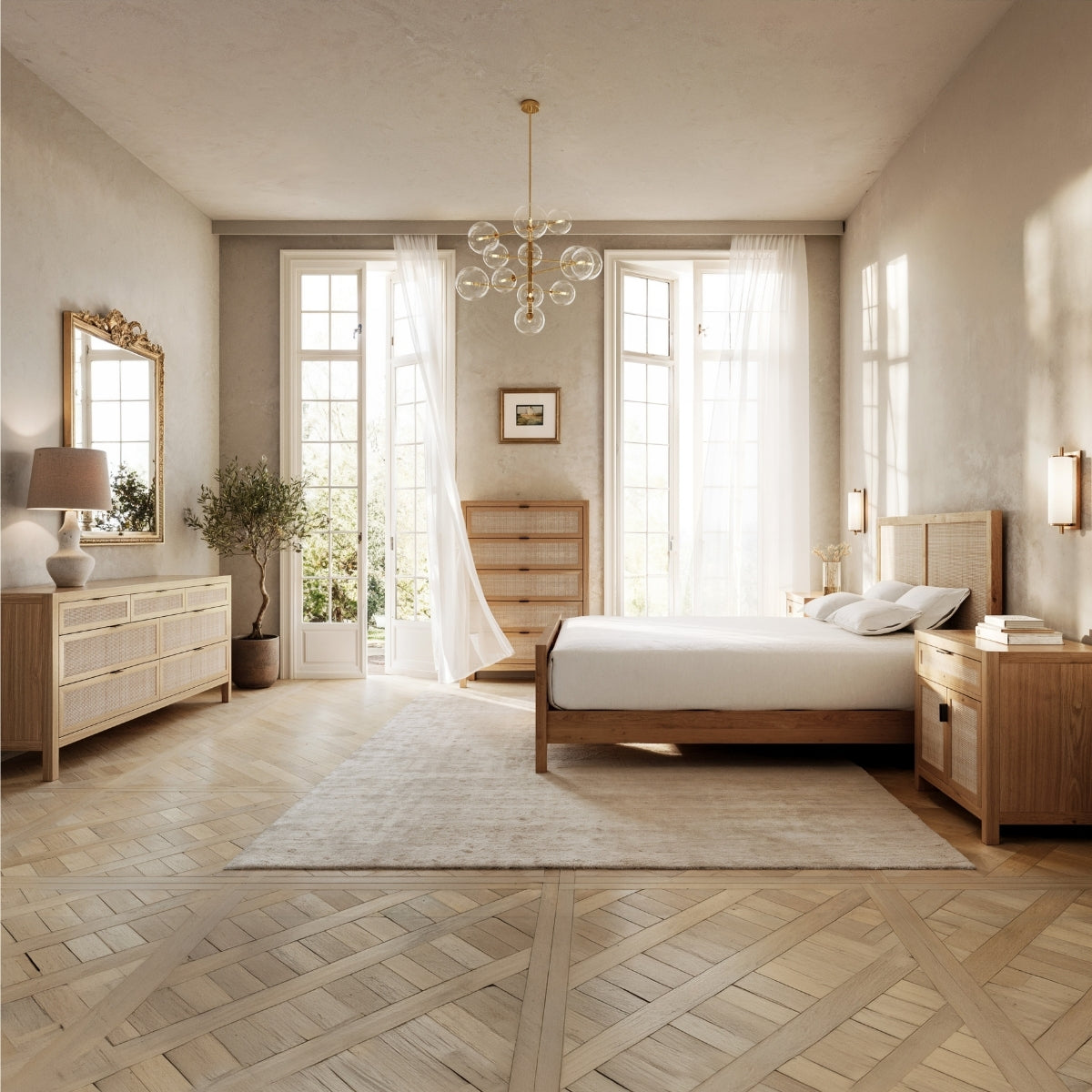
In the bedroom, visual rest can come from clear surfaces, gentle lighting or a softened color palette that mirrors nature. Each of these choices helps limit visual noise, allowing your eyes to rest and your body to follow.
The Connection Between Visual Calm and Better Sleep
The body reacts to what the eyes see. When the space around you feels chaotic, the brain interprets that visual noise as something that needs attention. This response activates the body’s stress system, raising cortisol and heart rate to keep you alert.

Psychology reveals that cluttered, overstimulating spaces can keep cortisol levels high – and that can make falling asleep harder.
Visually calm spaces have the opposite effect. Open surfaces, muted tones and soft lighting signal that it’s safe to relax. These cues help the nervous system shift into a parasympathetic state, the mode responsible for rest and recovery. In this state, breathing slows, tension eases and the body prepares for sleep.
Reducing visual clutter before bed can feel like an eye reset – a quiet signal that the day is done and it’s time to rest. That sense of calm doesn’t disappear in the morning, either. Waking up to a space that feels clear and composed can help your mind start the day grounded instead of overstimulated.
Creating a visually calm space doesn’t mean living without personality or comfort. You can balance it by keeping what adds warmth and removing what adds noise or visual clutter. The result is a room that feels cozy, visually restful and ready to restore you each night.
How to Create Visual Rest in Your Bedroom
A visually restful bedroom starts with intention.

It’s less about following rigid design rules and more about shaping a space that helps you unwind at the end of the day. Each small change can ease the mind, relax the body and make your room feel calmer.
1. Simplify Surfaces
Keep nightstands, dressers and window ledges clear whenever possible – like during your Sunday reset. Choose one or two items per surface, keeping only what’s useful or meaningful in sight. Creating this open space lets your eyes rest and gives your mind a break from visual decision-making.
2. Choose a Calm Palette
Opt for bedroom paint colors and decor colors that echo the natural world. Soft whites, earthy neutrals and gentle greens promote a sense of visual balance and are easy for the eyes to process. These hues are easy for the eyes to process and help create a smoother transition between alertness and rest. GOTS-certified organic fabrics and untreated wood add warmth without distraction, blending form and function in a way that feels both refined and restorative.
3. Let Lighting Work for You, Not Against You
Light affects the way your body prepares for rest. Warm bulbs, soft lamps and diffused daylight help reduce overstimulation and signal to the brain that it’s time to slow down. During the day, natural light helps regulate circadian rhythm, keeping your body alert and sleep cycles consistent. In the evening, lower light levels and warmer tones reinforce the body’s natural cues for winding down. Layered lighting – like bedside lamps or wall sconces – creates a gentle atmosphere that supports both comfort and relaxation.
4. Let Nature Be the Accent
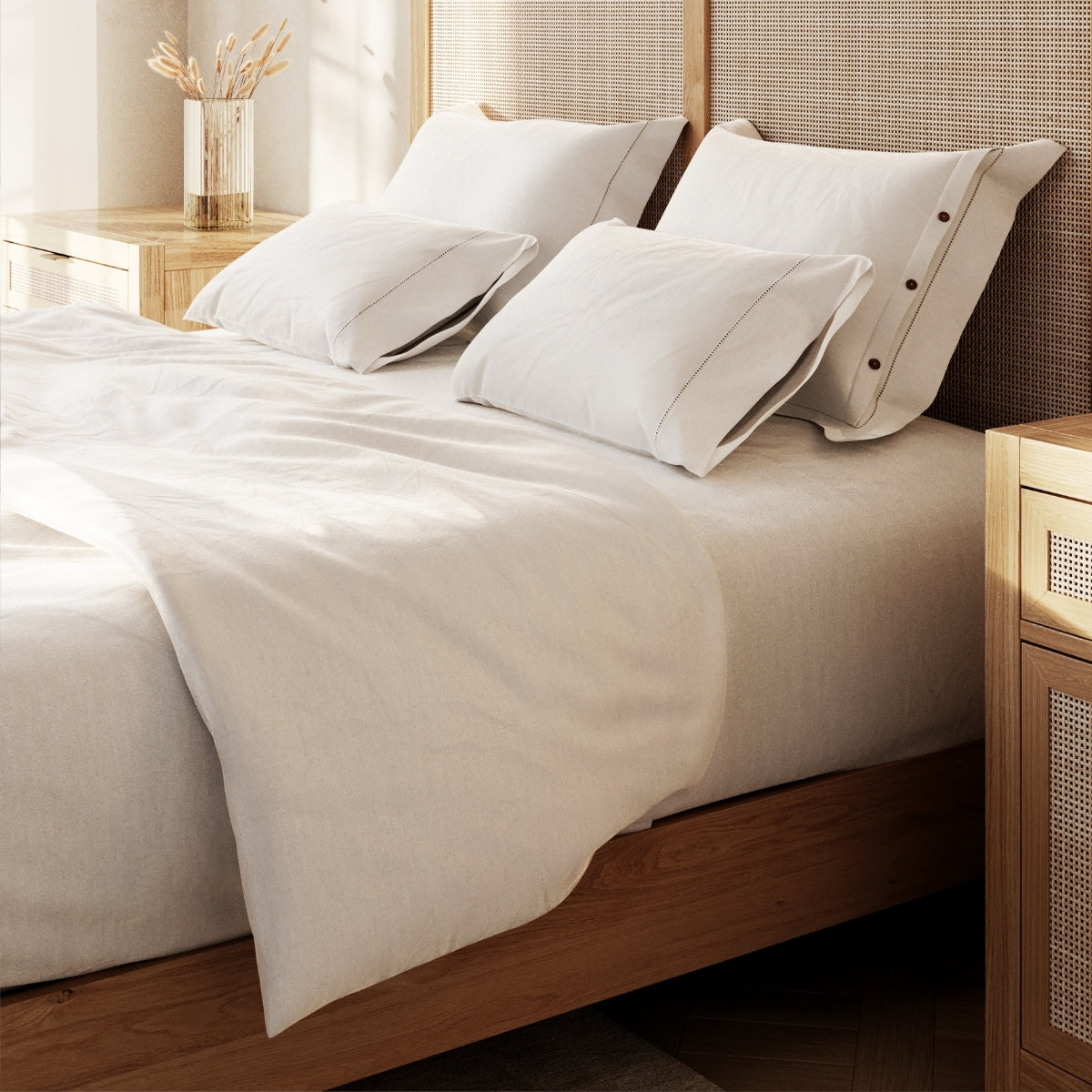
Materials like organic cotton, organic linen and FSC®-certified wood bring visual and sensory balance. A plant, woven basket or textured cotton blanket can add interest without clutter. These natural elements ground the room and engage the senses gently, avoiding the visual noise of synthetics or busy prints.
5. Make Your Bed the Star
Position your bed as the room’s anchor – a principle borrowed from feng shui that reinforces balance and focus. This way your physical space is focused on rest. A supportive mattress and breathable organic bedding can enhance both comfort and the sense of order that visual calm creates.
Signs Your Bedroom Is Too Cluttered
Most people can sense when their eyes and mind are working overtime, even if they can’t name it.

You might notice eye fatigue at the end of the day, trouble focusing or a restless feeling that doesn’t fade once you’re in bed. Sometimes it shows up as irritability or tension that’s hard to explain. These are all signs your senses could use a break.
Visual stress can serve as an everyday signal that your surroundings might be asking too much of your attention. When your bedroom feels busy, your brain probably does too.
Incorporating restful design gives you a chance to recover, especially if your day-to-day outside the bedroom causes you to feel overstimulated. Over time, that visual calm can influence more than your nights. Waking to a space that feels clear and composed can help you start the day grounded and focused.
The Deeper Meaning of Visual Rest
Visual rest extends beyond aesthetics. A calm bedroom environment supports deeper sleep and steadier energy throughout the day. When your space feels peaceful, it gives your mind permission to settle and your body space to recharge.
Designing with visual rest in mind encourages intention. Instead of adding more, it asks what truly belongs. Thoughtful choices in color, texture and light allow your environment to work in harmony with your body’s natural rhythms.
At Naturepedic, we believe rest begins with what surrounds it. A bedroom that feels gentle to the eyes and soothing to the body can become a foundation for better sleep, healthier living and a more balanced home.