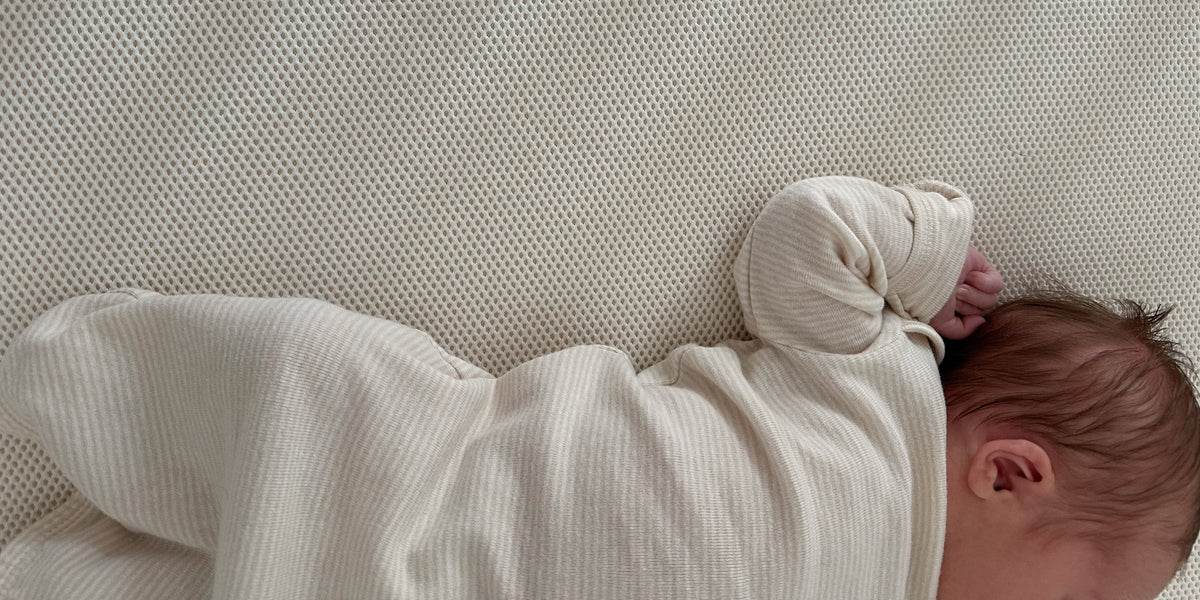


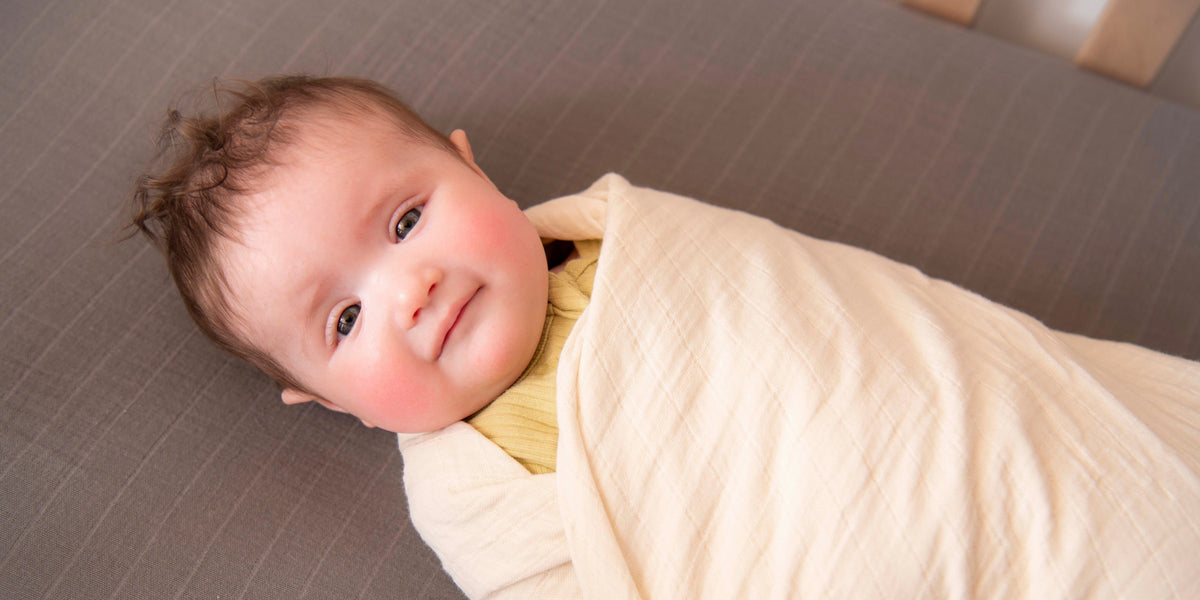
Swaddling is a traditional way of wrapping a baby snugly in a lightweight blanket to help them feel calm and secure. For some newborns, swaddling may also help reduce waking caused by the startle, or Moro, reflex. But knowing how to swaddle a baby safely is just as important as knowing how to wrap one.
From how to swaddle a newborn step by step to when to stop swaddling, what your baby should wear underneath and how to transition out of a swaddle, here’s what parents need to know about swaddling. Plus, once your baby has outgrown swaddling, that versatile blanket can still come in handy around the house and on the go.
Baby Swaddling: Key Points
- Always place a swaddled baby on their back to sleep on a firm, flat sleep surface with no loose bedding, pillows, toys, or other soft objects.
- A swaddle should be snug around the upper body but loose around the hips and legs so your baby can bend and move their legs freely.
- Stop swaddling as soon as your baby shows signs of trying to roll over. Some babies begin working on rolling as early as 2 months old.
- Avoid overheating. Choose lightweight clothing and swaddle materials appropriate for the room temperature, and watch your baby for signs that they are too warm.
- Once swaddling is no longer appropriate, an arms-free wearable blanket or sleep sack can help with the transition without restricting your baby's movement.
Note: This blog may contain links to Naturepedic products and promotional content where relevant to the topic discussed.
What Is Swaddling?
Swaddling means wrapping a baby snugly in a lightweight blanket with their arms secured while leaving enough room for their hips and legs to move. The practice is commonly used during the newborn stage to help babies feel calm and settled.
One reason parents swaddle newborns is the Moro reflex, commonly called the startle reflex. Sudden movements or sounds can cause a newborn to extend their arms and legs involuntarily, sometimes waking them from sleep. A properly fitted swaddle limits arm movement and may help some babies settle after being placed in their sleep space.
Traditional swaddle blankets are generally made from lightweight fabrics such as cotton or muslin. There are also purpose-built swaddles with zippers, snaps, or hook-and-loop closures. Whichever style you use, proper fit and safe sleep practices are essential.
Why Do People Swaddle Babies?
Parents swaddle babies primarily to provide a snug, comforting environment and help manage the newborn startle reflex. Some babies find the gentle pressure calming, particularly during the first weeks of life.

Swaddling can also become part of a consistent sleep routine. Wrapping your baby before placing them in their crib or bassinet can serve as one of several familiar cues that it is time to settle down for sleep.
However, babies do not have to be swaddled. Some newborns enjoy being wrapped snugly, while others prefer having their arms free. If your baby sleeps comfortably without a swaddle, there is no need to introduce one simply because swaddling is common.
How to Swaddle a Baby Step by Step
To swaddle a baby with a traditional blanket, create a snug wrap around the upper body while leaving plenty of room for the hips and legs to bend and move. The American Academy of Pediatrics (AAP) recommends making sure the swaddle is not too tight, particularly around your baby's hips.
- Spread out the swaddle blanket. Place a lightweight blanket on a flat surface in a diamond shape, then fold the top corner down to create a straight edge.
- Place your baby on their back. Position your baby's shoulders along the folded edge, keeping their head and neck completely uncovered.
- Wrap the first side. Gently straighten one arm alongside your baby's body. Bring that side of the blanket across the chest and tuck it securely underneath the opposite side of the body.
- Fold the bottom upward. Bring the bottom corner of the blanket up, leaving enough space for your baby's hips and knees to bend naturally.
- Wrap the other side. Gently position the other arm alongside your baby's body, bring the remaining corner across the chest, and tuck it securely behind your baby.
- Check the fit. The swaddle should be secure enough that it will not come loose, but it should not tightly restrict the chest, hips, or legs. Your baby's head and neck should always remain uncovered.
Once swaddled, always place your baby flat on their back in their own safe sleep space. Never place a swaddled baby on their stomach or side to sleep.
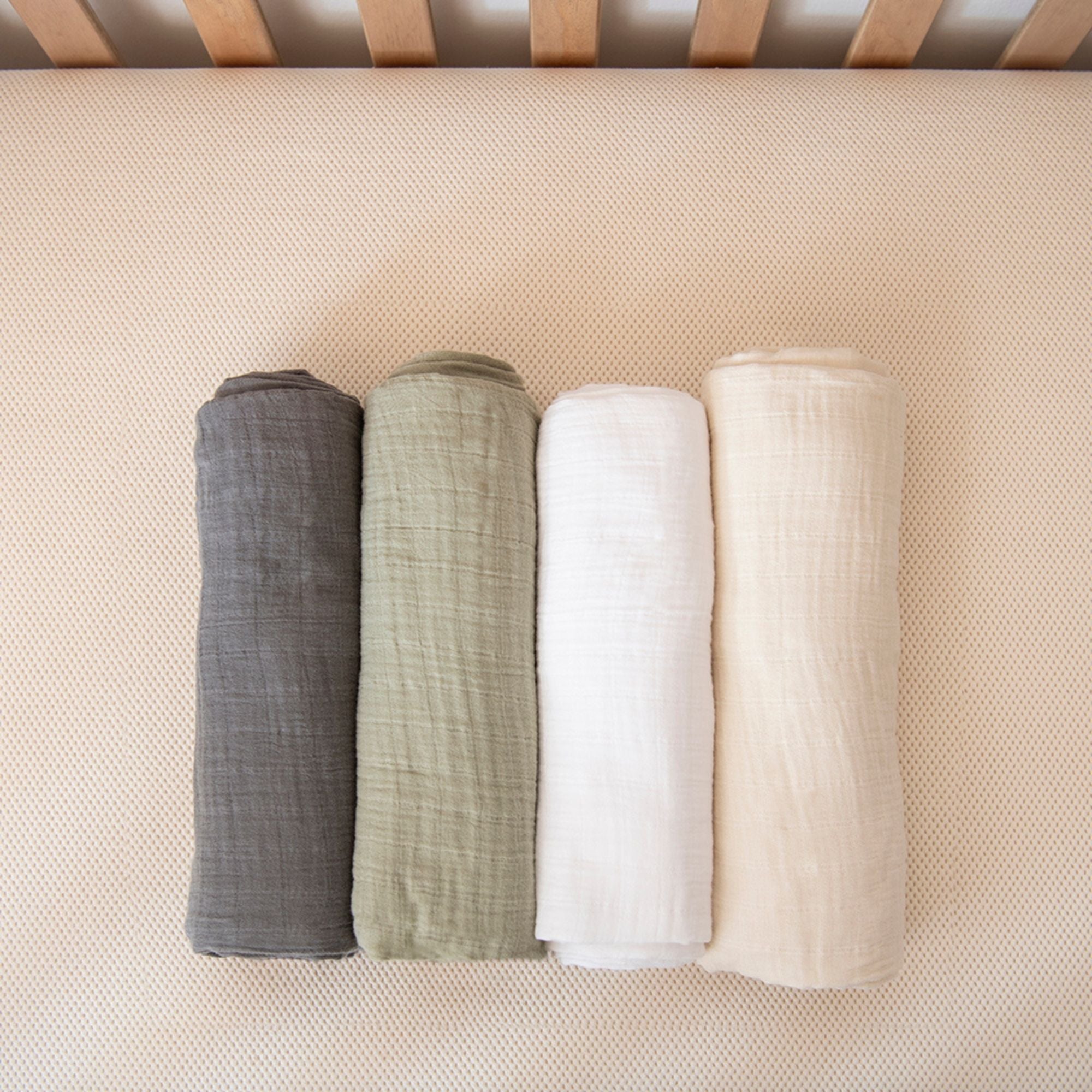
A lightweight blanket such as an Organic Muslin Swaddle Blanket can make folding and wrapping easier while helping you avoid unnecessarily heavy layers.
Is Swaddling Safe?
Swaddling can be used safely when parents follow appropriate safe sleep and hip-positioning practices. The most important rules are to put a swaddled baby to sleep on their back, keep loose bedding out of the sleep space, avoid overheating, allow the hips and legs to move freely, and stop swaddling when the baby shows signs of attempting to roll.

The AAP's swaddling guidance emphasizes that swaddling does not reduce the risk of sudden infant death syndrome (SIDS). A swaddled baby should always be placed on their back to sleep. Once a baby shows signs of trying to roll over, swaddling should stop because a baby who rolls onto their stomach while swaddled may have difficulty returning to a safe position.
Swaddling should also allow healthy hip movement. According to the International Hip Dysplasia Institute, a baby's legs should be able to bend up and out at the hips rather than being tightly wrapped straight together.
Finally, make sure the blanket cannot become loose and cover your baby's face. Your baby's head and neck should remain uncovered, and the swaddle should stay below the shoulders. For more information about creating a safer sleep environment, read our guide to crib mattress safety.
When Should You Stop Swaddling a Baby?
You should stop swaddling as soon as your baby shows signs of trying to roll over. According to the AAP, some babies begin working on rolling as early as 2 months old, so parents should watch for developmental signs rather than waiting for a particular age.
Signs that your baby may be preparing to roll can include increased twisting or rocking and attempts to move from their back toward their side. Once these behaviors begin, an arms-restricted swaddle is no longer appropriate for sleep.
Breaking out of a swaddle on its own is not the primary developmental milestone that determines when swaddling should end. The ability or attempt to roll is the important safety signal.
How Do You Transition Out of a Swaddle?
To transition out of swaddling, move your baby to sleepwear that leaves their arms free so they can use their hands and arms if they roll. An appropriately sized wearable blanket or sleep sack is one option.
Some families gradually transition by allowing one or both arms out before moving away from the swaddle completely. However, once your baby shows signs of attempting to roll, their arms should no longer be restricted during sleep.
Other parts of your baby's bedtime routine can stay the same during the transition. A familiar sequence such as feeding, changing, dimming the lights, and placing your baby in their crib can continue providing predictable sleep cues even after the swaddle is gone.
What Should a Baby Wear Under a Swaddle?
What a baby wears under a swaddle depends on the room temperature and the weight of the swaddle material. In a comfortably heated or cooled room, lightweight sleepwear paired with a lightweight swaddle may be enough. Avoid adding unnecessary layers that could cause your baby to become too warm.
The AAP recommends watching for signs of overheating such as sweating, a hot chest, or flushed skin. As a general safe sleep practice, your baby's head should also remain uncovered indoors.
During warmer weather, lightweight materials can help you avoid excessive layering. Our guide to keeping baby cool in summer covers additional ways to help maintain a comfortable sleep environment.
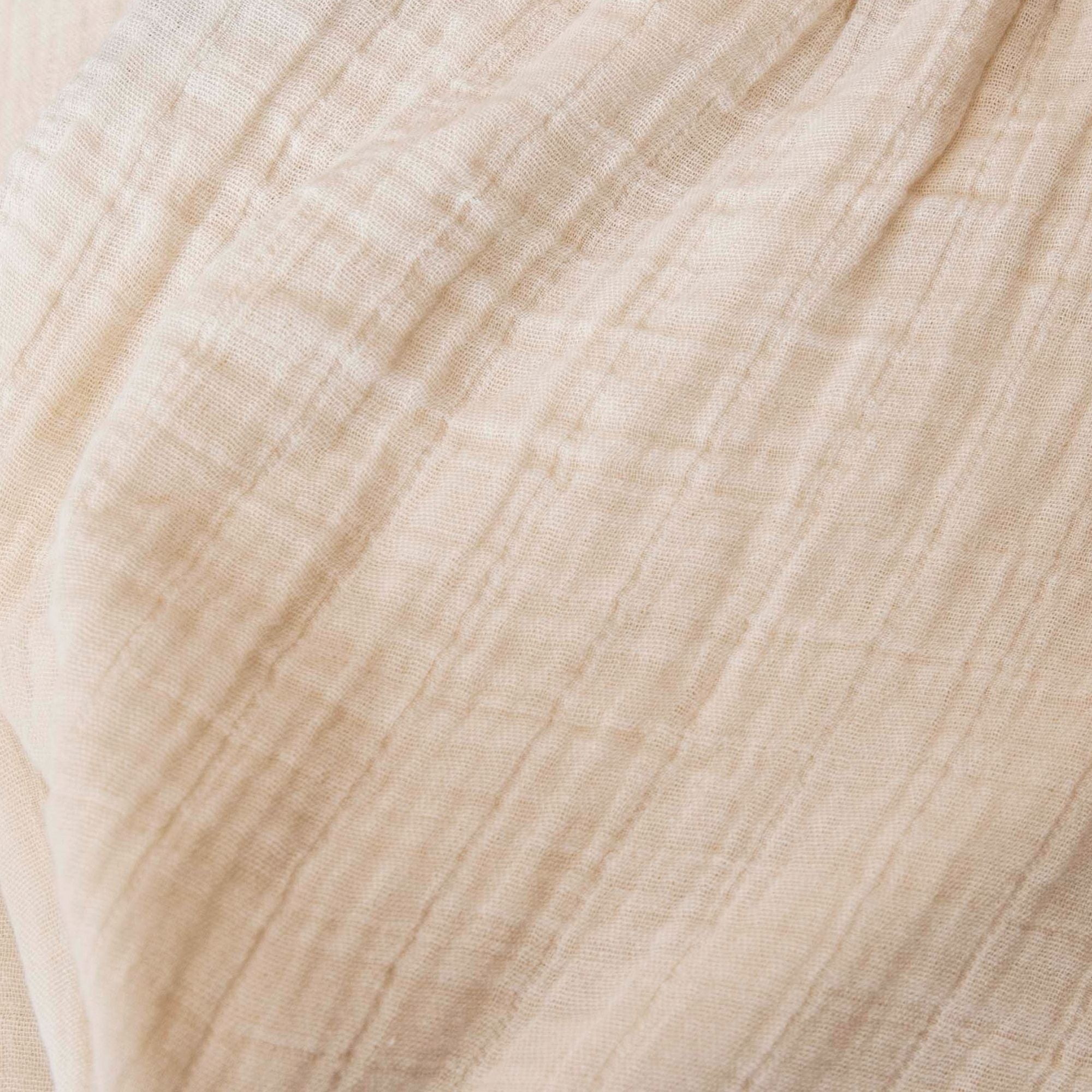
Our Organic Muslin Swaddle Blankets are made with lightweight, GOTS certified organic cotton muslin for an airy, versatile layer.
Other Ways to Use a Baby Swaddle Blanket
Once your baby is no longer being swaddled, the blanket does not have to disappear from your diaper bag.

Swaddle blankets can be repurposed for plenty of everyday baby tasks.
1. Make a Portable Play Mat
Lay a swaddle blanket on the floor to create a clean surface for supervised play, particularly when you're visiting friends or family or spending time away from home.
2. Cover a Changing Pad
A swaddle can serve as a soft, washable layer over a changing surface. Pairing one with a waterproof changing pad can make cleanup easier.
3. Keep One Handy as a Burp Cloth
The generous size of a cotton swaddle blanket makes it useful for protecting your clothes during burping or cleaning up the inevitable spills and spit-up that come with life with a baby.
4. Use It During Feeding
A lightweight swaddle can come in handy during feeding as a cleanup cloth or an extra layer to catch drips and spit-up. If you choose to use one as a nursing cover, make sure your baby's face remains visible and that they have plenty of airflow.
5. Create a Simple Photo Backdrop
Spread out a swaddle blanket for a simple background for milestone or newborn photos. Always supervise your baby and use a safe, stable surface.
6. Pack It as an Everyday Cleanup Cloth
From spills to unexpected messes, a washable cotton swaddle can double as an emergency towel when you're away from home.
A good swaddle blanket can remain useful long after your baby has outgrown swaddling. At Naturepedic, our Organic Muslin Swaddle Blankets come in a convenient four-color pack and are made with lightweight, GOTS certified organic cotton. Use them for swaddling during the newborn stage, then keep them within reach for playtime, feeding, cleanup, and all the little moments in between.
Swaddling can be a comforting part of the newborn stage, but safe technique matters. Keep the wrap secure around the upper body without restricting the hips and legs, always place your baby on their back to sleep, monitor their temperature, and stop swaddling as soon as they begin showing signs of trying to roll.
Have feedback on our story? Contact us to let us know what you think or visit our about us page to learn more!