
THE SNUGGLE TEST
A Hazard-Based Guide to Safer Baby Blankets & Stuffed Animals
What the Research Found
DEFINITION:
What Is a Hazard-Based Evaluation? “A hazard-based evaluation screens a product’s materials for chemicals with known or suspected hazards, like carcinogens, endocrine disruptors, and ‘forever chemicals,’ and avoids them at the source instead of estimating how much exposure is acceptable.”
-Amy Ziff, President, MADEWORKS Intelligence
What’s Hiding in Your Child’s Stuffed Animals and Blankets?
Often, more than the label lets on. MADEWORKS reviewed some of today’s top-selling baby and toddler blankets and stuffed animals, and the biggest concerns weren’t the base fabrics. They were the extras: electronic modules, plastic pellet fill, embedded magnets, synthetic plush with undisclosed finishes, and missing material details. None of the stuffed animals reviewed would qualify as best-in-class under MADE SAFE screening. The simplest construction of the bunch? A 100% cotton swaddle.

Why Babies Are More Vulnerable to These Chemicals Than Adults
Relative to their size, babies breathe more air and swallow more household dust than adults. Their developing bodies are also more sensitive to chemical exposure during this window. Add constant mouthing and hours of face-to-fabric contact, and the items they cuddle most become their closest exposures.
How Chemicals in Soft Goods Actually Reach Your Child
Chemicals in blankets and stuffed animals can reach a child in three main ways: ingestion, skin contact, and inhalation. Babies mouth their comfort items and pick up dust and residues on their tiny hands. Long stretches of cuddling keep fabric pressed against delicate skin. And because babies breathe about twice as much air as adults for their size, they can also inhale shed fibers and low-level emissions from synthetic materials.

6 Chemicals of Concern in Baby Blankets and Stuffed Animals
The six chemical classes most likely to show up in baby soft goods are PFAS, phthalates, flame retardants, formaldehyde, antimicrobials, and azo dyes and optical brighteners.
Q: What are PFAS, and why are they in baby blankets?
A: PFAS are “forever chemicals” that make fabric repel water and stains. Some manufacturers add them to baby blankets so they can be marketed as “stain resistant” or “easy clean,” even though a washable comfort item rarely needs that kind of finish.
PFAS break down extremely slowly, and the strongest evidence links some of them to lower vaccine antibody response and higher cholesterol. They can be hard to spot, too: one peer-reviewed study found that labels didn’t reliably flag PFAS in children’s products. Claims like “stain resistant” or “water repellent” are your best clue.
Q: What are phthalates, and why are they in stuffed animals?
A: Phthalates are chemicals that make plastic soft and flexible. They’re used in stuffed animals to soften parts like hard eyes and noses, vinyl trim, and coated prints, so those parts bend instead of crack. They can be found in any plastic product details.
Phthalates are widely recognized as endocrine disruptors, meaning they can interfere with the body’s hormones. Federal law restricts eight of them in the plastic parts of children’s toys and care products. Choosing stuffed animals with embroidered features and uncoated fabric keeps plastic, and the phthalates that come with it, out of the picture.
Flame Retardants
Flame retardants are chemicals added to materials to slow ignition. In soft goods, they’re most often tied to foam fills and foam-structured plush, and some are known or suspected endocrine disruptors. According to the National Institute of Environmental Health Sciences, they can migrate from products into household dust and have been associated with effects on children’s cognitive and behavioral development.
Formaldehyde
Formaldehyde-based resins are used to make fabric wrinkle resistant and help it hold its shape. Formaldehyde can irritate the skin, eyes, and airways. It’s also classified as a known human carcinogen based on inhaled, workplace-level exposure. For baby blankets, the easiest way to avoid it is to skip anything labeled “wrinkle resistant” or “no-iron.”
Antimicrobials
Antimicrobial treatments are biocides added to fabric to control odor and bacteria, including silver, quaternary ammonium compounds (QACs), and triclosan. Some have been linked to hormone disruption, and some may contribute to antimicrobial resistance. MADEWORKS notes these treatments rarely offer a real benefit on a blanket or stuffed animal that can simply be washed.
Azo Dyes & Optical Brighteners
Azo dyes are common textile dyes that can, under certain conditions, break down into aromatic amines, a group that includes several known carcinogens. The EU restricts azo dyes that can release any of 22 listed amines in textiles meant for prolonged skin contact, but the U.S. has no comparable federal rule. Optical brighteners, which give fabric an “extra white” look, are associated with skin sensitization.

What the Label Doesn’t Say: Performance Claims = Chemistry Clues
Most baby product labels list the fiber, not the chemistry. A claim like “stain resistant” is often the only sign that a chemical treatment was applied.
DEFINITION:
What Are “Chemistry Clues” on a Baby Product Label? Chemistry clues are performance claims like “stain resistant,” “antimicrobial,” or “wrinkle resistant” that signal a chemical treatment was applied, without telling you which chemical, how much, or whether it was tested for infant use.
-Source: MADEWORKS Intelligence, 2026
A tag might say “100% polyester” without mentioning the dyes, finishes, fill additives, or adhesives that went into the product. Some clues, like a foam-filled body or hard plastic eyes, don’t appear on the label at all. Use the table below to know what to ask. If a brand can’t answer, choose a simpler item that doesn’t need these treatments.
| Claim on the Tag | What It Can Signal | What to Ask the Brand |
|---|---|---|
| “Stain resistant,” “water repellent,” “waterproof,” “easy clean” | PFAS-based finish | Is the finish made without detectable PFAS, and is that confirmed by third-party testing? |
| “Antimicrobial,” “anti-odor,” “odor control” | Biocides like silver, quaternary ammonium compounds (QACs), or triclosan | Which antimicrobial agent was used, and why is it needed on a washable item? |
| “Wrinkle resistant,” “no-iron,” “easy care” | Formaldehyde-based resin finish | Is the fabric treated with formaldehyde-based resins? |
| Extra-vibrant colors, “extra white” | Azo dyes or optical brighteners | Which dyes are used, and are they made without restricted azo dyes? |
| Foam-filled or foam-structured plush (no label claim) | Possible flame retardants in the foam | Does the foam or fill contain any added flame retardants? |
| Plastic eyes/noses, vinyl trim, coated prints (no label claim) | Phthalates or PVC | Are any plastic or coated parts made with phthalates or PVC/vinyl? |
What the Law Covers and Where It Falls Short
Q: Does legal mean safe for snuggle toys and blankets?
A: Not always. U.S. rules limit certain phthalates and lead in children’s products, but there’s no federal limit on PFAS, flame retardants, formaldehyde, or dyes in baby blankets and stuffed animals. A product can meet every legal requirement and still contain chemicals you’d rather keep away from your baby.
Under the Consumer Product Safety Improvement Act (CPSIA), federal law restricts eight phthalates in the plastic parts of children’s toys, including stuffed animals, and limits lead. The toy safety standard, ASTM F963, focuses mainly on physical hazards like small parts. But no federal law limits PFAS, flame retardants, formaldehyde, or dyes in baby blankets or plush fabric, though a growing number of states now regulate PFAS.

Best, Better, and Avoid: How to Shop for Safer Snuggle Items
You won’t always have time to quiz a brand about its finishes, and that’s where certifications help. The Global Organic Textile Standard (GOTS) verifies organic integrity from farm to finished product, with strict limits on the dyes and chemical treatments used along the way. MADE SAFE goes ingredient by ingredient, screening every material against more than 15,000 substances known or suspected to harm human health or the environment. When you see both, much of the guesswork is already done for you.
MADEWORKS took a hazard-based look at the materials, finishes, and features most common in baby blankets and stuffed animals, and ranked each one by how much chemical concern it carries. Use this chart as a quick reference when you shop.
A Hazard-Based Look at Snuggle Materials
| Best | Better | Avoid | |
|---|---|---|---|
| Fabric & Fill | GOTS-certified organic cotton fabric & fill | Conventional cotton, wool, or linen, plain polyester or nylon with disclosure testing | Undocumented “bamboo” viscose/rayon, foam-filled inserts, plastic pellet fill |
| Finishes | No stain-resistant, water-repellent, or wrinkle-resistant finishes | No performance finishes or antimicrobial claims | Stain- or water-resistant (often PFAS), antimicrobial, or wrinkle-resistant/no-iron finishes |
| Features & Add-Ons | Embroidered eyes and details, minimal add-ons | Simple construction | Hard plastic eyes or noses, vinyl/PVC coatings or coated prints |
| Certifications | GOTS or MADE SAFE | OEKO-TEX STANDARD 100, Product Class I* | None/unclear material disclosures |
*OEKO-TEX Product Class I is the program’s strictest class, for items made for babies and toddlers up to age 3. Every component is tested for a list of harmful substances.
What “Best” Looks Like
MADEWORKS defines “best” as an item made with GOTS-certified organic cotton, no polyester fill, no plastic eyes or noses, and no stain-resistant, antimicrobial, or wrinkle-resistant finishes. That’s exactly how we make our nontoxic stuffed animals, the first stuffed animals to earn MADE SAFE Certification with organic cotton fabric and fill, plus embroidered details instead of plastic pieces. Our organic swaddle blankets and organic baby blanket are woven from GOTS-certified organic cotton, and all three are MADE SAFE Certified.

The Environmental Side: Microfiber Pollution & Forever Chemicals
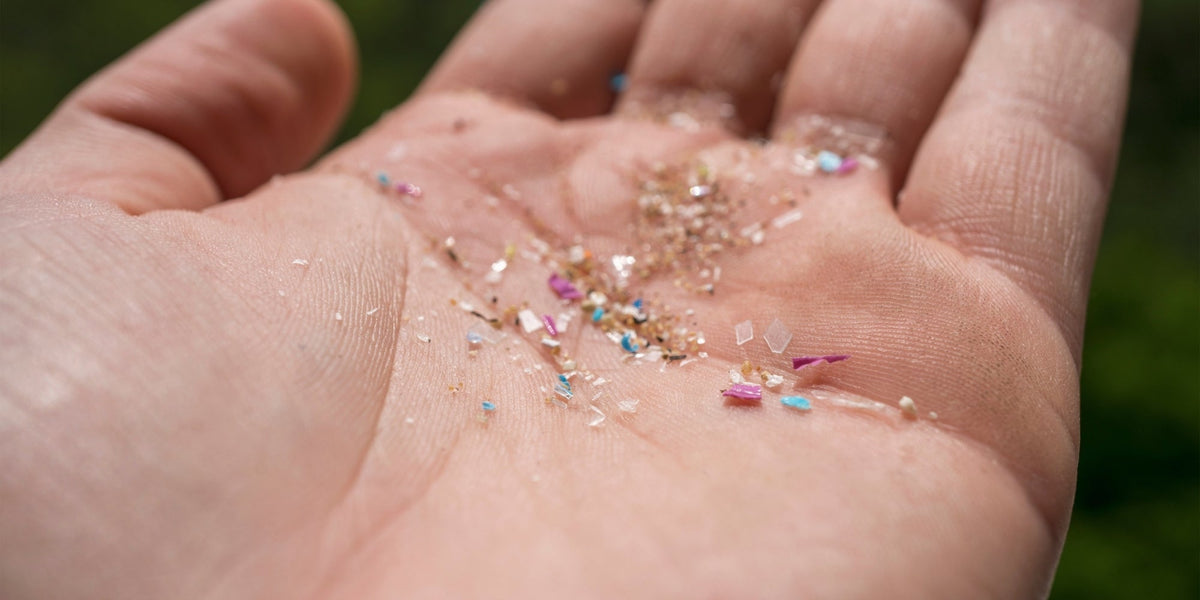
Synthetic fabrics like polyester fleece and minky plush shed tiny plastic fibers every time they’re washed, and many of those fibers end up in rivers and oceans. In one study, a single 6 kg load of polyester fabric released nearly 500,000 microfibers. PFAS finishes break down slowly in the environment, too, and a comfort item has no real need for them. Choosing natural fibers and buying fewer, longer-lasting pieces helps on both fronts.

What to Do With the Snuggle Items You Already Have
You don’t need to toss a favorite lovey. If it’s still fairly new or has a strong “new” smell, give it a wash before your child uses it again. Skip fabric fresheners and antimicrobial or waterproofing sprays on anything your child mouths or snuggles. Wash and rotate comfort items regularly, especially ones that go to daycare or ride along in the stroller, and check seams and trims for wear.
For babies under 12 months, the CDC recommends keeping blankets, stuffed animals, and other soft items out of the sleep space.
Our organic stuffed animals, muslin swaddle blankets, and waffle baby blankets are made with GOTS-certified organic cotton and MADE SAFE Certified. They’re an easy pick for the cuddles and playtime or as nontoxic baby gifts.
Want the full picture? Read the complete MADEWORKS white paper for the research, sources, and shopping framework behind this guide.
FAQs
Research Methodology
About MADEWORKS Intelligence