
Shopping for your baby's crib mattress is an exciting step, but it can also come with a lot of questions. With so many materials, certifications and safety features to consider, it’s easy to feel overwhelmed by unfamiliar terminology. That’s why we’ve created this simple crib mattress glossary to help decode the language and empower you to make informed choices for your growing family.
At Naturepedic, we believe that safer, healthier sleep starts with knowledge – and we're here to make that part easy.
The Basics: Parts of a Crib Mattress
Before diving into specific shopping terms, it helps to understand the basic components that make up a crib mattress. Here's a diagram to help you.

Wondering what's what? Here are some quick definitions, too:
- Core: The core is the heart of the mattress that provides essential support. It may be made of an innerspring system or a lightweight, supportive material such as food-grade polyethylene.
- Support Layer: This layer adds stability and firmness – both critical for your baby’s safety and physical development. A properly supportive mattress helps reduce suffocation risks while providing a comfortable surface.
- Batting: Batting is a cushioned filling layer placed between the core and the surface for extra comfort, without compromising the firmness that infants need.
- Surface: The mattress surface is where your little one actually sleeps. It should be smooth, firm and waterproof to support both physical safety and hygienic protection.
- Seams/Edges: The areas where the mattress comes together are called seams or edges. Reinforced edges help maintain the mattress's shape over time and provide additional support as your child grows.
- Cover: The cover is the outermost layer of the mattress, which may be waterproof, breathable or both. High-quality covers help keep the mattress clean, dry and safe.
That's your crib mattress, layer by layer! Turns out there's a lot going on under the crib sheet, right?
Crib Mattress Shopping Terms from A to Zzz
Once you’re familiar with the basic anatomy of a crib mattress, you’ll notice plenty of terms describing materials, safety features and certifications. Here’s your go-to guide to understanding them.
Quick Glossary Index:
Looking for a specific term? Jump directly to any section below to find exactly what you need!
Construction and Materials Terms
When it comes to what’s inside a crib mattress, not all materials are created equal. From breathability to waterproofing, these key terms will help you understand how construction impacts comfort, safety and durability.

Breathable: How easily air can flow through a mattress surface or core. This feature helps your little one breathe more easily – even if they happen to roll onto their tummy during sleep – and also promotes better temperature regulation. By reducing the risk of overheating, a breathable design supports safer, more comfortable sleep.
Dual-Stage: A dual-stage crib mattress offers two different firmness levels: a firm side for infants and a quilted side for toddlers. You’ll use the firmer side for the first 12 months, then flip it over as your child grows. It’s a practical, long-lasting option that transitions with your baby – essentially two mattresses in one.
Food Grade: Materials considered safe for direct food contact, meaning they’re held to strict safety standards to minimize chemical exposure. In crib mattresses, food-grade waterproofing – like the polyethylene used in Naturepedic designs – helps create a safer, cleaner sleep environment by resisting leaks without introducing unwanted chemicals.
GMOs (Genetically Modified Organisms): Often used in conventional cotton farming, genetically modified organisms are organisms whose genetic material has been altered using biotechnology.
Innerspring Core: Steel coils surrounded by supportive padding to create a durable, firm sleep surface. While this traditional option offers excellent longevity, these mattresses tend to be heavier than lightweight alternatives, which can make changing crib sheets a bit more challenging – especially in those early, sleep-deprived months.
Lightweight Core: Typically weighs under 15 pounds, making sheet changes and mattress cleanups much more manageable for busy, exhausted parents. With the right materials, a lightweight mattress can provide the same safety and firmness as heavier options, without the back strain.
Off-Gassing: The release of chemical odors from synthetic materials, especially memory foam and conventional adhesives. While some off-gassing is harmless, others may affect air quality.
Organic Cotton: Grown without synthetic pesticides, herbicides or GMOs. GOTS-certified organic cotton also ensures socially responsible manufacturing.
Reinforced Edges: Added support around the perimeter of the mattress to help prevent sagging and maintain proper shape as your child grows. This extra stability is especially helpful when your little one starts standing or bouncing in the crib, keeping them safely supported – even when they migrate toward the sides.
Seamless Waterproofing: An integrated barrier that protects the mattress core from moisture without relying on stitched seams or separate covers. This design helps prevent liquid from seeping in, reducing the risk of mold, bacteria and allergens building up inside the mattress where they can’t be seen.
Sizing and Fit Terms
Choosing the right size and ensuring a proper fit are just as important as selecting the right materials. The following terms help explain how crib mattresses align with different crib types and safety guidelines.

Bassinet Mattress: A smaller sleep surface designed for newborns, typically used up until 4 to 6 months of age. There’s no universal size for bassinets – they can be oval, rectangular or custom-shaped depending on the brand. These compact mattresses create a cozy, enclosed sleep space for your baby’s earliest months.
Mini Crib Mattress: A miniature crib mattress, often measuring around 24" x 38", perfect for smaller living spaces like apartments or shared bedrooms. It offers a space-saving solution without compromising on safety or comfort.
Organic Crib Mattress: A crib mattress made with certified organic materials like organic cotton. These mattresses are also produced in certified facilities and avoid toxic chemical treatments.
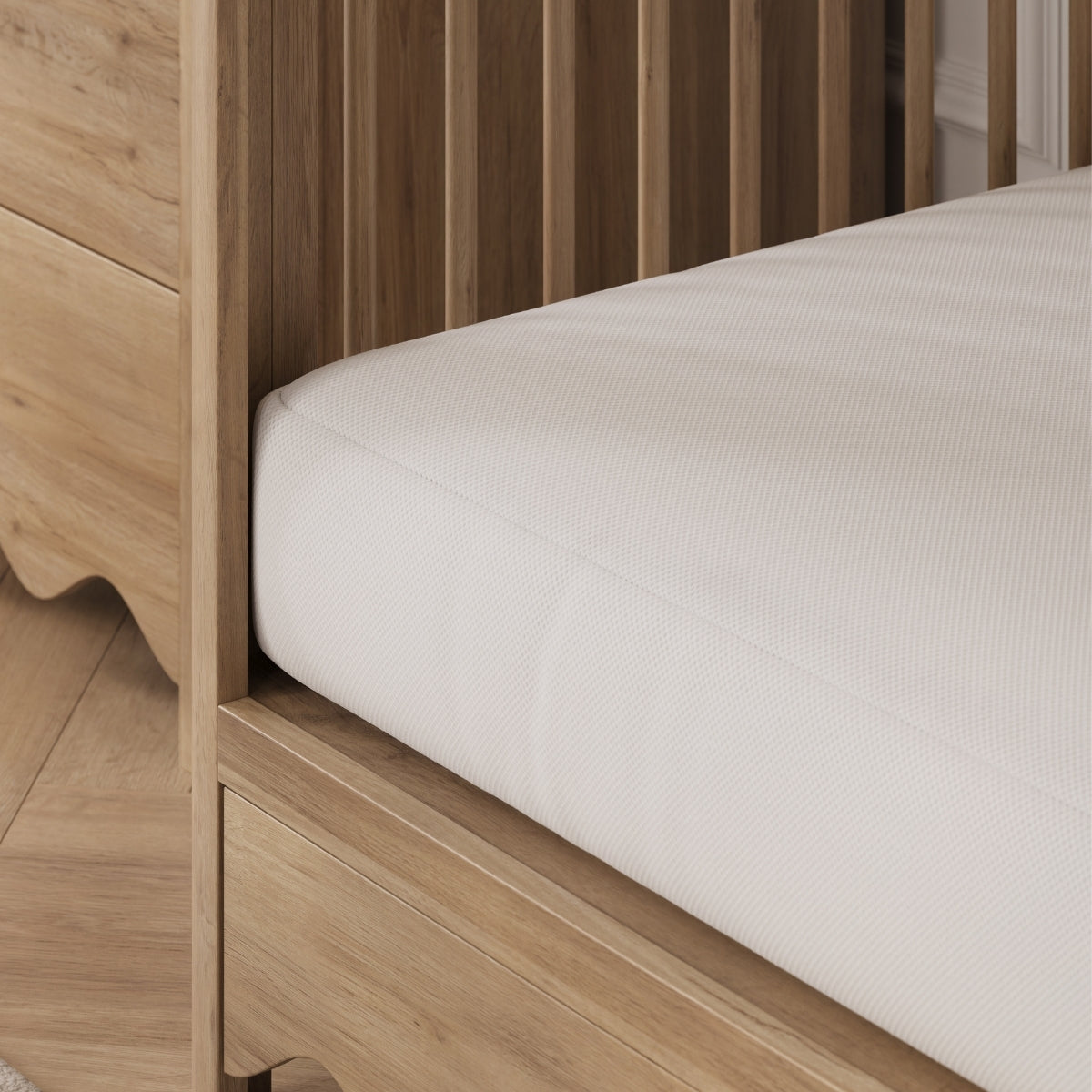
Snug Fit: To meet infant safe sleep standards, there should be no more than a 1-inch gap between the mattress and the crib frame. This tight fit helps prevent little arms, legs or heads from getting trapped in dangerous spaces during sleep.
Standard Crib Mattress: Designed to fit full-size cribs, measuring approximately 27.25 inches by 51.63 inches. To help prevent climbing injuries, these mattresses must be no more than 6 inches thick. This widely accepted size ensures compatibility with most cribs and toddler bed frames, making it a long-lasting choice.
Toddler Bed: A transitional sleep space designed for children roughly 15 months to 5 years old, using the same mattress from their crib. Toddler beds sit low to the ground for easy access and to reduce the risk of falls, helping your little one feel safe and secure as they grow.
Two-Finger Test: A simple, quick way to check if your crib mattress fits properly. If you can fit more than two adult fingers between the mattress edge and the crib frame, the mattress is too small and could pose a safety risk. This basic check ensures a snug, secure sleep environment for your baby.
Health and Safety Terms
Nothing matters more than your baby’s safety. These terms highlight health considerations and potential risks to be aware of when selecting a crib mattress.

Crib Mattress Allergens: Certain materials used in crib mattresses, such as natural latex, wool, coir or soy-based foams, that can trigger allergies or sensitivities in some babies.
Firmness Test: A quick way to check if your crib mattress is firm enough for your baby. Press your hand into the mattress – it should feel noticeably firmer than your own bed and shouldn’t compress more than half an inch.
Flame Retardants: Chemicals that many traditional mattresses use in order to meet flammability regulations that can raise health concerns.
Formaldehyde: A carcinogenic chemical sometimes found in adhesives, glues or finishes used in conventional crib mattresses. Exposure to formaldehyde can irritate sensitive airways and skin, leading to discomfort for little ones.
Phthalates: Chemicals used to soften plastics and are found in some waterproof mattress covers or materials. Phthalate chemicals have been associated with health concerns including asthma and hormone disruption.
Polyurethane Foam: A common material in many crib mattresses that can release volatile organic compounds (VOCs) and may contain other concerning chemicals.
SIDS: Sudden Infant Death Syndrome, the unexplained passing of an otherwise healthy baby during sleep. While its exact causes remain unknown, research suggests that using a firm mattress and avoiding soft bedding can help reduce risk.
VOCs: Volatile organic compounds, airborne chemicals released from certain materials that contribute to indoor air pollution. Many conventional mattresses emit VOCs, particularly when new.
Certifications and Standards
Certifications and safety standards offer extra peace of mind by ensuring that the mattress you choose meets rigorous requirements for chemical safety, air quality and overall product safety. Here’s what to look for.

1% for the Planet®: A global movement of businesses that donate 1% of annual sales to environmental causes.
AAP Recommendations: The American Academy of Pediatrics (AAP) provides trusted guidelines to help parents create the safest possible sleep environment for babies. These recommendations include always placing your baby on their back to sleep, using a firm mattress and keeping the crib free of soft bedding, pillows or stuffed animals to help reduce the risk of Sudden Infant Death Syndrome (SIDS).
CPSC Guidelines: The U.S. Consumer Product Safety Commission (CPSC) sets mandatory safety standards for all crib mattresses sold in the United States. These guidelines cover mattress size, firmness and fit to ensure that products help reduce the risk of injury or suffocation.
EWG Verified: The Environmental Working Group (EWG) developed its Verified certification to highlight products made without harmful chemicals linked to health concerns. EWG Verified products avoid ingredients such as flame retardants, phthalates, formaldehyde and unnecessary VOCs.
GOTS (Global Organic Textile Standard): The leading certification for organic textiles like cotton and wool. GOTS covers everything from farming to manufacturing to ensure the materials are truly organic and produced responsibly.
Juvenile Products Manufacturers Association (JPMA): The Juvenile Products Manufacturers Association (JPMA) represents companies dedicated to producing safer, high-quality products for babies and children. Many JPMA members, including Naturepedic, participate in independent product testing and safety certification programs to help ensure that items meet rigorous safety standards.
MADE SAFE®: This certification evaluates materials for known or suspected toxins and bans thousands of harmful substances. It’s one of the most rigorous standards for safer products.
Parenting Is Hard. Crib Mattress Shopping Doesn’t Have To Be.
We know there are plenty of decisions to make when you’re preparing for a new baby, and it’s easy to get overwhelmed by all the options. But choosing a crib mattress doesn’t have to be stressful. By understanding the language and knowing what matters most, you can shop with confidence, knowing you’re creating a safer, healthier sleep space for your little one.
At Naturepedic, we’re honored to be part of your parenting journey – because every baby deserves a cleaner, safer start.