



It happens more often than most of us admit. You meant to head to bed after just one episode. Or maybe you were waiting for the dryer to finish running. Or you were jussst resting your eyes after a long bedtime battle with a toddler who won’t sleep.
Next thing you know, it’s 2:17 AM and you’re waking up on the couch with a stiff neck and a sweaty throw pillow under your shoulder.
If you’re a couch sleeper, you’re not alone. Many adults regularly find themselves sleeping on the couch, whether it’s accidental, situational, or simply because they feel like they sleep better there.
TL;DR: How to Make Sleeping on a Couch Comfier
- Use an adjustable pillow
- Layer a breathable flat sheet under you
- Keep a lightweight blanket nearby
- Add a compact pillow for lumbar support
But is it bad to sleep on the couch? And if it keeps happening, what does it actually mean for your sleep quality? Let’s break it down.
Note: This blog may contain links to Naturepedic products and promotional content where relevant to the topic discussed.
TL;DR: How to Make Sleeping on a Couch Comfier
- Use an adjustable pillow
- Layer a breathable flat sheet under you
- Keep a lightweight blanket nearby
- Add a compact pillow for lumbar support
Is Sleeping on the Couch Bad for You?
The good news is that occasionally falling asleep on the couch isn’t likely to cause lasting harm.

Your body is resilient, and a night here or there won’t undo years of healthy sleep habits. But sleeping on the sofa every night can create problems over time.
Why Sleeping on the Couch Can Lead to Aches and Poor Sleep
Studies show that your sleep posture plays a role in joint stiffness, back pain, and neck discomfort. Unlike mattresses and bed pillows, which provide intentional support to alleviate pain, sofas simply aren’t designed for eight hours of restorative sleep. Here’s what can happen when you regularly sleep on the couch:
- Spinal misalignment: Sofas are shorter and often softer in the middle, which can let your spine curve unnaturally.
- Neck strain: Decorative throw pillows aren’t built for supportive alignment, leading to flexed or twisted neck positions.
- Aggravated pressure points: Armrests and seams can press into shoulders or hips, especially for side sleepers.
- Limited movement: Narrow cushions restrict natural nighttime repositioning.
- Overheating: Many upholstered sofas are made with synthetic materials that trap heat and disrupt deep sleep cycles.
Over time, this combination may contribute to morning stiffness, lower back discomfort, and fragmented sleep.
Couch Sleeping Interferes With Sleep Cues, Too
Beyond physical support, there’s another reason sleeping on the couch feels different from sleeping in a bed: your brain relies heavily on environmental cues to regulate sleep.
Behavioral sleep research shows that the bed and bedroom can become conditioned sleep signals when they are consistently associated with rest. When the bed is reserved primarily for sleep and intimacy, the brain learns to associate that space with winding down and staying asleep.
The couch, however, sits in a very different context. The living room is typically a multi-purpose space where you watch TV, scroll on your phone, read emails, snack, talk, and stay mentally engaged. Lighting tends to be brighter. Screens are more present. It’s not a room you’ve curated for sleep.
Over time, this can make it harder to fall asleep, stay asleep or feel fully restored.
So … Why Do I Sleep Better on the Couch?
If sleeping on the couch leaves you sore and disrupts your sleep cues, why does it sometimes still feel better?

There are a few reasons:
1. It Feels Cozy and Contained
Recent research reveals that 76% of people sleep better when they feel cozy. If you think about it, couches are smaller than beds. The armrests create boundaries, and the cushions hug your body. For some people, that contained feeling mimics the comfort of being “tucked in,” which can feel cozy and soothing.
2. It Reduces Sleep Anxiety
Beds can carry expectations of falling asleep quickly and intentionally. If you’ve ever struggled with insomnia, you know that the pressure to sleep can make sleep harder. On the couch, sleep often happens unintentionally. That alone can make drifting off feel easier.
3. Your Couch May Be Firmer Than Your Mattress
Some sofas are actually firmer than overly plush or worn mattresses. If your mattress lacks support, the firmer surface of the couch may temporarily feel better for your back.
But “feels better tonight” and “supports long-term spinal alignment” aren’t the same thing. If you consistently sleep better on the couch than in your bed, it may be worth evaluating whether your mattress and pillow are providing the support your body needs. Here are some tips on when to replace your mattress and pillow.
4. It’s a Relationship Thing
Some couples sleep better when they sleep separately (and don’t worry, the data shows that’s not a bad sign!). Maybe your partner snores, you have conflicting sleep schedules, or you prefer different sleep temperatures – regardless of the reason, some people just sleep better when they sleep alone. If you don’t have a spare room, that means one of you is relegated to the couch.
How to Make Sleeping on the Couch More Comfortable
Bottom line – if you’re reading this you're probably going to sleep on the couch sometimes. And, that’s not the end of the world.

But, there are some easy ways to improve support and reduce discomfort:
1. Upgrade Your Pillow
Most couch sleepers rely on decorative throw pillows. These aren’t designed for alignment and can easily push your neck into awkward angles. A supportive pillow designed for sleep makes a significant difference.
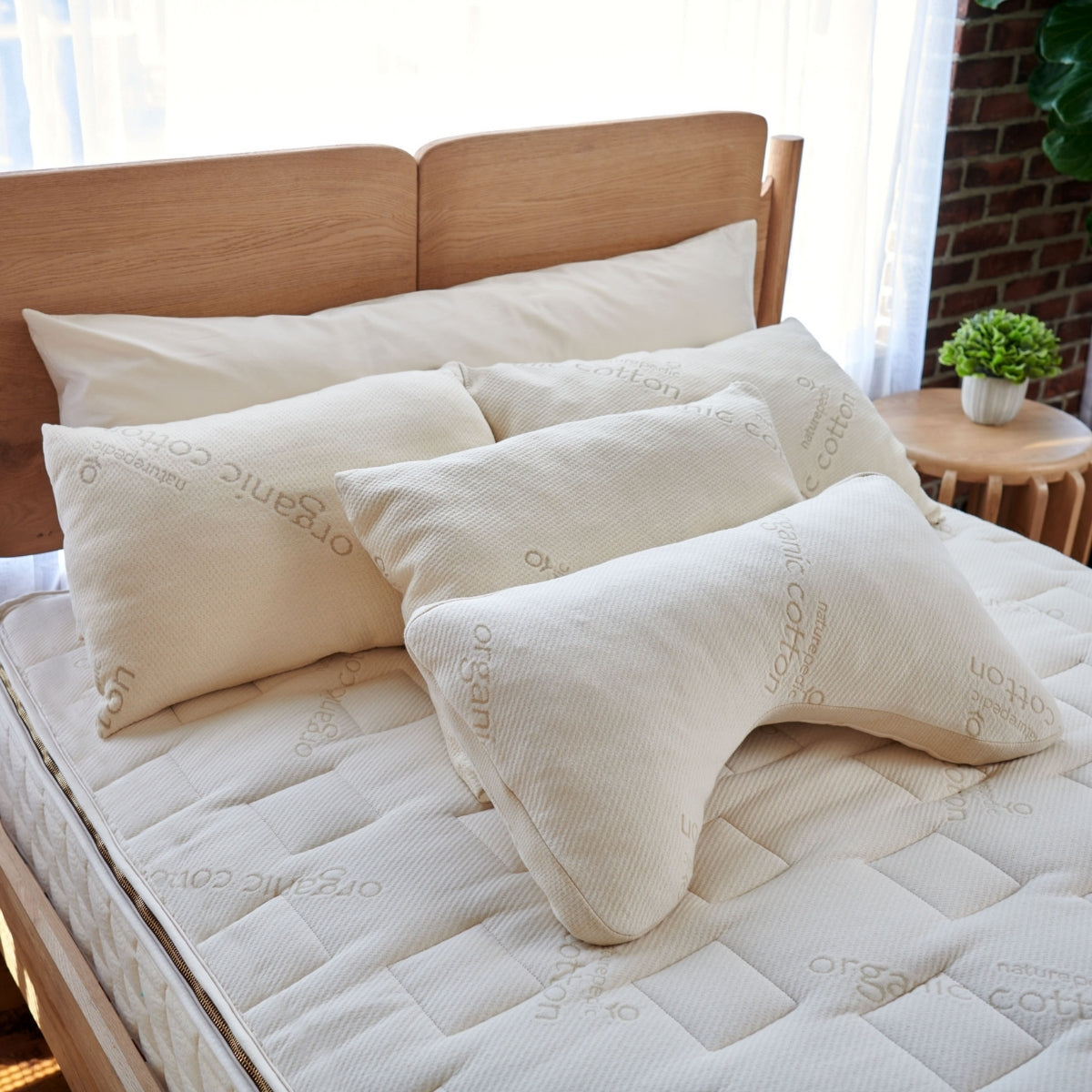
An adjustable pillow makes an even bigger difference by allowing you to tailor loft and firmness so your neck and spine stay aligned, whether you’re on your side or back. Look for a pillow made with a responsive fill material like organic latex as it can help reduce that “head sinking too low” feeling that contributes to neck strain.
2. Add Breathable Layers
Upholstered sofas often contain synthetic fabrics and polyurethane foam, which can retain heat. It’s why you may wake up hot and sweaty on the couch. Adding a breathable organic sheet between you and the couch can help regulate temperature. Consider keeping a cotton sheet under the couch and using it at night to cover the surface.
What blanket you use matters, too. It’s tempting to just reach for a decorative throw. However, keeping a lightweight organic muslin blanket nearby helps reduce night sweats and improve overall comfort.
3. Support Your Lower Back
If you’re sleeping on your side, try placing a small rolled towel or compact pillow at your waist to help maintain a more neutral spine. Avoid curling tightly toward the back of the couch, which increases spinal rotation and shoulder pressure.
Small adjustments can reduce next-day stiffness significantly.
4. Be Mindful of Light and Screens
It’s pretty well known at this point that blue light is not great for sleep. It can suppress the production of melatonin, your body’s natural sleep hormone. Screen use in general can keep your brain stimulated and keep the alertness signals firing.
And yet. Speaking from experience, we’d say a lot of couch sleepers are dozing off in front of the TV. Try dimming the lights, lowering the volume and reducing screen brightness.
Better Sleep Shouldn’t Be an Accident
Some nights, the couch wins. You’re exhausted, the house is finally quiet and moving feels like more effort than it’s worth. That’s human.
Occasional couch sleeping isn’t catastrophic, but your body does respond to what you ask of it. So, make what adjustments you can to ensure your sofa is a more supportive sleep environment, and you should feel some positive impacts.
Just keep in mind that if sleeping on the couch has become your norm, it may be worth asking why. Is your mattress still supportive? Is your pillow aligned with how you sleep? Does your bedroom feel like a space designed for rest?
You don’t need a perfect nighttime routine. You just need a sleep setup that works with your body instead of against it. Because when your sleep is intentional, your mornings are a lot better.
Have feedback on our story? Contact us to let us know what you think or visit our about us page to learn more!
Tired of Sleeping on the Couch?
Let our products show you a better way to sleep.


This article or parts of this article may have been created with the support of AI tools. All Naturepedic content is thoroughly reviewed and edited by our team to ensure accuracy.