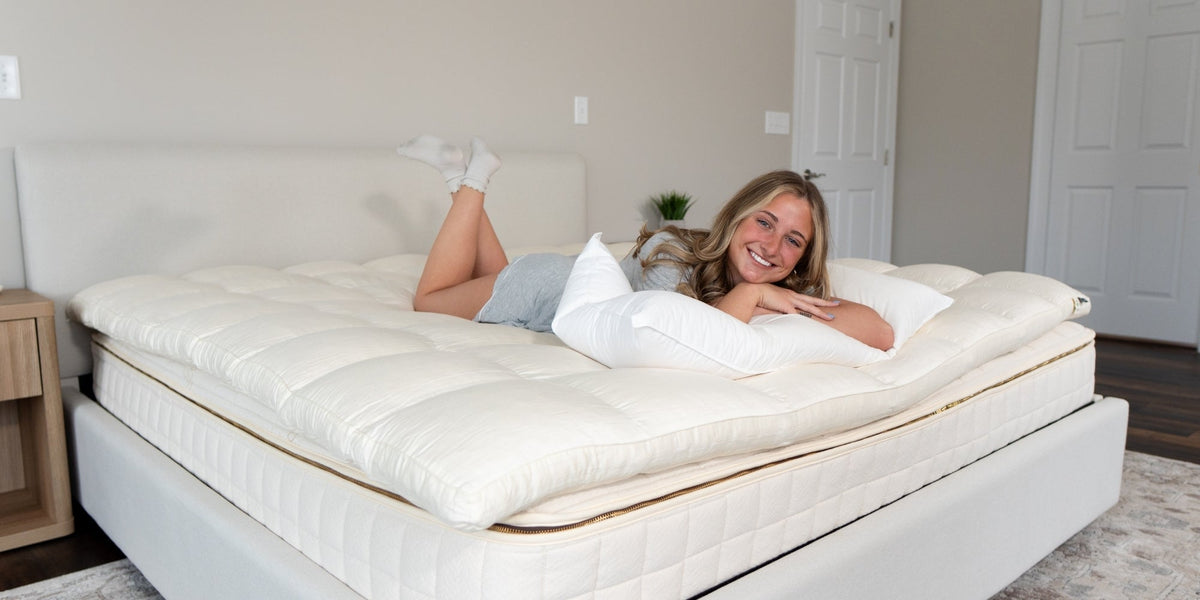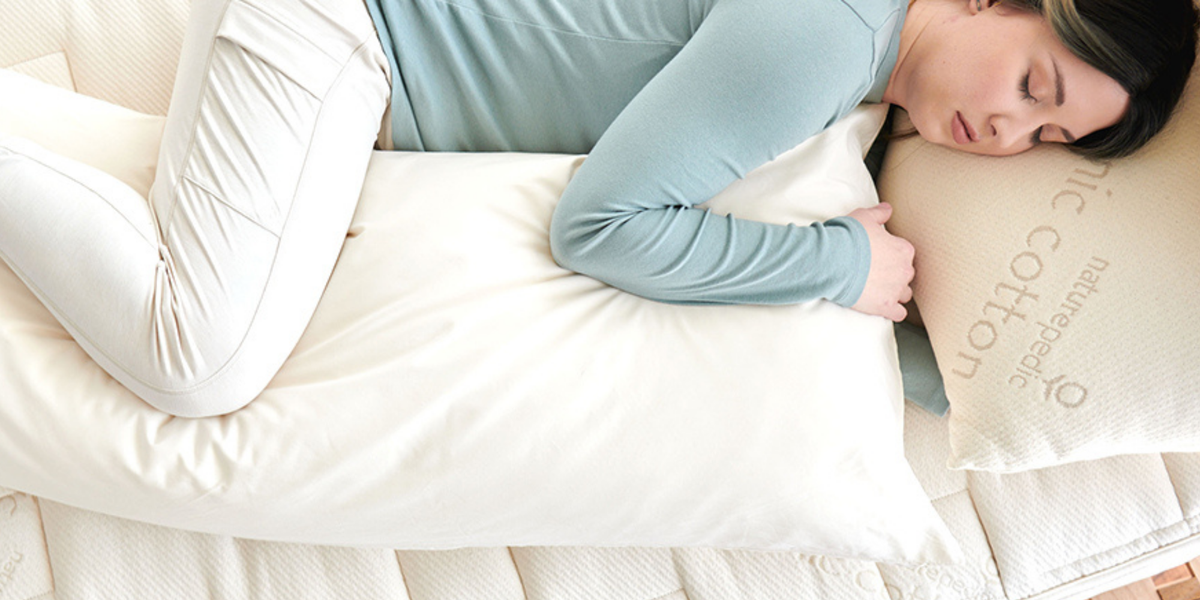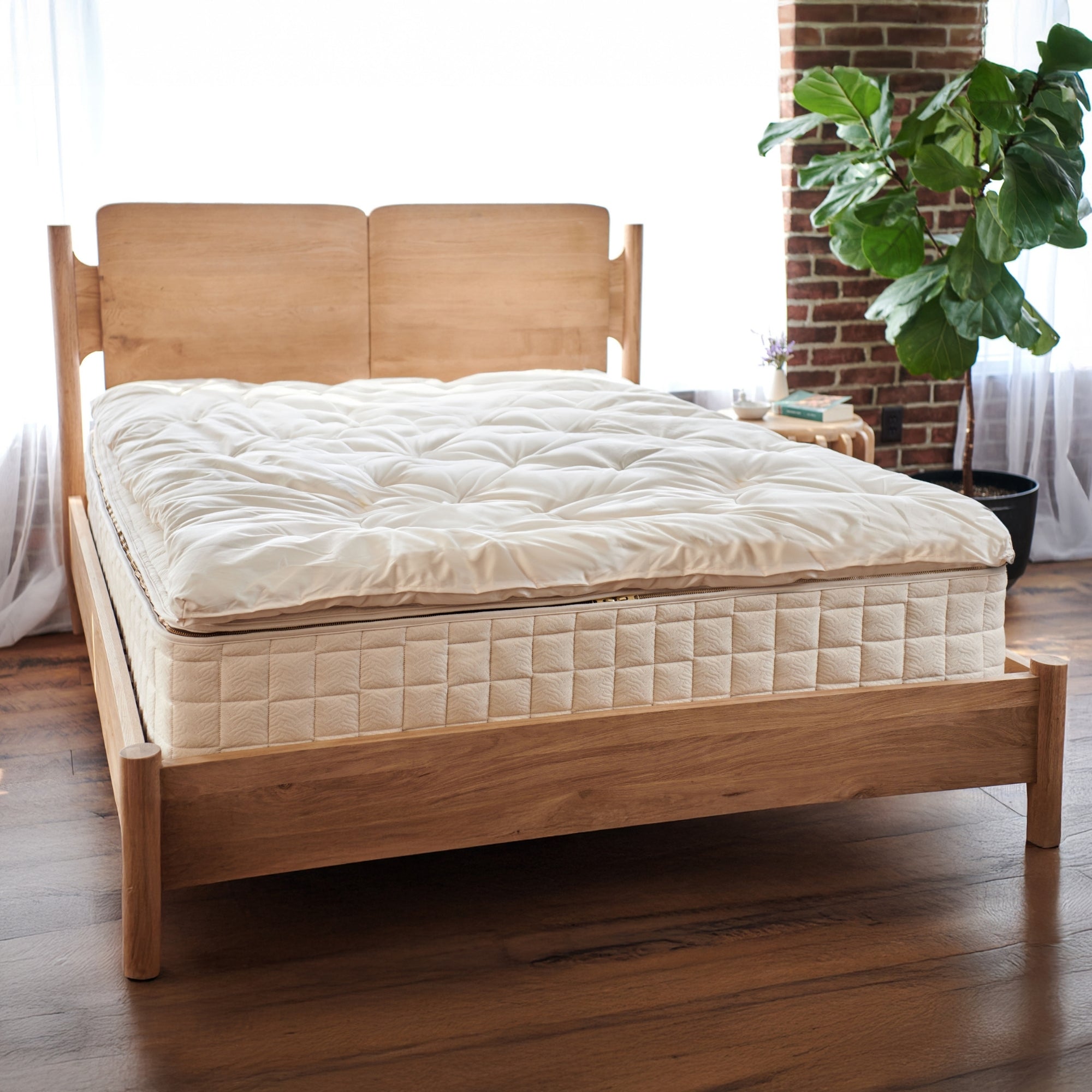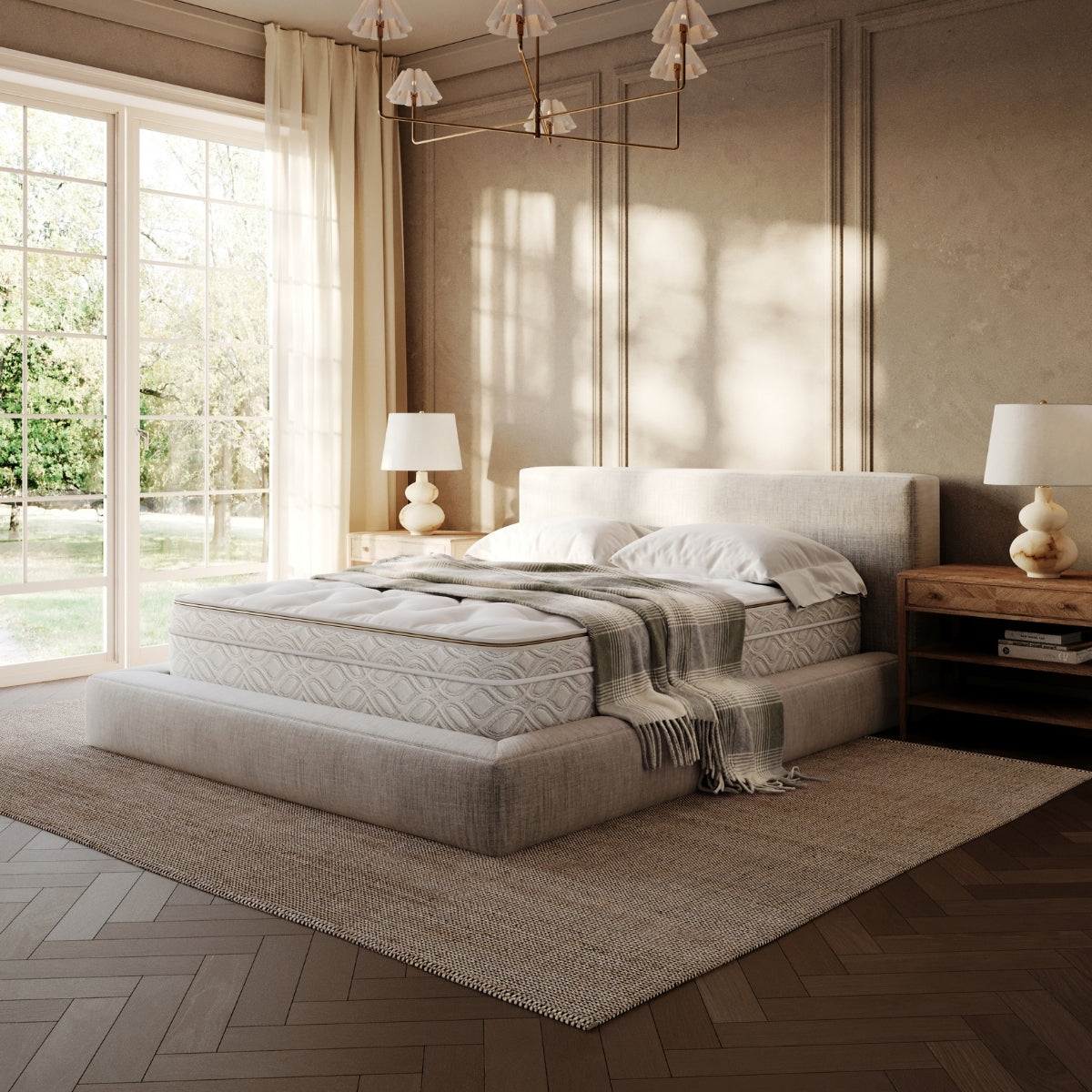


Back pain can make it harder to get comfortable at night, especially when your mattress feels too firm, too soft, or no longer suits the way you sleep. A mattress topper can change the feel of your existing bed by adding cushioning, pressure relief, and responsive support without replacing the entire mattress.
For many sleepers with back pain, a responsive latex topper that creates a balanced, medium to medium-firm feel is a strong starting point. Latex can contour to the body while maintaining a buoyant, supportive feel, helping you avoid the deep sink associated with softer foams. However, the best mattress topper for back pain also depends on your sleep position, body, and the condition of the mattress underneath it.
Mattress Toppers for Back Pain: Key Points
- A supportive latex topper is a strong choice for many sleepers with back pain. Latex offers responsive cushioning and pressure relief without excessive sinkage.
- Medium to medium-firm is a useful starting point, not a universal rule. Your ideal feel depends on your sleep position, body, and the firmness of your existing mattress.
- A topper works best on a mattress that is still structurally supportive. It can adjust comfort and firmness, but it cannot fully correct significant sagging or deterioration.
- Thickness determines how dramatically a topper changes your bed. A 2-inch topper offers a more subtle adjustment, while a 3-inch topper generally creates a more noticeable change in cushioning and feel.
- Material matters. Latex is responsive and resilient, while memory foam, wool, and other materials create different levels of contouring, cushioning, and support.
Note: This blog may contain links to Naturepedic products and promotional content where relevant to the topic discussed.
Can a Mattress Topper Help With Back Pain?
Yes, the right mattress topper may improve comfort for some people with back pain. A topper can adjust the firmness and cushioning of an otherwise supportive mattress, helping distribute weight and reduce pressure. However, it is a comfort upgrade rather than a medical treatment, and it cannot repair a mattress that is significantly sagging or worn out.
The goal is not simply to make your bed firmer. Instead, your sleep surface should provide enough support to keep your body comfortably positioned while offering enough cushioning around pressure-sensitive areas like your shoulders, hips, and lower back.
Research on mattresses also challenges the old idea that harder is always better. In a randomized controlled trial of adults with chronic nonspecific low-back pain, participants sleeping on medium-firm mattresses had better outcomes than those sleeping on firm mattresses. While the study evaluated mattresses rather than toppers, it reinforces the importance of balancing support and cushioning instead of choosing the firmest surface possible. You can review the study on mattress firmness and low-back pain through PubMed.
Do You Need a Mattress Topper or a New Mattress?
Before shopping for a topper, consider what you are actually trying to change. A mattress topper can make a meaningful difference when your mattress is still supportive but does not feel quite right. It is much less effective when the underlying mattress has lost its structure.
A topper should work with the support already provided by your mattress. If the mattress itself is worn out, layering additional material on top may temporarily change the feel without correcting the underlying problem.
What Makes a Mattress Topper Good for Back Pain?
The best mattress topper for back pain should improve the comfort of your current mattress without creating excessive sinkage or making it harder to maintain a comfortable sleeping position.

Focus on firmness, responsiveness, pressure relief, thickness, and material rather than looking for the hardest topper available.
Is a Firm Mattress Topper Better for Back Pain?
Not necessarily. Although people often search for a firm mattress topper for back pain, extra firmness is not automatically more supportive. A surface that is too firm may create uncomfortable pressure around the shoulders and hips, while one that is too soft may allow parts of the body to sink more deeply than others.
For many sleepers, a balanced medium to medium-firm feel is a practical starting point. From there, your ideal mattress firmness depends on your sleep position, body, and the mattress underneath the topper.
How Thick Should a Mattress Topper Be for Back Pain?
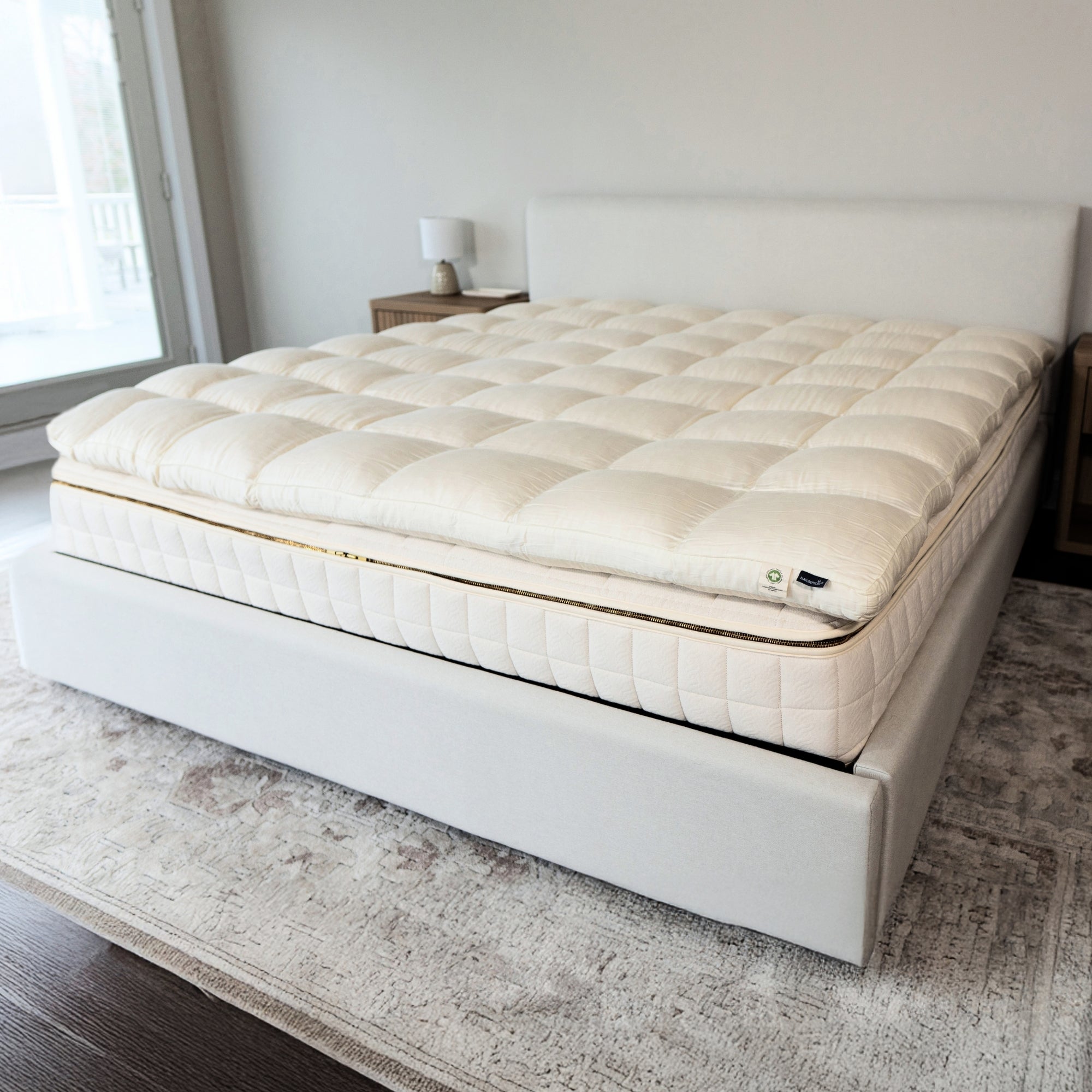
Thickness affects how significantly a topper changes the feel of your mattress. A 2-inch topper generally provides a more subtle comfort adjustment, allowing you to continue feeling more of the mattress underneath. A 3-inch topper creates a deeper layer of cushioning and can make a more noticeable difference in how the bed feels.
Thicker is not automatically better for back pain. If your existing mattress already provides good support, adding too much soft cushioning could change the way your body rests on the bed. Choose thickness based on how much you want to alter your current sleep surface rather than treating a particular number of inches as universally better.
What Type of Mattress Topper Is Best for Back Pain?
For many sleepers, latex is a particularly strong choice because it combines cushioning with a responsive, buoyant feel. Unlike materials that allow the body to sink deeply into the surface, latex compresses under weight while quickly responding as you move.
The right material ultimately depends on the feel you prefer and what your existing mattress needs.
Why Consider Latex for Back Pain?
Latex contours without the slow, enveloping feel associated with memory foam, which can make it easier to change positions during the night. It also distributes pressure across the sleep surface while maintaining a resilient feel.
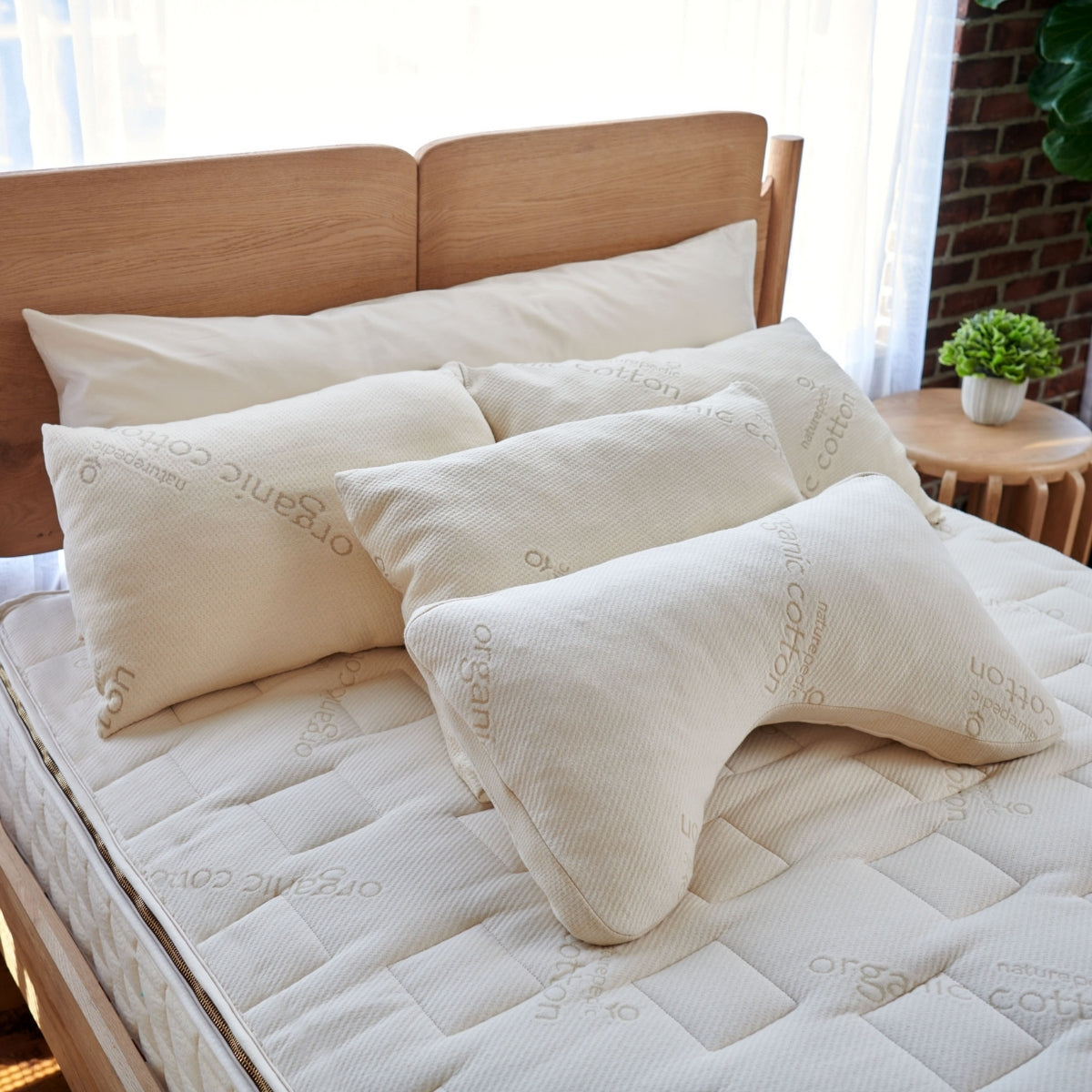
Naturepedic uses GOLS-certified organic latex rather than polyurethane or memory foam in our latex toppers. Our solid latex designs are also perforated to increase airflow through the material, while shredded latex constructions create air channels between pieces of fill.
How Should You Choose a Topper for Your Sleep Position?
Your preferred sleeping position changes where your body needs cushioning and where it needs support. Rather than choosing a topper based only on a firmness label, consider how the topper will interact with both your body and the mattress beneath it.
What if You Have Sciatica, Hip Pain, or Another Type of Back Pain?
Back discomfort can have many causes, so the same topper will not be right for everyone. Someone dealing with lower or lumbar back pain may prioritize balanced support, while a side sleeper with hip pain may need additional pressure relief around the hips. People with sciatica, arthritis, upper-back pain, or scoliosis may have different comfort and positioning needs depending on the underlying condition.
A mattress topper can adjust your sleep surface, but it is not a treatment for any of these conditions. Persistent, worsening, or unexplained pain should be discussed with a qualified healthcare provider.
Can a Mattress Topper Make Back Pain Worse?
A mattress topper can make you less comfortable if it is a poor match for your body or mattress. A topper that is excessively soft or thick may allow too much sinkage, while one that is too firm may create uncomfortable pressure. A topper can also mask, but not fix, an underlying mattress that has lost its support.
If you begin waking with new discomfort after adding a topper, reassess whether its firmness, thickness, or material is right for you. The goal should be to improve the way your mattress feels while preserving the support you need.
Why Naturepedic Organic Latex Mattress Toppers Stand Out
Naturepedic offers several organic mattress toppers designed to change the comfort and feel of the bed you already own. For sleepers who prefer responsive cushioning, our latex options use certified organic materials and avoid polyurethane foam.

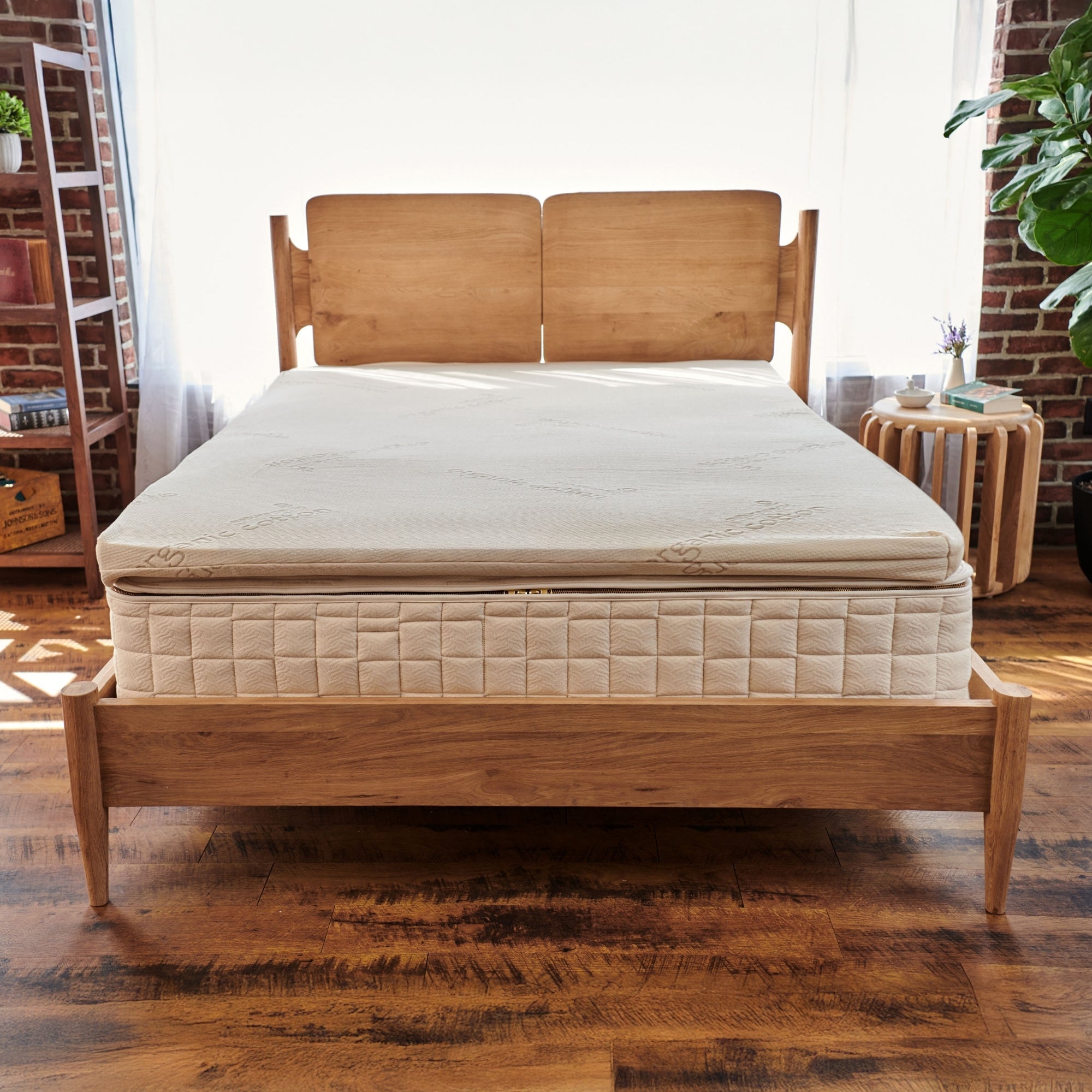
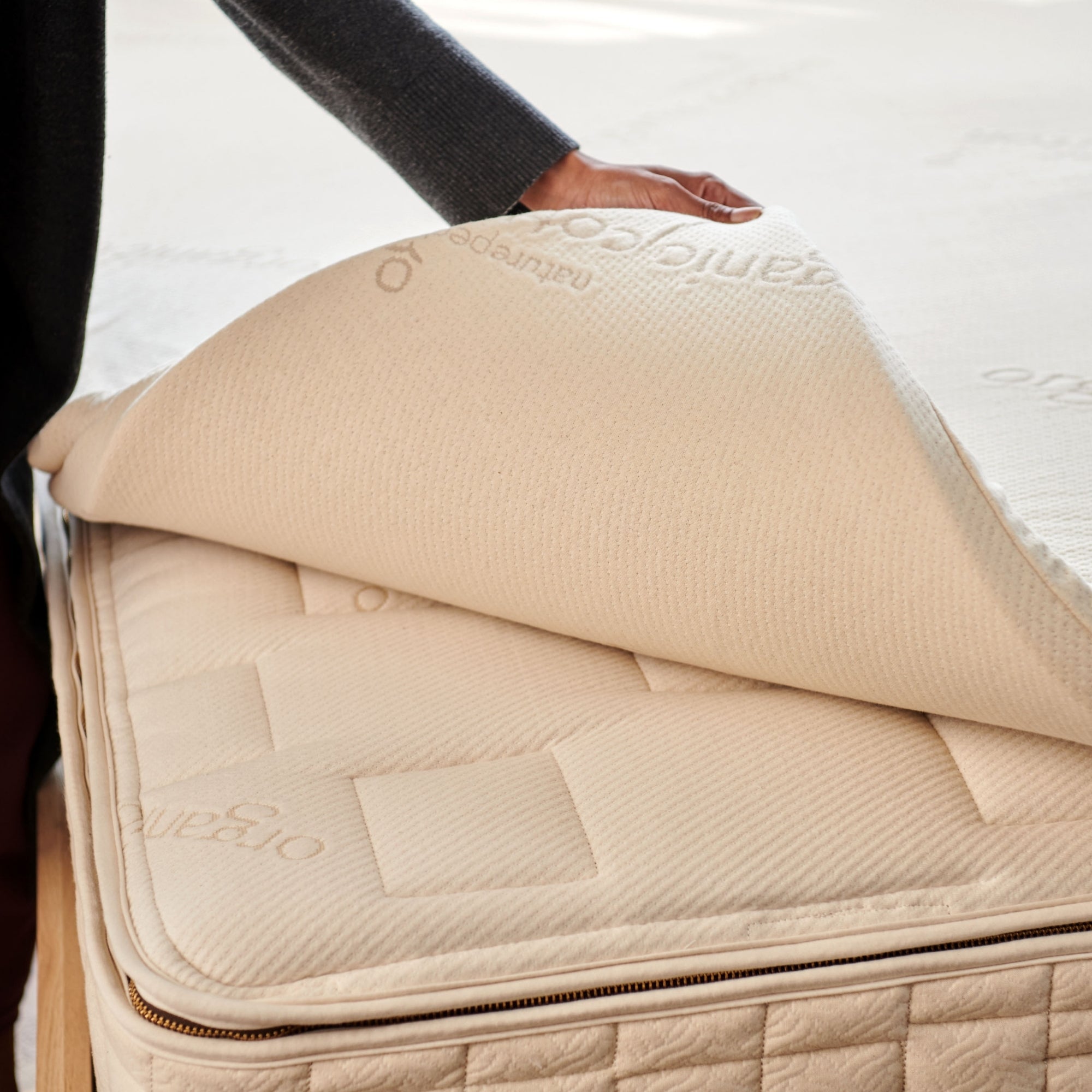
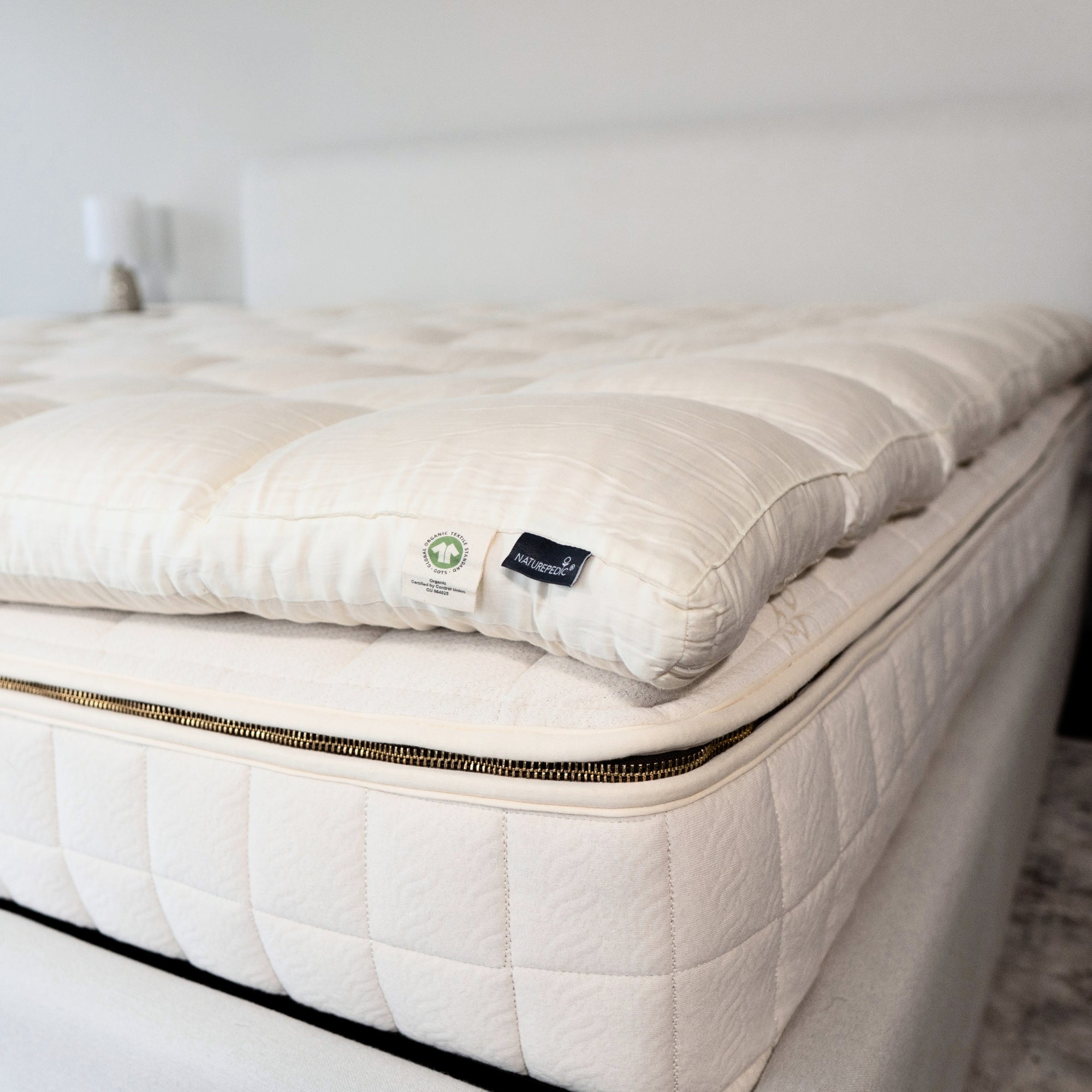
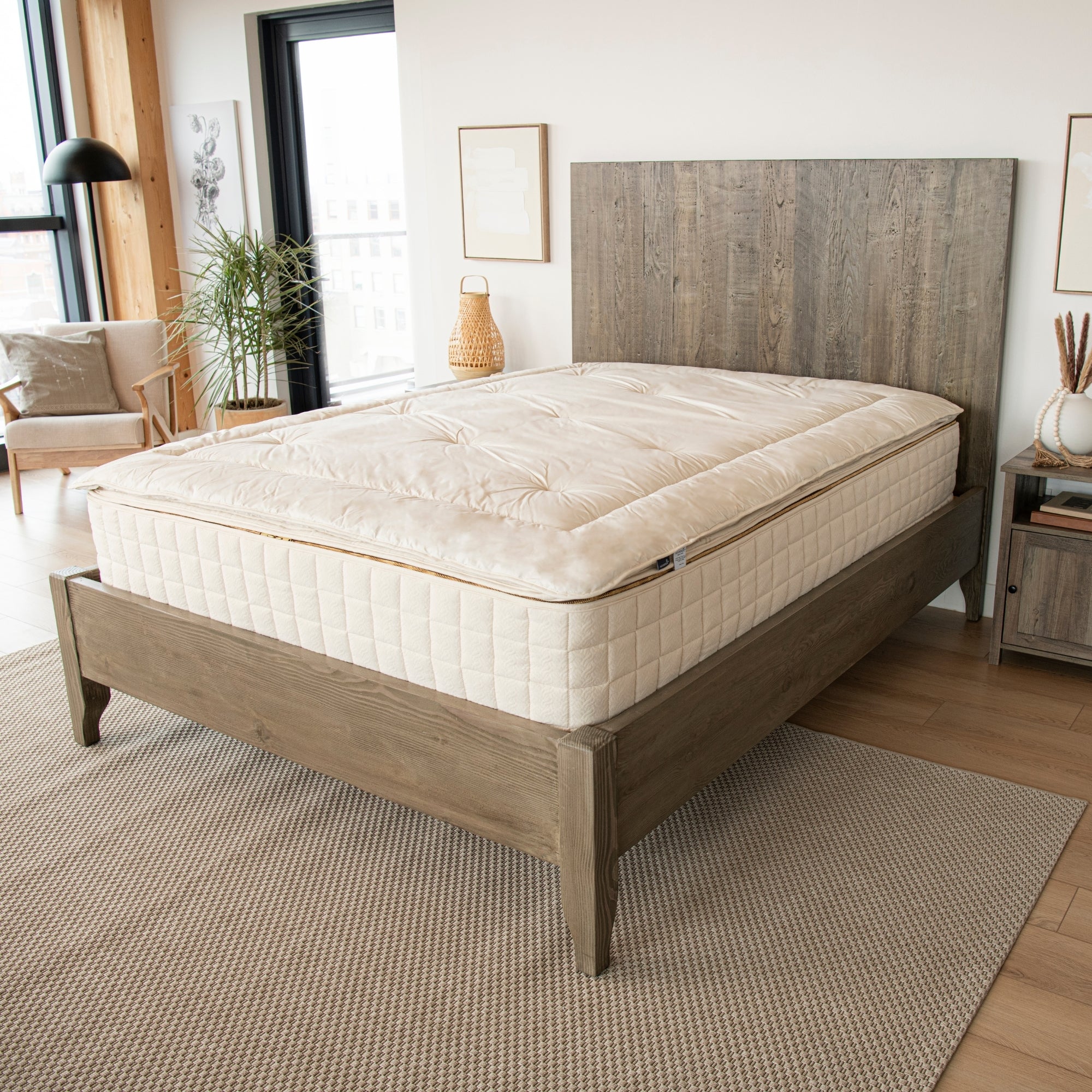
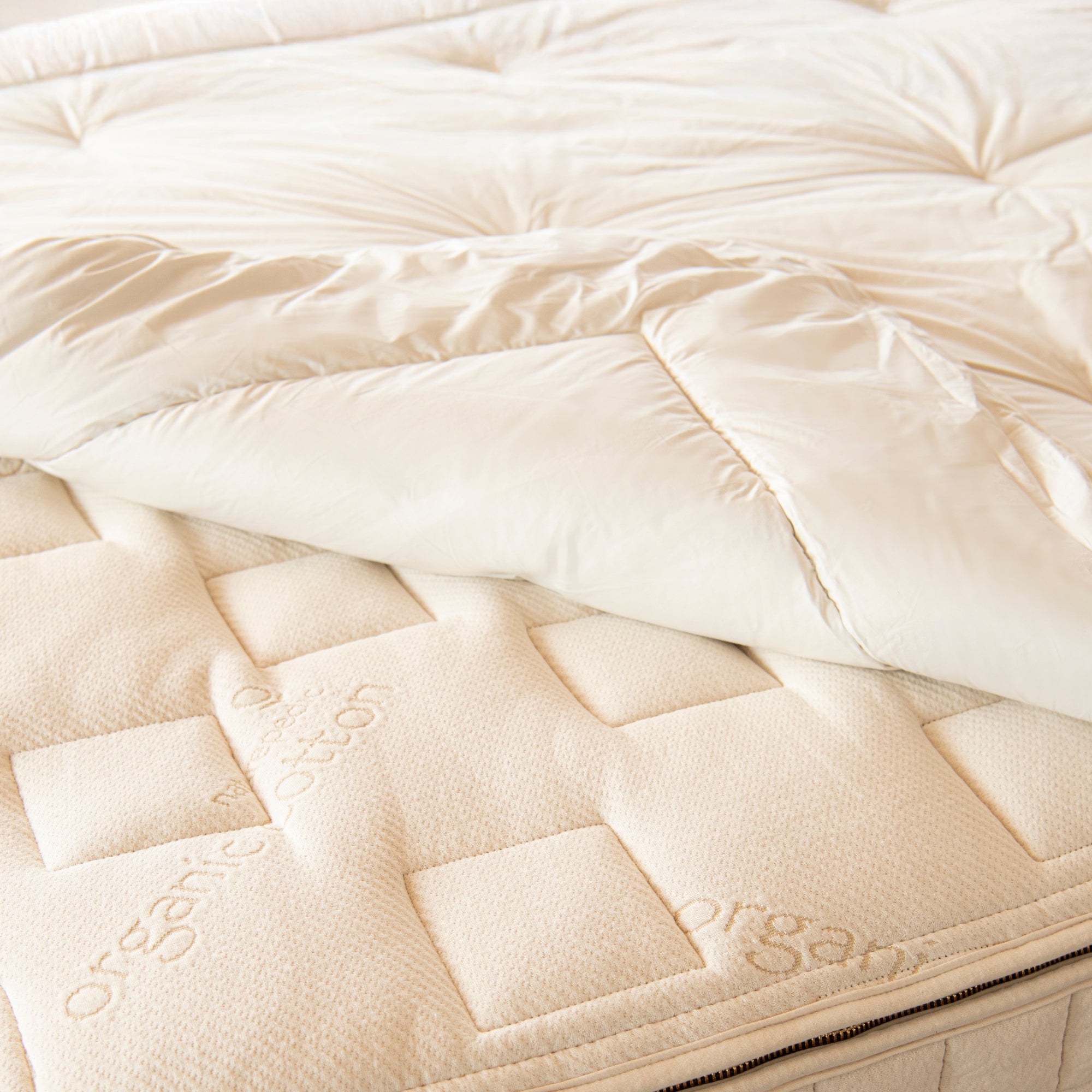
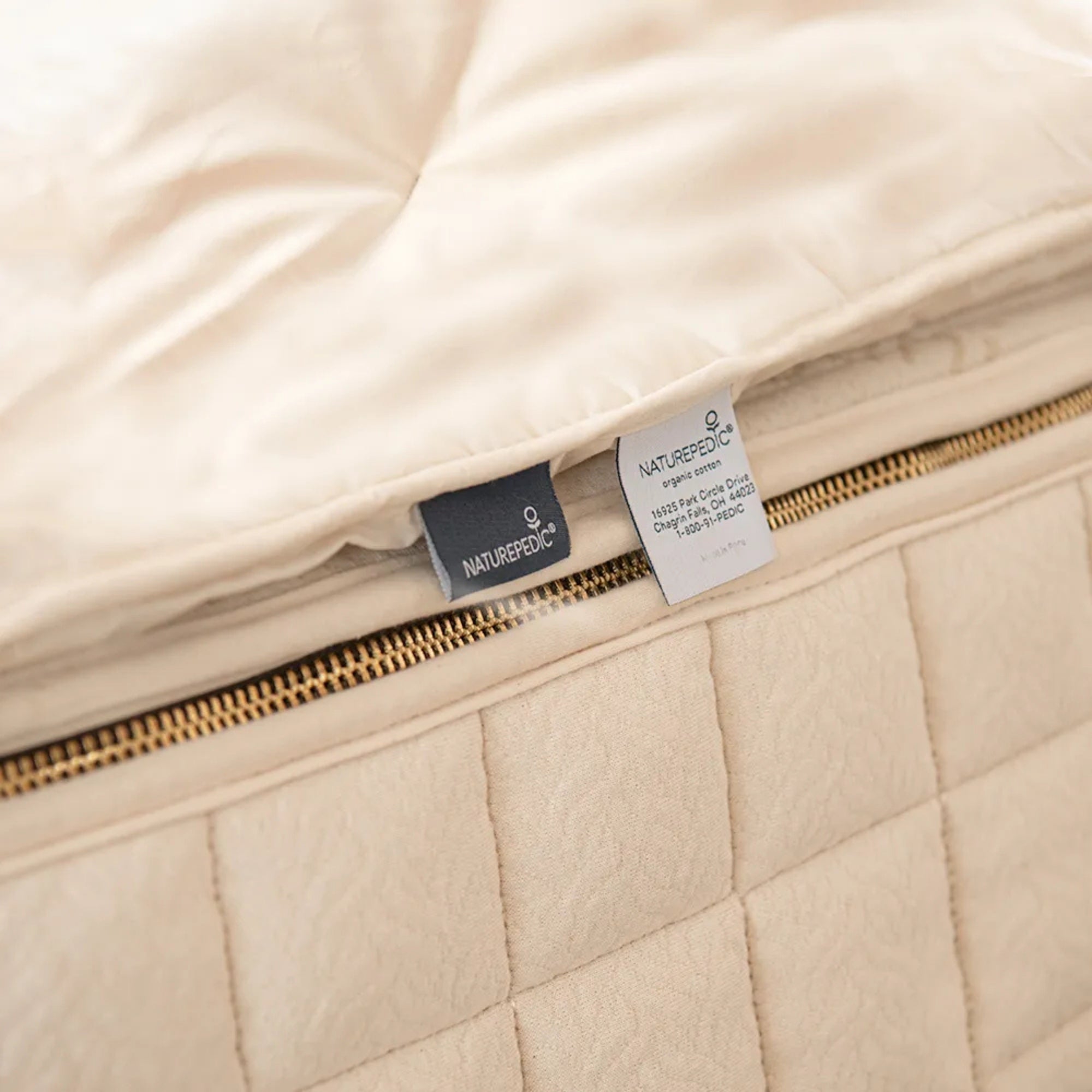
The Adagio 2" Organic Latex Mattress Topper features a solid layer of GOLS-certified organic Dunlop latex wrapped in a GOTS-certified organic cotton encasement. Its responsive latex gently contours while maintaining lift, and perforations throughout the latex increase airflow through the material.
For sleepers looking for a more substantial change in cushioning, our Box-Stitched Organic Latex Topper uses 3 inches of shredded organic latex in a box-stitched construction designed to help keep the fill evenly distributed.
Naturepedic latex toppers also carry certifications including GOTS, GOLS, MADE SAFE®, and GREENGUARD Gold, depending on the product. These third-party standards provide additional transparency around materials and manufacturing.
Naturepedic also prioritizes more sustainable product design, from certified materials and responsible sourcing to packaging initiatives and our 1% for the Planet membership.
How to Care for a Mattress Topper
Proper care helps a topper maintain an even feel over time. Always follow the manufacturer's cleaning instructions, because care requirements differ by material.

Latex toppers generally should not be machine washed. For Naturepedic's Adagio topper, spot clean as needed, allow it to dry completely, and rotate it periodically to promote more even wear.
Using a mattress protector can also help shield your topper from spills and everyday wear.
So, What Is the Best Mattress Topper for Back Pain?
For many sleepers, a responsive latex mattress topper with a balanced medium to medium-firm overall feel is a strong choice for back pain because it can add cushioning and pressure relief without excessive sinkage. The right thickness and firmness, however, depend on your sleep position, body, and existing mattress.
Most importantly, think of a topper as a way to fine-tune a mattress that still provides adequate support. If your mattress is significantly sagging or worn out, replacing it may be a better long-term solution than trying to compensate with additional layers.
If you decide a topper is right for your bed, Naturepedic mattress toppers come with a 30-night trial so you can determine whether the new feel works for you.
Have feedback on our story? Contact us to let us know what you think or visit our About Us page to learn more!