


Getting comfortable is the first step to falling asleep, but what if you just can't seem to find that perfect position? If you've been struggling to get the healthy, restorative sleep you need, your sleep environment may be the culprit. Is it time for a new mattress? Maybe you need to replace your flattened pillows?
If your mattress and pillows are in tip-top shape, you may get the comfort — and rest! — you need by investing in a body pillow. Depending on your sleep position, you can hug a body pillow, place it between your legs, tuck it behind your back, or position it beneath your knees. But before you dive in and make a purchase, let’s take a closer look at how to use a body pillow, how it may improve your comfort, and who can benefit from one.
How to Use a Body Pillow: Key Points
- Side sleepers can hug a body pillow while positioning the lower portion between the knees and ankles.
- Back sleepers can place one beneath both knees to support a comfortable, slightly bent-leg position.
- Stomach sleepers can use a body pillow to transition into a supported, partially side-lying position.
- Pregnant sleepers can position one between the knees, beneath the belly, or behind the back for added support.
- The right body pillow should feel supportive without forcing the neck, hips, back, or knees into an uncomfortable position.
Note: This blog may contain links to Naturepedic products and promotional content where relevant to the topic discussed.
What Is a Body Pillow?
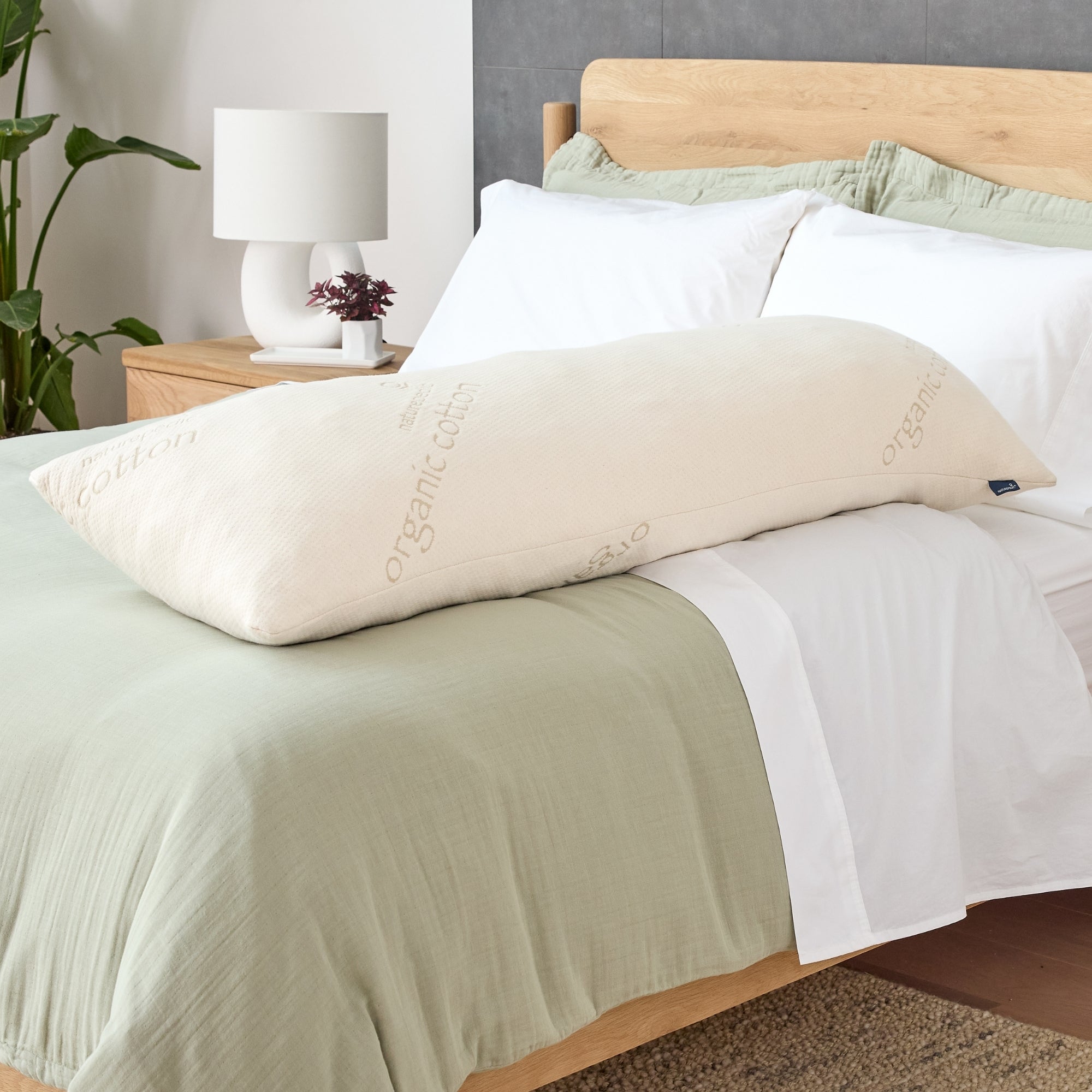
Essentially, a body pillow is an oversized pillow. Although some are as long as six feet, body pillows are not typically the full length of an adult’s body. On average, a standard rectangular body pillow is approximately 48 to 54 inches long. Think of it as a giant, huggable pillow that you can snuggle up with in bed.
Body pillows are popular among side sleepers who want support between their knees, pregnant people who need additional cushioning, and anyone who simply wants to wrap themselves in a cozy embrace while they sleep. The possibilities are endless!
What Are the Different Body Pillow Shapes?
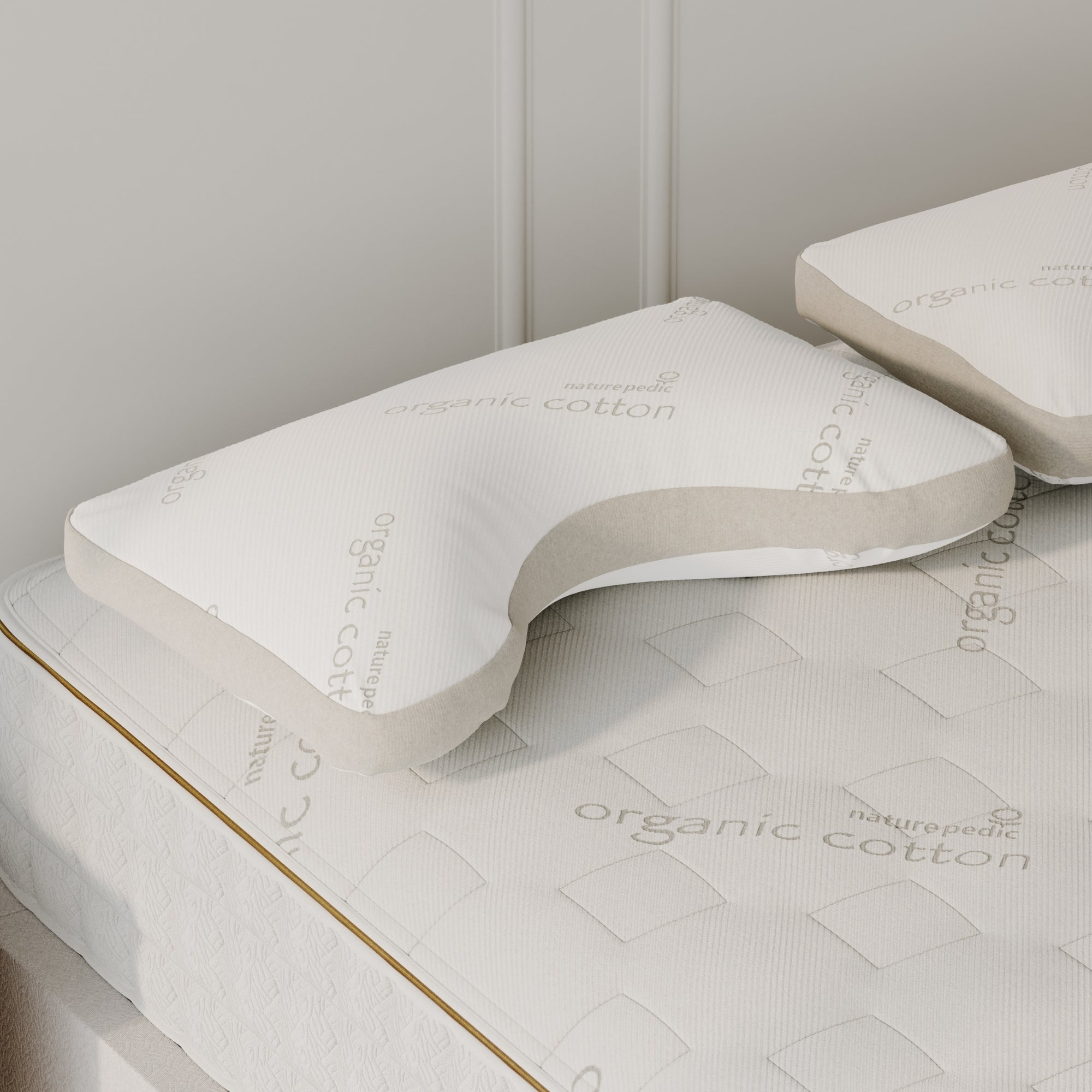
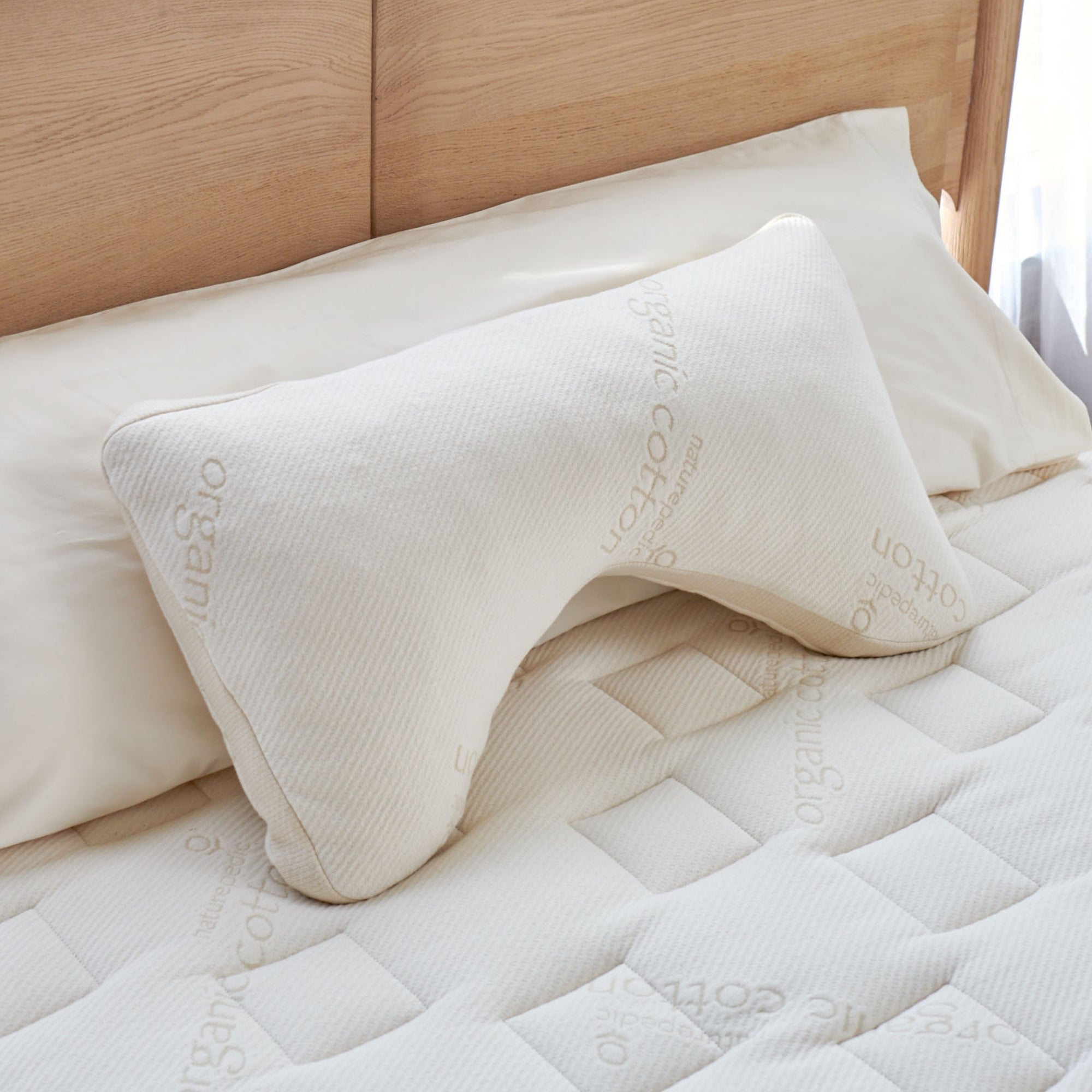
Body pillows come in a variety of shapes. They can be straight, cylindrical, or shaped like alphabet letters and candy canes. The right design depends on how much of your body you want the pillow to support, your preferred sleep position, and the amount of space available in your bed.
What Is an I-Shaped Body Pillow?
The most common body pillow shape, an I-shaped body pillow is a long, straight pillow. You can hug it, position it between your legs, place it behind your back, or use it beneath your knees. Its simple shape makes it the standard body pillow design and one of the most versatile options.
Are There Other Body Pillow Shapes?
There are other body pillow shapes specifically designed for pregnancy, side sleeping, and more. These include:
-
C-shape: This style curves around one side of the body. Depending on which direction it faces, it may provide support beneath the head, along the back or belly, and between the knees.
- U-shape: This pillow surrounds both sides of the body. It may appeal to sleepers who want support along both the front and back without repositioning the pillow when they turn over. However, U-shaped pillows can take up considerable space in a shared bed.
- J-shape: This design has one curved end and one long, straight side. The curved portion may be used beneath the head or between the legs, while the longer portion supports either the front or back of the body.
How Do You Use a Body Pillow?
To use a body pillow, position it so that it supports the areas of your body that might otherwise twist, sink, or rest directly against each other. The best placement depends on your preferred sleep position and where you need extra cushioning or support.

Your body pillow should feel comfortable without forcing your body into an unnatural position. You may need to adjust its placement, firmness, or amount of fill before finding the setup that feels best.
How Should Side Sleepers Use a Body Pillow?
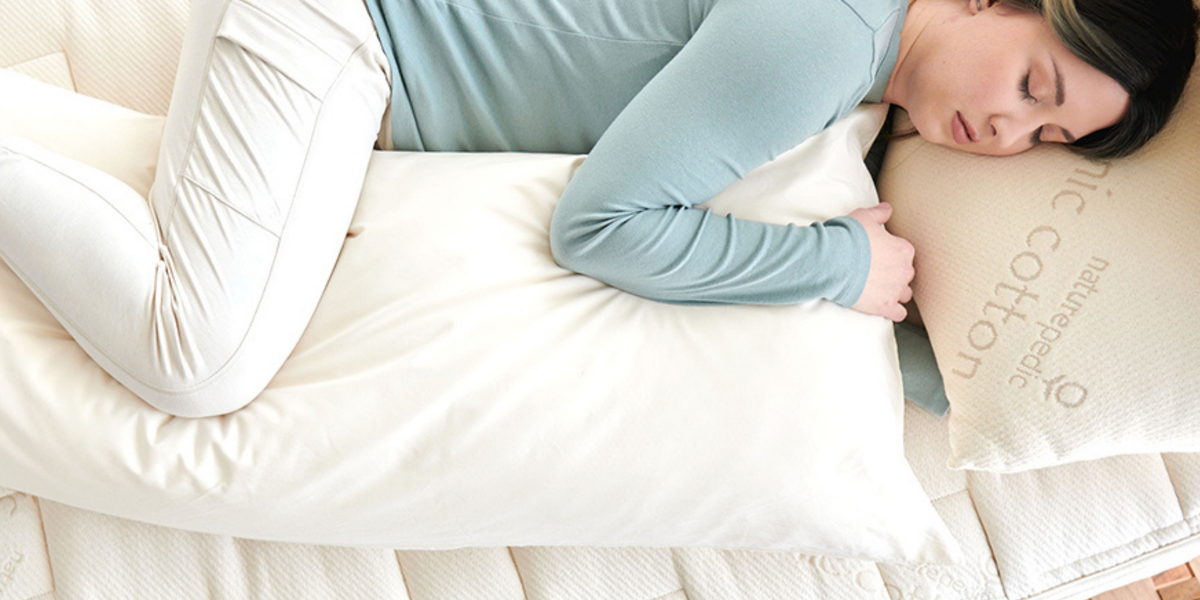
Lie on your side with the body pillow running along the front of your body. Hug the upper portion with your arms, and place the lower portion between your knees. If the pillow is long enough, extend it between your ankles as well.
This position can help keep your upper leg from falling forward, cushion the knees, and support more neutral positioning through the hips and pelvis. Make sure your head still rests on a separate pillow with enough loft to fill the space between your head and the mattress.
For additional support, you can place a second body pillow behind your back. This may make it easier to remain on your side instead of rolling onto your back during the night. Get more tips for side sleepers here.
How Should Back Sleepers Use a Body Pillow?
People tend to associate body pillows with side sleepers, but they can be a useful sleep accessory for back sleepers, too.
If you sleep on your back, try placing your body pillow horizontally beneath both knees so that your legs are slightly bent. Supporting the knees in this position may make lying on your back feel more comfortable by reducing the space beneath your lower back.
You may need to adjust the pillow’s placement or remove some fill until you find a position that feels supportive without lifting your legs too high.
How Should Stomach Sleepers Use a Body Pillow?
Stomach sleeping can leave the neck and spine in a rotated position, particularly when the head is turned sharply to one side. A body pillow may help stomach sleepers transition into a partially side-lying position while preserving some of the hugged, front-supported feeling they prefer.
Position the body pillow along one side of your torso. Bend your upper leg, and rest it over the pillow while allowing your lower leg to remain straighter. You can also hug the upper portion of the pillow to support your chest and shoulder.
Because stomach sleepers often need less elevation beneath the head, pair this position with a low-loft head pillow that does not push your neck too far upward.
How Should You Use a Body Pillow During Pregnancy?
During pregnancy, expectant parents often have a difficult time getting comfortable. For side sleeping, position the body pillow along the front of your body and place the lower portion between your bent knees. Depending on the shape and length of the pillow, you may also be able to tuck part of it beneath your belly.
Some pregnant sleepers prefer placing the pillow behind the back to discourage rolling completely onto the back. Others use pillows both behind the back and beneath the belly for support on multiple sides.
Sleep is especially important during pregnancy, and if you’re struggling to get comfortable, a body pillow may be worth a try. Learn more about sleep and pregnancy here.
How Can You Use a Body Pillow for Added Support?
A body pillow can also cushion or elevate specific areas of the body while you sleep, relax, or sit up in bed. Depending on your needs, you might place it:
- Between the knees and ankles while lying on your side
- Beneath both knees while lying on your back
- Behind your back for additional side-sleeping support
- Beneath an arm while reading or relaxing in bed
- Across your lap or behind your lower back while sitting up
A body pillow may improve comfort, but it should not be treated as a substitute for medical care. Speak with a qualified health care professional if you have persistent pain, an injury, a sleep disorder, or questions about safe positioning after surgery.
What Are the Best Body Pillow Materials?
What’s inside your body pillow and what it’s encased in will determine how firm, supportive, moldable, durable, breathable, and expensive it is.

Body pillows can be filled with a variety of materials, but some common fill materials include:
- Memory foam: Memory foam is known for its ability to conform closely to the body and provide a slow-moving, cushioned feel. Some memory foam pillows may retain more body heat, although shredded constructions generally allow more airflow than solid foam.
- Down: Down is soft, lightweight, and moldable, providing a plush feel and gentle cushioning. It may require regular fluffing to maintain its shape and may not offer enough structure for sleepers seeking firmer support. It’s also important to make sure the down is responsibly sourced.
- Polyester: Polyester is a synthetic material often used as a cost-effective fill option. Its support, durability, and temperature performance vary considerably depending on the quality and construction. Some polyester fills may retain heat, which can be an important consideration for hot sleepers. Some types of polyester, such as PLA, may also have a different environmental profile than conventional petroleum-based polyester.
- Latex: Natural latex, derived from the sap of rubber trees, is a resilient and supportive fill material. It offers a responsive, buoyant feel and returns to shape more quickly than memory foam. Shredded latex can also be molded or adjusted while allowing air to move between the individual pieces. Look for organic latex with third-party certifications such as GOLS.
No matter which material you choose, review the complete material list and look for transparent information about the fill, cover, adhesives, added flame retardant chemicals, and third-party certifications.
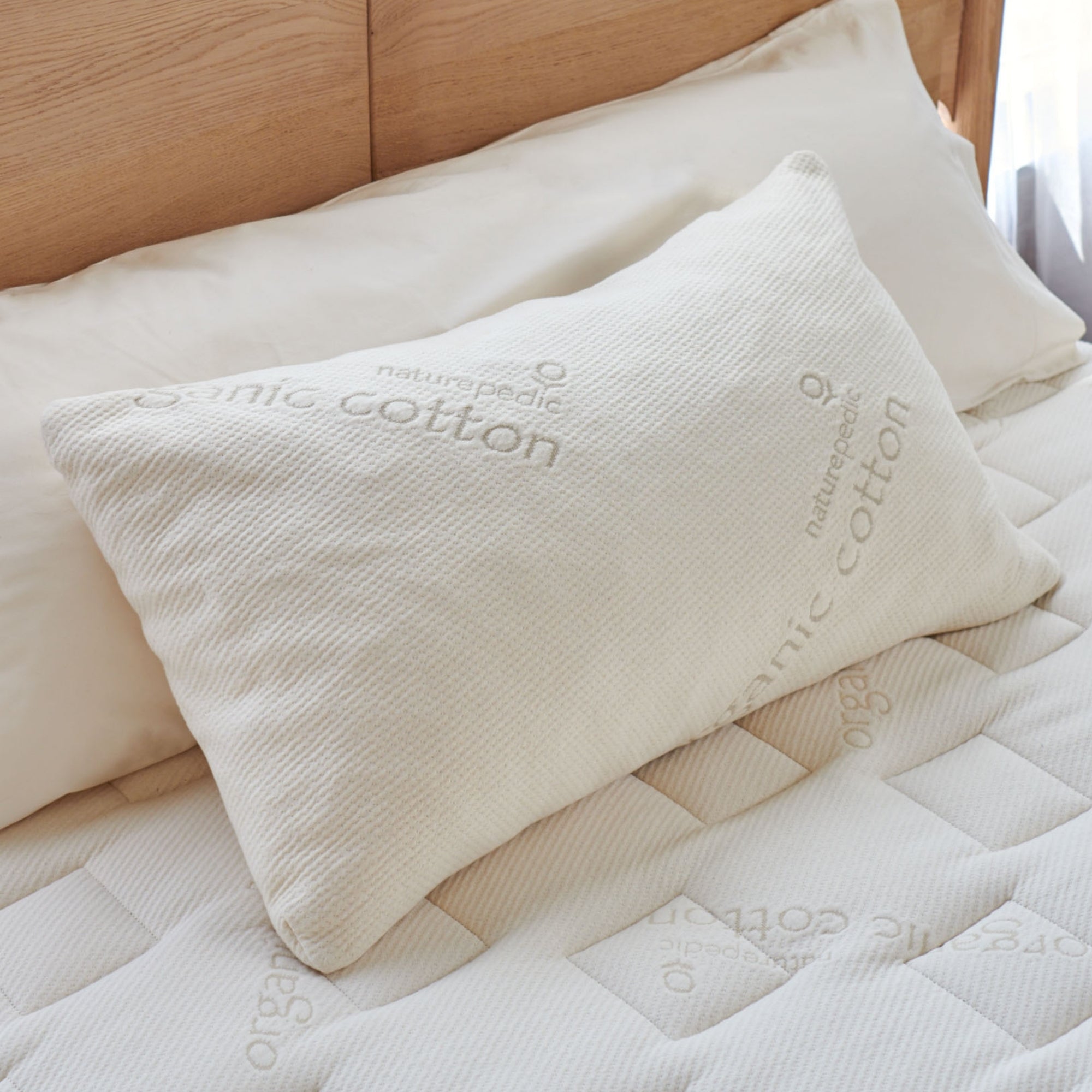
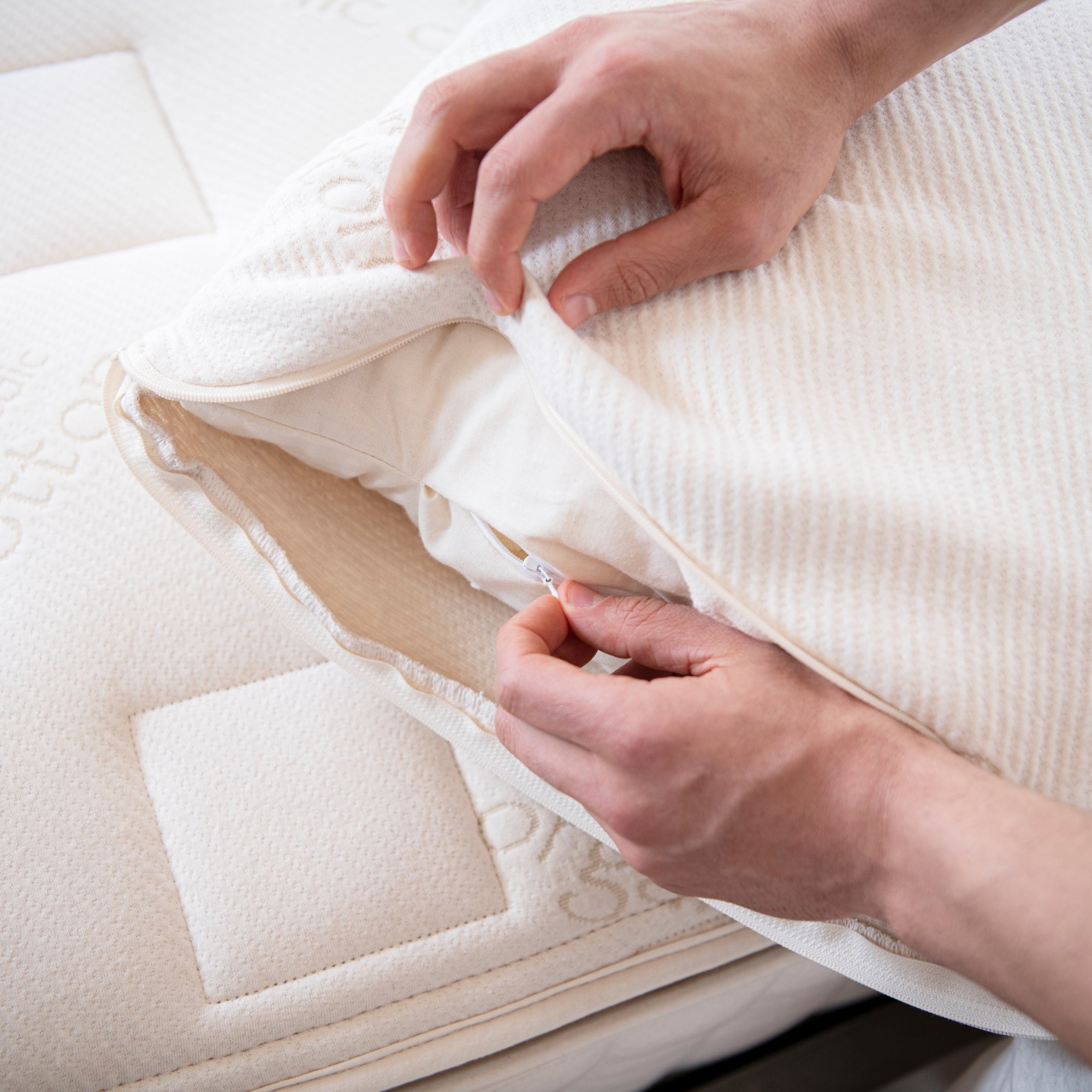
At Naturepedic, we’ve hit on an excellent combination for our latex body pillow. We use GOLS-certified organic latex fill for responsive, adjustable support, along with a soft and stretchy GOTS-certified organic cotton encasement. The result is a vegan-friendly body pillow made without polyurethane foam or polyester fill.
What Are the Benefits of Using a Body Pillow?
Almost anyone can find comfort and support from a body pillow, even if you’re just using it while you binge-watch your favorite TV show. Because a body pillow supports a larger area than a standard pillow, it can be used to cushion multiple parts of the body at once.
Depending on your sleep position and how the pillow is placed, a body pillow may:
- Cushion the knees, ankles, arms, or shoulders
- Help prevent the upper leg from dropping forward during side sleeping
- Support more comfortable positioning through the hips and pelvis
- Give pregnant sleepers additional places to support the belly, back, and legs
- Provide a comfortable surface to hug
- Make sitting, reading, or relaxing in bed more comfortable
Comfort is personal, so a body pillow that works well for one sleeper may not feel right for another. Shape, firmness, fill, length, and adjustability should all be considered.
Can Body Pillows Provide Emotional Comfort?
There is a powerful connection between sleep and mental health. A more comfortable and supportive sleep environment may make it easier to settle down and get the rest you need.

Some people also find hugging a body pillow calming. Its size and weight can provide a sense of physical comfort, particularly when winding down at night, coping with stress, or sleeping alone.
Body pillows may also serve as a soothing presence for some people experiencing anxiety, grief, or other difficult emotions. When the body feels comfortable and well-supported, it may contribute to a greater sense of self-care and overall well-being.
It’s important to note that while body pillows can complement mental health support, they are not a treatment for anxiety, depression, PTSD, grief, or another mental health concern. If you’re experiencing mental health symptoms, seek guidance from a qualified health care professional or therapist.
How Can You Find the Right Body Pillow Position?
If you came into this thinking body pillows were just for side sleepers, hopefully we’ve helped open your eyes to the many ways you can use one. Try adjusting the pillow’s position and fill until it supports your body without feeling bulky or restrictive.
Plus, we weren’t kidding about the Netflix binge-watching — body pillows are great for that, too!
Have feedback on our story? Contact us to let us know what you think or visit our About Us page to learn more!