



Hey, side sleepers — this one’s for you! Side sleeping is the most common sleep position, but getting comfortable on your side is about more than simply rolling over. The way you position your head, shoulders, arms, hips, and knees can affect how supported you feel — and whether you wake up with a sore shoulder, stiff neck, numb arm, or achy hip.
So, how do you sleep on your side properly? Start with a supportive mattress and pillow that help keep your spine in a comfortable, neutral position, then pay attention to where your shoulders, arms, and legs fall. Here’s how to make side sleeping more comfortable from head to toe.
Side Sleeping: Key Points
- There is no universally “best” side to sleep on. For most people, the better side is whichever feels most comfortable and supported, although certain health considerations may make one side preferable.
- Your head and neck should stay relatively neutral. A pillow that is too flat or too lofty can tilt your head and contribute to neck discomfort.
- Shoulder pain can be a pressure problem. Your mattress needs enough give to cushion the shoulder without letting your torso sink excessively.
- Keep your bottom arm in front of you rather than underneath you. Trapping an arm beneath your body or pillow can contribute to discomfort or numbness.
- A pillow between your knees can improve lower-body alignment. Supporting the upper leg can help keep your hips and pelvis from rotating forward while you sleep.
Note: This blog may contain links to Naturepedic products and promotional content where relevant to the topic discussed.
What Is the Best Side to Sleep On?
For most healthy adults, there isn’t one universally best side to sleep on. The better side is generally the one that allows you to stay comfortable and supported throughout the night without aggravating pain or other symptoms. That said, certain circumstances — particularly acid reflux and pregnancy — can make side sleeping especially useful.

Is It Better to Sleep on Your Left Side?
If you experience nighttime acid reflux or GERD, the left side may be the better side to sleep on. Research suggests that left-side sleeping can reduce nighttime reflux compared with sleeping on the right side or back because of the position of the stomach relative to the esophagus.
Side sleeping is also commonly recommended later in pregnancy. However, you don’t necessarily need to force yourself to stay on your left side all night — both the left and right sides can be appropriate during pregnancy. If you’re expecting, your health care provider can give you guidance based on your individual pregnancy. You can also find more sleep tips for pregnancy here.
Why Do I Feel Better Sleeping on My Right Side?
Sometimes, the answer is simply comfort. Your preferred side can depend on your shoulder and hip sensitivity, previous injuries, mattress feel, pillow setup, and sleep habits. If your right side feels better and you don’t have a medical reason to avoid it, you generally don’t need to force yourself to sleep on the left instead.
Why Side Sleeping Is Worth Getting Right
More than half of adults (about 54%) sleep on their sides, making it the most common sleep position. There are good reasons people gravitate toward it, too.
Compared with back sleeping, side sleeping may help reduce snoring for some people because the tongue and other soft tissues are less likely to fall backward toward the airway. Some people with positional obstructive sleep apnea may also breathe more easily on their side, although sleep apnea should be evaluated and treated with guidance from a health care professional.
Side sleeping can also be useful for nighttime acid reflux, and many people simply find it more comfortable for their backs when their head, hips, and legs are properly supported. But those benefits depend heavily on your setup. Poor alignment or too much pressure on one area can turn your favorite sleep position into a source of shoulder, neck, hip, or arm discomfort.
Why Does My Shoulder Hurt When I Sleep on My Side?
If you wake up with shoulder pain from sleeping on your side, pressure is often part of the problem. Your bottom shoulder bears more direct weight in this position, and spending hours on that joint can become uncomfortable — particularly if your mattress does not cushion the shoulder well or your arm is positioned awkwardly.
Your mattress plays an important role here. A surface that is too firm may concentrate more pressure around the shoulder and hip, while a mattress that is too soft may allow those heavier areas to sink farther than the rest of your body and affect alignment. The right feel depends on your body, sleep preferences, and mattress construction, so there isn’t one firmness level that works for every side sleeper. Learn more about choosing the right mattress firmness.
What Is the Side Sleeper Trick for Achy Shoulders?
There isn’t one magic “side sleeper trick,” but a few simple adjustments can reduce unnecessary pressure on your shoulders. Try hugging a pillow with your top arm so that shoulder has somewhere to rest instead of rotating forward toward the mattress. Keep your bottom arm slightly in front of your body rather than pinned beneath your torso, and avoid sleeping directly on a shoulder that is already sore whenever possible.
If shoulder pain regularly wakes you up, continues during the day, or is getting worse, changing your sleep position may not address the underlying cause. Consider talking with a health care professional rather than assuming your mattress or sleep position is solely responsible.
How to Prevent Neck Pain When Sleeping on Your Side
Your pillow has an especially important job when you sleep on your side. Because your shoulder creates space between your head and the mattress, your pillow needs enough loft to fill that gap and support your head without tilting it sharply up or down.

That doesn’t mean every side sleeper needs the thickest pillow available. Shoulder width, body size, mattress firmness, and how deeply you sink into your mattress can all affect the amount of loft you need. A broader-shouldered sleeper on a firmer mattress may need more height, for example, while someone who sinks more deeply into a softer mattress may need less.
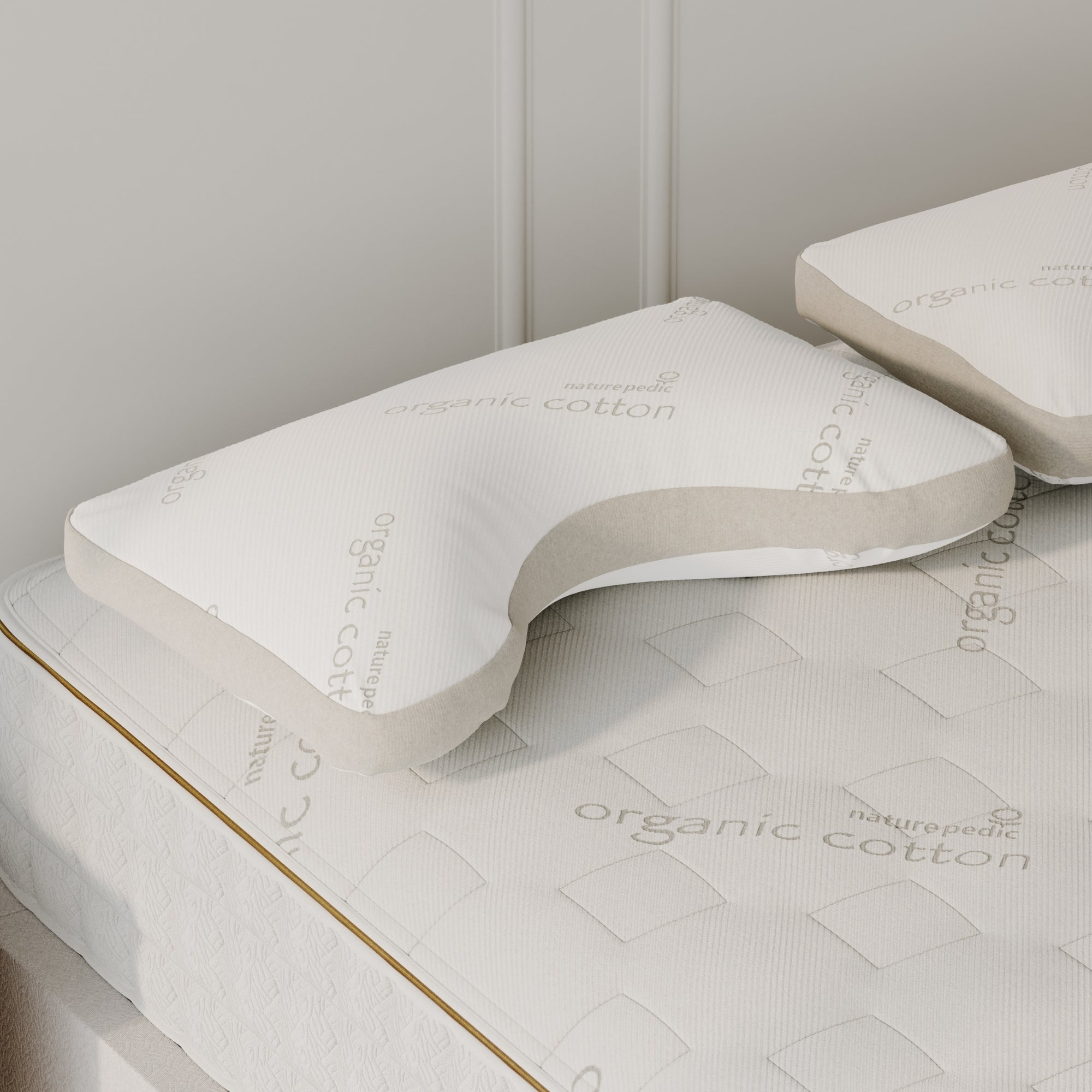
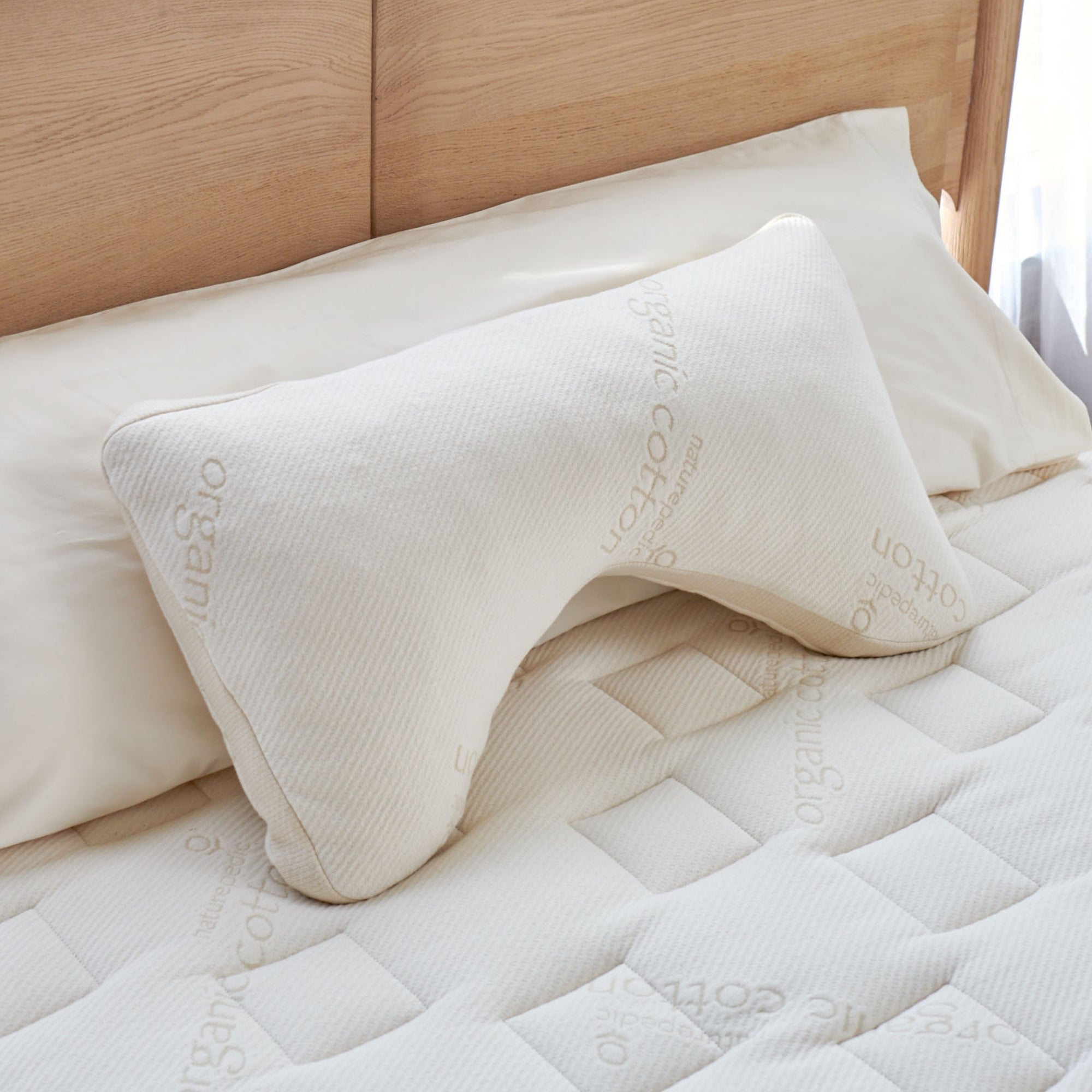
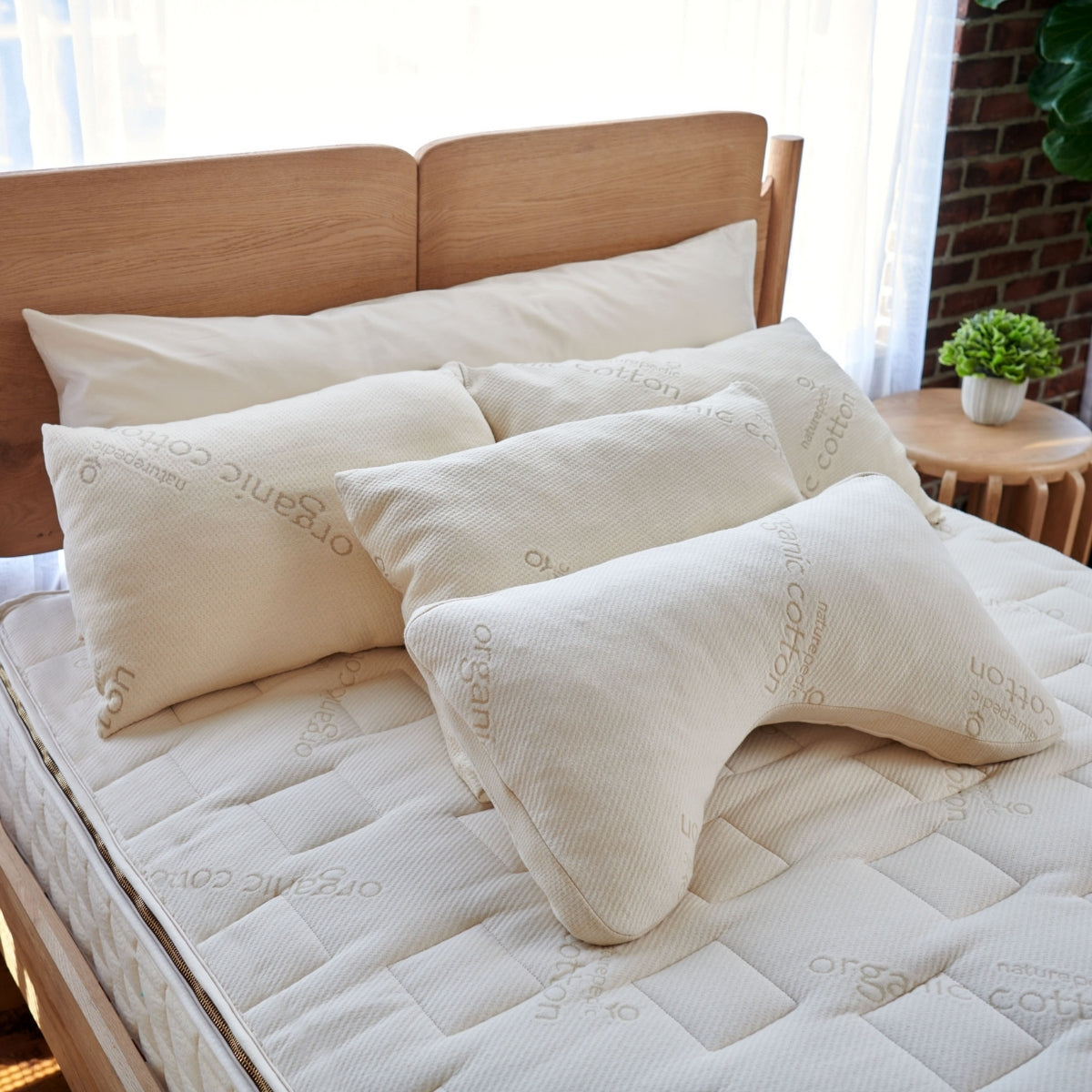
The Naturepedic Organic Latex Side Sleeper Pillow is specifically shaped to accommodate the shoulder while supporting the head and neck. Its curved design creates space where a traditional rectangular pillow can feel crowded, while adjustable shredded GOLS-certified organic latex fill lets you add or remove loft based on your body, mattress, and sleep preferences.
Where Should Your Arms Go When Sleeping on Your Side?
When sleeping on your side, keep your bottom arm slightly forward rather than directly underneath your torso, head, or pillow. Your top arm can rest along your body or hug a pillow in front of you. This positioning gives both shoulders more room and can help prevent the upper shoulder from collapsing forward.
Why Does My Arm Go Numb When I Sleep on My Side?
If your arm “falls asleep” while you’re sleeping on your side, your position may be putting prolonged pressure on nerves or surrounding tissues. Sleeping directly on your arm or tucking it beneath your head can make this more likely.
Try moving the bottom arm forward, changing sides, and using a pillow to support your upper arm. Occasional numbness that resolves after repositioning can happen, but frequent, persistent, painful, or unexplained numbness should be discussed with a health care professional.
How to Support Your Hips and Back While Side Sleeping
Good side-sleeping alignment doesn’t stop at your shoulders. Your hips and legs matter, too. When your top leg drops forward toward the mattress, it can rotate your pelvis and create a twist through your lower back.
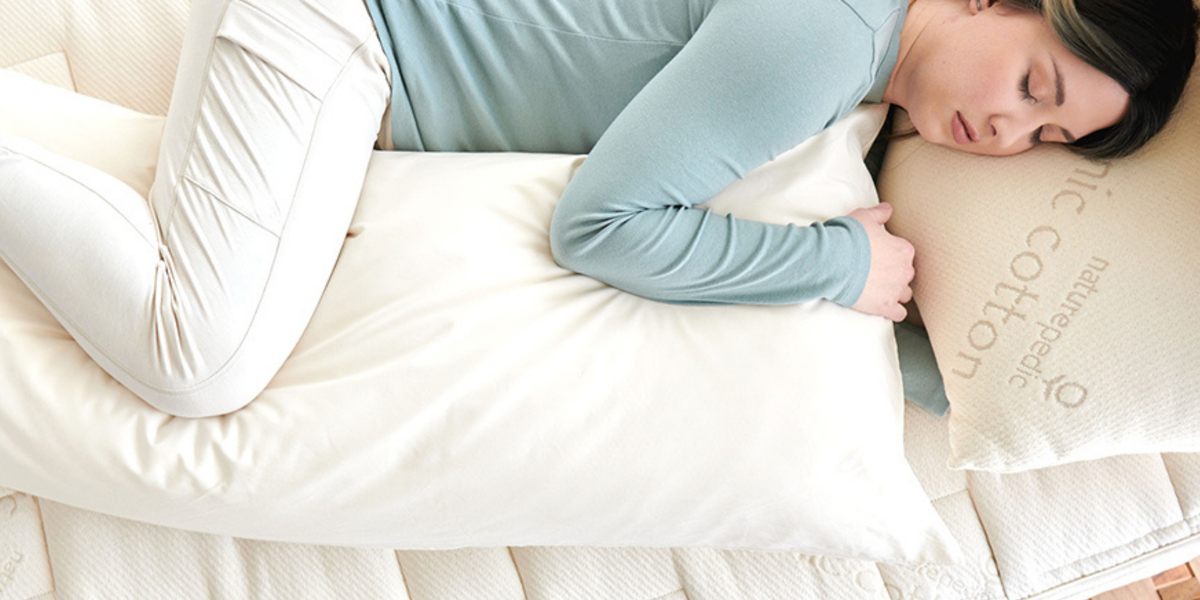
Try sleeping with your knees comfortably bent and placing a pillow between them. Ideally, the support should prevent your upper knee from dropping dramatically below your upper hip. Some sleepers prefer support that extends between both the knees and lower legs to help keep the hips, knees, and ankles in a more comfortable position.
A pillow between your knees can be particularly helpful if you tend to wake up with hip or lower-back discomfort. It isn’t a treatment for persistent pain, but it can make it easier to maintain a more neutral side-sleeping position throughout the night.

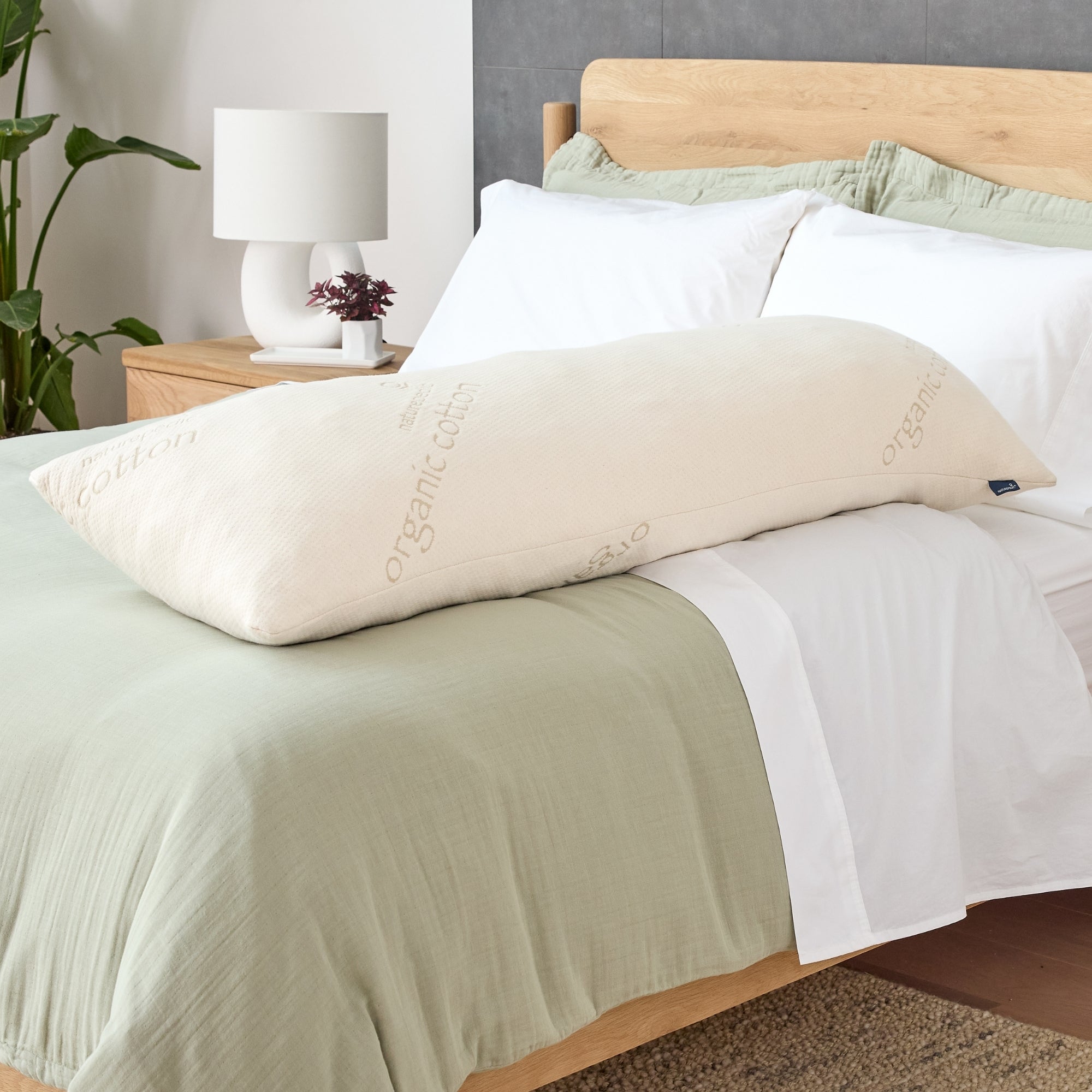
If balancing separate pillows feels cumbersome, a full-length body pillow can support several areas at once. The Naturepedic Organic Latex Body Pillow is designed to support the body from the shoulders to the knees. Side sleepers can hug it with the upper body while placing it between the legs to help align the shoulders, hips, and knees.
How to Sleep on Your Side Properly
The best way to sleep on your side is the position that keeps your body comfortably supported without forcing any one area to bear unnecessary pressure. Your exact setup will be personal, but these side-sleeping tips are a good place to start:
- Keep your head relatively neutral. Your pillow should fill the space between your head and mattress without pushing your head sharply upward or allowing it to drop toward the bed.
- Let your shoulder settle into the mattress. You want enough pressure relief for comfort without sinking so deeply that your torso falls out of alignment.
- Keep your bottom arm in front of you. Avoid trapping it directly beneath your torso, head, or pillow.
- Keep your shoulders and hips stacked. Try not to let your upper shoulder or hip rotate dramatically forward.
- Put a pillow between your knees. Supporting your upper leg can help prevent your pelvis from twisting toward the mattress.
- Adjust rather than forcing one “perfect” position. Your pillow loft, mattress firmness, preferred side, and leg position should work with your individual body and comfort needs.
Side sleeping may be common, but comfortable side sleeping takes the right support from head to toe. Paying attention to your pillow loft, shoulder pressure, arm placement, hip alignment, and mattress feel can help you create a position that works with your body instead of fighting it.
And remember: waking up sore every once in a while doesn’t necessarily mean you need to overhaul your entire bed. Start with small positioning changes, and pay attention to how your body responds. If pain, numbness, or other symptoms are persistent or worsening, talk with a health care professional about what may be causing them.
Have feedback on our story? Contact us to let us know what you think or visit our about us page to learn more!