1-800-91-PEDIC


Organic Cotton Mattress Pads and Quilted Toppers Extend the Life of Your Mattress

March 11th, 2010 by gloria


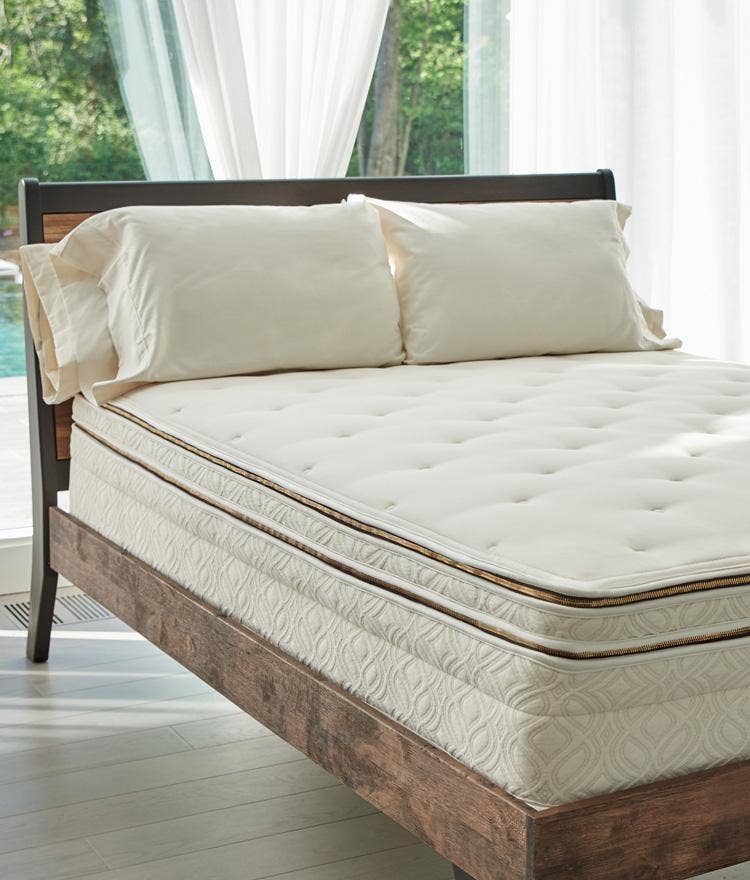
I was recently reading a forum and noticed a person asking where they could get a mattress pad like those made by Naturepedic (she even included a link to the product) for her own, adult-sized bed. There are quite a few people interested in organic cotton mattress pads and toppers, so I thought I’d let you know that we do actually have larger sizes – not just those that fit toddler and crib mattresses.

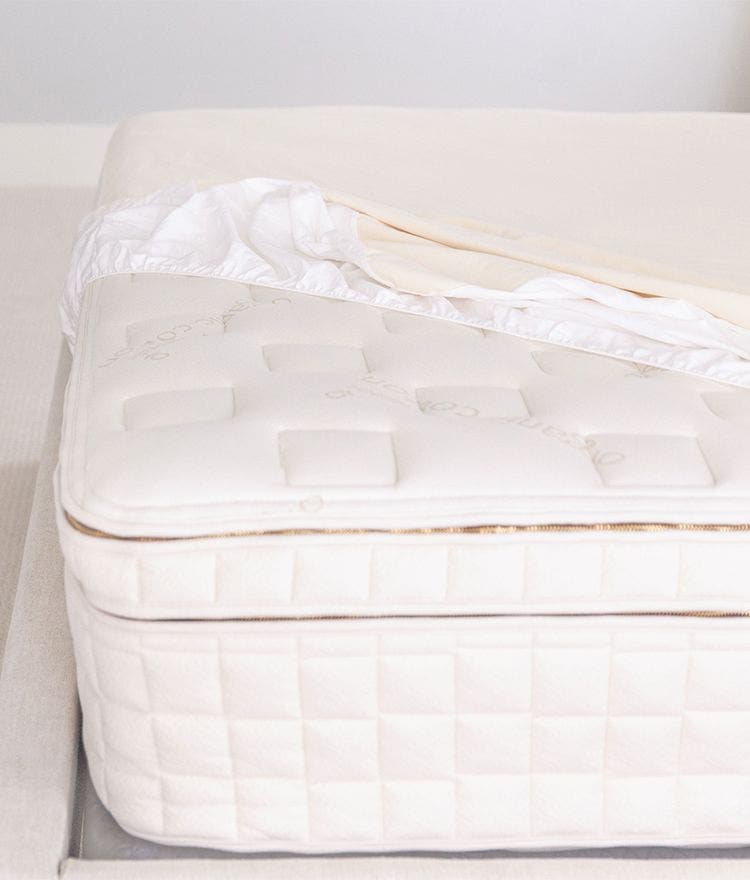
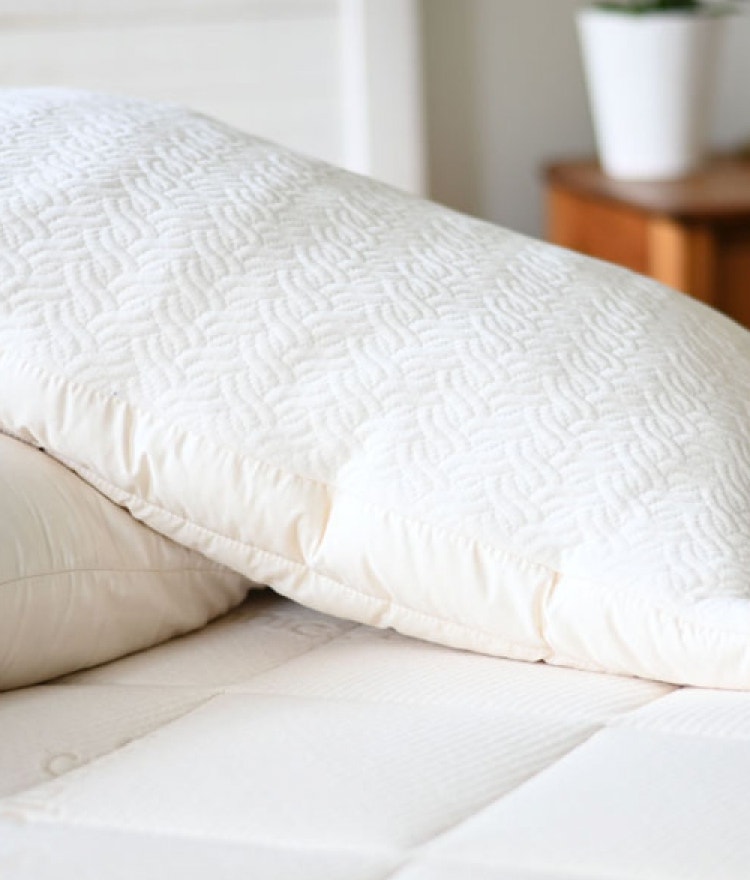
Mattress pads and toppers are a good idea for every bed – they help keep the mattress clean, make it more comfortable, and extend the life of your mattress. If you choose a waterproof model, it will also help keep the mattress free of bodily fluids, make sure it stays dry so no mold or bacteria develop and block dust-mites and other allergens.

The waterproof models are also very comfortable – the outer and inner layers are soft, organic cotton, but between them is a non-toxic membrane that blocks liquids. You sleep on the soft cotton without sacrificing protection.

We make mattress pads and toppers in several different sizes: Everything from bassinette to full in both waterproof and non-waterproof models, and a waterproof queen-size.

We have models that simply lie on top of the mattress, others that have straps to hold them still, and still others that wrap around the sides and corners like a fitted sheet.

No matter which model you choose, they’re all made in the U.S.A, are machine wash and dryable, don’t contain Vinyl / PVC, phthalates or latex, and are GREENGUARD certified.

To find out more, check out the Naturepedic organic cotton mattress pads and quilted mattress toppers on our website.

Bookmark and Share

Meryl Streep Speaks Out About Kids, Toxic Chemicals and Going Green

March 8th, 2010 by gloria


“When you become a parent, you start to notice what they’re eating, what they’re breathing, and children are like canaries in the mine.” Meryl Streep.

Meryl Streep is not just a great actress. She has also been carrying the green flag for more than 20 years. In 1989, having read a Natural Resources Defense Council (NRDC) report about pesticides on fruits and vegetables, Ms. Streep founded Mothers and Others. A concerned mother herself, Ms. Streep and a few neighbors she recruited started handing out informational flyers in the neighborhood and making pests of themselves in local grocery stores demanding they do their part in keeping kids safe.

This humble beginning eventually changed laws, and Ms. Streep continued as an activist. She became a staunch supporter of several other causes and foundations, including Healthy Child Healthy World. In fact, she wrote the forward to the book Healthy Child Healthy World: Creating a Greener, Cleaner, Safer Home and has info about the organization, and several others, on her website.

In case you are unaware of this, Naturepedic crib mattresses are the only brand recommended by Healthy Child Healthy World. I would bet Ms. Streep would really like our toddler and baby mattresses!

Ms. Streep also lives a personally ‘green’ life.

She was recently interviewed by the Natural Resources Defense Council about her beliefs, her lifestyle and her experiences. Check out Beyond Acting: Meryl Streep, Activist Mom on the NRDC’s Simple Steps website. The interview also includes several brief video clips.

Ms. Streep is a prime example of the influence mothers can have on the health of our children, ourselves, and the environment. Check out the interview.

Photo credit: Brigitte Lacombe

Bookmark and Share

Does Your Baby Mattress Label Say ‘Green’ or ‘Eco’? Do You Know What That Really Means?

February 25th, 2010 by gloria


So many products with ‘green’, ‘natural’ or ‘eco’ labels are made with toxic or hazardous materials that it’s hard to tell what you’re really buying. Labeling laws and practices make it even more difficult – the manufacturers of some products are required to reveal very little; even if they make baby mattresses or other products for children that could affect their health.

Manufacturers of many products are not required to put all the exact information on labels, nor do they have to give you the information if you contact them privately.

This might be a great tactic for maintaining a competitive edge, but it’s not good for consumers.

‘Natural’ or ‘eco’ on labels is obviously going to lead buyers to think they’re getting just that. Unfortunately, that is often not the case.

Crib mattresses are a good example. Labels now say things like ‘Green’ or ‘Eco’ or that the products are made with ‘Soybean Foam,’ ‘Soy Foam,’ ‘Eco Foam,’ ‘Bio Foam,’ or ‘Plant-derived Foam.’

True – they’ve got some soybean oil (or whatever) in them. But, the actual amount of soybean oil is often only about 20% of the content.

What does the other 80% comprise? The same old polyurethane foam, probably with toxic fire retardant chemicals, that you were trying to avoid by buying a ‘Green’ or ‘Eco’ product.

It’s easy to get discouraged about all this. Who has the time to go back to school for a degree that will enable you to decipher all this double-talk?

But, in fact, there is an easy solution. You may not be able to find out what materials a manufacturer uses, but you can find out that a manufacturer will not tell you what’s in their products.

When they won’t tell you, you simply move on to a manufacturer who will give you full information. Some quick research, and you can then find out if the materials used are safe.

For the record, we at Naturepedic will give you all the information you need about our crib mattresses, organic cotton bedding and all our other products. Just check our website, or give us a call. If you live in the area, you can even come by and we’ll show you just how, and with what materials, our products are made.

Bookmark and Share

Is Your Baby Ready for a Pillow? Make Sure You Understand All the Health and Safety Issues.

February 23rd, 2010 by gloria


A pillow adds a very nice touch to a bed. It makes it look cozy and inviting – especially to adults who have warm memories of peaceful slumber. But, for a baby, it’s another story. A pillow can suffocate a baby – which is why doctors recommend not using one until your child is two years old. But suffocation is far from the only safety problem with pillows, whether your child is newborn, two years old, or twenty.

What are the other elements of a pillow that can affect health and safety? Primarily, the materials with which they’re made. Interesting enough, almost all of the materials are of the same type used in adult, toddler and crib mattresses.

  • Feathers and down. Down is the fine, soft, fluffy feathers on baby birds, and underlying the regular feathers of adult birds. Down is more expensive than regular feathers. Some pillows are made only of down, some are a mixture of down and other feathers, and some mix down or feathers with synthetic materials. The problem? Many people are allergic to feathers, whether down or otherwise, and feathers can really collect and hold dust – another common allergen.
  • Polyester. Polyester in itself may not be particular hazardous, but the same is not true of the chemicals with which polyester is treated. Polyester pillows could contain formaldehyde or dangerous fire-retardants. If you’re going to go with polyester, make sure you contact the manufacturer to find out all the details about every chemical used in processing. Unfortunately, the information will not be on the label.
  • Polyurethane foam. Many of the new pillows that conform to your shape are made with polyurethane foam – a petro-chemical that the National Association of State Fire Marshals calls ‘solid gasoline.’ Breathing solid gasoline all night is bad enough, but polyurethane foam can also contain toxic chemicals used as fire retardants. If you’re in California, where the addition of fire retardants to some polyurethane items is required by law, there’s not much chance of finding a polyurethane pillow without those chemicals. Fire retardants in polyurethane pillows are also common in other states, but you have to check with the manufacturer of the product. All in all, it’s probably best to avoid polyurethane foam pillows – they’re not quite the breath of fresh air you expect from a healthy, relaxing sleep.
  • Wool. Wool pillows may be okay for adults, but they’re not recommended for a baby. Wool is a common allergen and your baby, if not outright allergic, could develop a sensitivity to wool without you being aware of it.
  • Latex. Again, allergy is the primary issue. And, as with wool, latex sensitivity can develop with long-term exposure.

The other option is organic cotton – which is we use to make both our toddler and crib mattresses and our adult, toddler and baby pillows. Organic cotton is not an allergen and hasn’t been grown with synthetic pesticides, herbicides or fertilizers. Nor have any dangerous chemicals been added in processing.

When your baby’s ready for a pillow, make sure you choose one that is safe all around. As with all baby products, health and safety are the primary concerns.

Bookmark and Share

Is Your Baby Bedding Toxic?

February 17th, 2010 by gloria


shar peiDecades ago, clothing, linens and other textiles were anything but easy-care. The fabrics were heavy and cumbersome to clean, took forever to dry, and had more wrinkles than a Shar Pei. This kept housewives, which was just about every wife at the time, pretty busy.

When synthetic fibers came into the picture, American women sighed with relief. The clothes and linens were lighter, washed quickly, dried quickly, and wrinkles, if there were any, practically shook out. We came to expect that – even with baby clothes, blankets and the bedding we use on their crib mattresses.

However, as we have discovered what some of these synthetic fabrics actually have in and on them, the blush is definitely fading from the easy-care chemical rose.

What chemicals can your baby be exposed to with crib bedding?

Labels like ‘crease-resistant,’ ‘crease-proof,’ ‘no iron,’ ‘wrinkle-resistant,’ ‘durable press,’ ‘easy-care’, ‘wrinkle-free’, ‘stain-resistant,’ ‘wash and wear,’ and ‘permanent press’ mean the fabrics are probably treated with formaldehyde.

Formaldehyde can cause a number of health conditions – burning and watery eyes, coughing, difficulty breathing, and allergic contact dermatitis where formaldehyde-containing fabrics come in contact with the skin.

According to the National Cancer Institute, formaldehyde is also human carcinogen (cancer-causing substance), and the Environmental Protection Agency agrees that’s probably the case.

Formaldehyde is just one of the chemicals of concern in baby bedding, but it’s enough.

What’s the solution? Although you can buy untreated 100% cotton products, it might be easier to get organic cotton. Organic cotton is becoming so popular you can even find linens and clothing in major department stores. Not all stores, and not many items, but you may be able to find them.

If not, you can shop at specialty stores or online. There are literally hundreds of online stores that sell organic cotton sheets – including for a toddler or crib mattress – as well as blankets, pillowcases, clothing, and so on. You can also find them at Naturepedic – we make organic cotton crib sheets and other bed linens as well as organic crib mattresses. Check them out.

So … what do you do about the wrinkles?

Some organic cotton items don’t wrinkle anywhere near as much as they did decades ago; it depends on the weave and a number of other factors. Our crib sheets, for example, look pretty good right out of the dryer. So, wrinkles might not be a problem.

Here are a few tips to keep wrinkles to a minimum, regardless of the fabric:

  • Add vinegar to the final rinse cycle of your wash. Simply fill the fabric softener reservoir with one cup of vinegar to help keep textiles soft.
  • Don’t let your laundry sit in the washing machine. Take it out as soon as it’s done, then shake things out and smooth them before putting them in the dryer.
  • Pack the dryer loosely; the tighter it’s packed, the more wrinkles you’ll get.
  • Take clothes out of the dryer as soon as the cycle is complete, immediately smooth them out, then fold or hang.
  • If you need to iron something, use a steam iron. A combination of heat and moisture is the best wrinkle-fighter.

True, this all takes a little longer that permanent press. But it’s worth it to protect the health of your baby, and yourself.

Bookmark and Share

Toxic Chemicals Are Putting Your Children at Risk

February 9th, 2010 by gloria

Check out the startling details in a new health report from Safer Chemicals Healthy Families.

Read The Health Case for Reforming The Toxic Substances Control Act

Read The Health Case for Reforming The Toxic Substances Control Act

The results of a compilation and analysis of 30 years of environment studies, recently published as a health report from Safer Chemicals Healthy Families, revealed startling details about the increase in disease in the U.S. over the last 35 years, and the link to toxic chemicals.

Here are some of the statistics from the report:

  • Leukemia, brain cancer, and other childhood cancers, have increased by more than 20% since 1975.
  • Breast cancer went up by 40% between 1973 and 1998 and, while breast cancer rates have declined since 2003, a woman’s lifetime risk of breast cancer is now one in eight, up from one in ten in 1973.
  • The incidence of asthma doubled between 1980 and 1995 and has stayed at the elevated rate.
  • Difficulty in conceiving and maintaining a pregnancy affected 40% more women in 2002 than in 1982. For woman aged 18 – 25, the incidence of reported difficulty has almost doubled.
  • The birth defect resulting in undescended testes increased 200% between 1970 and 1993.
  • Diagnosed autism has increased more than 10 times in the last 15 years.

According to the report, there is a growing consensus that chemicals are playing a role in the incidence and prevalence of these diseases.

The birth defect resulting in undescended testes, for example, as well as other hormonal problems with young boys, could be the result of exposure to phthalates – the plasticizer chemicals used to soften PVC/Vinyl so it can be used as a waterproof covering in crib mattresses – which is one of the reasons three phthalates were banned in baby mattresses and other kids products. One study even found that the school-age boys of women who tested positive for phthalates in their urine while pregnant played in ways that were not typical of young boys – no trucks, rough housing, and so on.

What’s being done about the chemical problem?

Although the EPA has admitted they’ve failed to protect the public from the dangers of toxic chemicals, and is currently making changes, the track record is abysmal: Since the Toxic Substances Control Act (TSCA) was enacted 34 years ago, only 200 of the 80,000 chemicals that have since been produced and used in the U.S. have been tested by the EPA, and only five have been regulated.

Health care reform is currently the subject of intense controversy. But real reform will come when we start getting rid of the chemicals suspected of exacerbating, if not causing, illness.

Chemical policy reform would also free up a lot of health care dollars: If reducing exposure to chemicals resulted in healthier people, it would only take one tenth of one percent in health savings to free up $5 billion every year.

Read more details in the report, The Health Case for Reforming the Toxic Substances Control Act.

Safer Chemicals Healthy Families also has a campaign to help eliminate toxic chemicals. There are many facets to their campaign, including Parents for Non-Toxic Alternatives and several others directly concerned with toxic chemicals and the relationship to child safety. Check them out, you may want to become involved.

If you’re concerned about your child’s safety and want to do something about it right now, consider getting a Naturepedic toddler or crib mattress, along with our safe child and baby bedding and pillows. Also, check out the book Home Safe Home by Debra Lynn Dadd for thousands of safe alternatives for just about every chemical in your household.

Bookmark and Share

Have Your Baby or Child Items Been Recalled for Safety Reasons?

January 31st, 2010 by gloria


Find out about Consumer Product Safety Commission recalls on infant and child products

Find out about Consumer Product Safety Commission recalls on infant and child products

The Babies”R”Us second Great Trade-In Event, the first was in August/September 2009, gives parents the opportunity to get a 25% discount on replacing several types of baby items – cribs, car seats, bassinets, strollers, travel systems, playards, toddler beds or high chairs – that may no longer be safe for your child.

You just take your products into your local Babies”R”Us or Toys”R”Us store and purchase new ones from participating manufacturers at the discounted price. Your products don’t have to have been recalled, and you don’t have to provide proof that your product is faulty.

However, there are probably millions of parents out there who are unaware of the fact that items they’re using may have been recalled.

How can you find out if a baby or child’s product you’re using is potentially dangerous? The Consumer Product Safety Commission has a comprehensive list of infant and child product recalls that provides all the details of each recall, including what to do about replacing the faulty items or parts.

Unfortunately, crib mattresses are not included in the types of items that can be traded in, but if you’re looking for information on what makes a crib mattress safe, you can find it on our site.

Bookmark and Share

Take Advantage of Babies”R”Us Great Trade-In Event to Protect Your Children

January 29th, 2010 by gloria


Babies"R"Us Great Trade-In Event - Be Safe and Save

Babies"R"Us Great Trade-In Event - Be Safe and Save

Today marks the first day of Babies”R”Us The Great Trade-In event. You can return as many qualifying items as you want and replace them with new items from participating manufacturers or brands. This gives consumers a break on replacing recalled items or older and used baby items that are “potentially unsafe for a variety of reasons, including damage or lack of compliance with recent advances in product safety standards.”

We contacted Babies”R”Us to find out if the event includes crib mattresses – there has never been a recall on waterproof crib mattresses containing phthalates, for example. Unfortunately, crib mattresses are not on the list: a sure sign that awareness of unsafe chemicals and consumer demand for safer materials needs a boost.

That said, the safety issues regarding the trade-in are vital to resolve. The majority of recalls were for things like crib sides that aren’t properly secured so they can fall off, platforms for mattress that don’t allow the mattress to be lowered to the necessary extent (the baby could fall out of the crib), car seats with bases that ‘fail’ if there’s a collision so the baby isn’t protected, strollers with failing brakes or that kids can easily fall out of, or that amputate fingertips.

So, while you generally don’t have the opportunity to return items that contain potentially hazardous or toxic materials, you do have the opportunity to return a long list of items – cribs, car seats, bassinets, strollers, travel systems, play yards, toddler beds or high chairs – even those that haven’t been recalled, and get new ones at a 25% discount. Any parent concerned about the safety of their children will want to take advantage of this deal.

It’s much easier than replacing faulty parts or waiting for a recalled item to be replaced by the manufacturer (it obviously can’t be used while it’s being fixed). And it’s much safer than continuing to use an older product that may be damaged or not meet current safety standards.

To find out about participating manufacturers and other details, check out The Great Trade-In Event. It ends on February 20th – so don’t delay.

Bookmark and Share

Does Your Baby’s Crib Mattress Have Dust-mites?

January 22nd, 2010 by gloria

High levels of dust-mite allergens are present in 50% of American homes – they cause several health problems, and they love to hide in your mattresses.

dustmites2A recent article in the Wall Street Journal, Does Mattress Cleaning Treat Dust-Mite Allergies?, prompted this blog post about dust-mites. They really are a big problem – at least half the homes in America contain enough dust-mite allergens to cause health problems. How do you get rid of those allergens? The answer to the question in the headline “Does Mattress Cleaning Treat Dust-mite Allergies” appears to be ‘no.’ And I’ll explain why. But, first, a little info about dust-mites.

Dust-mites are microscopic arachnids (same family as spiders) that live in dust. They hide in dark places like upholstered furniture, dust bunnies under couches and beds, in blankets, sheets, stuffed toys, mattresses – even your baby’s crib mattress.

Although they do bite, they generally they feed off dead skin cells and hair. However, their waste is usually the source of allergic reactions. In fact, up to 30% of people in the U.S. are allergic to this waste and even those who are not allergic can develop a sensitivity if there’s enough of the allergen in the environment. A recent study conducted by the National Institute of Environmental Health Sciences found that half the homes in the U.S. have enough of these allergens to trigger a sensitivity – which can have the same symptoms as an actual allergy.

What are the symptoms?

  • Asthma
  • Hay fever
  • Eczema
  • Itchy, watery eyes
  • Persistent stuffy nose or ears
  • Repeated sneezing upon awakening
  • Sneezing
  • Runny nose

Generally, the symptoms are worse at night and when you first wake up. And they improve when you’re out of the house.

There are various services available that clean mattresses to remove dust-mites. They cost about $50 for a twin mattress, more for larger sizes. One such service (using ultraviolet light) was tested and found to reduce the mites by 98%.

That statistic sounds good, but it’s only one test and, worse, the mites build up to their previous levels within a month, according to Peyton Eggleston, a pediatric allergist and professor emeritus at Johns Hopkins Children’s Hospital in Baltimore. At that rate, the average household (cleaning all their mattresses) would have to spend about $150 to $200 a month to get their mattresses cleaned – which is hard to fit into the average budget.

So, what are your other alternatives? For your baby, get a Naturepedic crib mattress with a waterproof covering made with food-grade polyethylene. Dust-mites cannot penetrate this covering, so all you have to do is wipe down the surface.

For your own mattresses, and for bigger kids, get an organic waterproof mattress pad or airflow sheet. These will provide dust-mite protection for the top of the mattress which is where the majority of the problem lies.

There’s nothing worse than sick kids – especially babies. Their under-developed immune systems need all the help they can get. Handle the dust-mite problem, and that will be one less thing you have to worry about.

Bookmark and Share

New Study Links Phthalates to ADHD – One More Reason to Use Organic Crib Mattresses

January 20th, 2010 by gloria


cdc_logoIt is troubling to see how many children are suffering from ‘learning disorders.’ Parents are tearing their hair out trying to find solutions, and often resort to putting their kids on drugs when they see no other solution. However, a new study linking ADHD to the chemical plasticizers ‘phthalates’ may offer some hope.

The study, published in the journal Biological Psychiatry, found that the higher the concentration of phthalates in the urine, the more apt the children were to have ADHD symptoms. The researchers also found “significant relationships” between urine concentrations and errors in continuous performance tests (CPTs), which measure the child’s sustained and selective attention – the ability to focus on the right things at the right times – and impulsivity. CPT is used to support an ADHD diagnosis.

So, where are these phthalates coming from?

According to other studies, it starts in the womb: phthalates in mom’s body transfer to the child. Mom may have gotten them into her body via her hand lotion, nail polish, or a variety of other personal care products, or from food containers and packaging, laundry detergents or even the enteric coating on pharmaceuticals.

So, the kids get off to a bad start. Then, right from infancy, they sleep on crib mattresses with PVC/vinyl waterproof coverings made pliable by the use of phthalates. We’ve never used phthalates in our Naturepedic crib mattresses, and we never will.

From the crib mattress, the very long list of products containing phthalates continues: Plastic toys, building materials, textiles, the same liquid soap and detergent used by mom – it goes on and on.

According to a study published in Atmospheric Environment in 2008, manufacturers produce about 800 million pounds of phthalates each year (those figures are from 2004, the latest available at the time), and they contribute 10-60% of plastic products by weight.

Fortunately, the U.S. government is getting wise to phthalates. The Consumer Product Safety Commission (CPSC) banned phthalates in crib mattresses and some children’s products last year – although only three phthalates were banned and several others are still used. Both the CPSC and the EPA are doing further investigation, and the EPA now has a Phthalates Action Plan by which they hope to determine the degree to which these chemicals should be restricted – or perhaps banned altogether.

But, unlike Europe – where phthalates were banned a decade ago – we’re a long way from full protection.

What is the answer? The obvious solution is to avoid them. Fortunately, there are more and more products out there that do not contain phthalates. Look for them. If you have questions about specific products, contact the manufacturer. If they can’t guarantee ‘no phthalates,’ switch to a brand that can.

According to the Centers for Disease Control and Prevention, up to 10% of U.S. children have been diagnosed with ADHD. Wouldn’t it be great if an environment free of phthalates and other dangerous chemicals could change that?

Bookmark and Share

 
© 2010 Naturepedic. All rights reserved.